


Small Rosewood Bookcase
A small rosewood bookcase brings rich, figured grain and compact proportions to a room, holding volumes in style.
Small Rosewood Bookcase
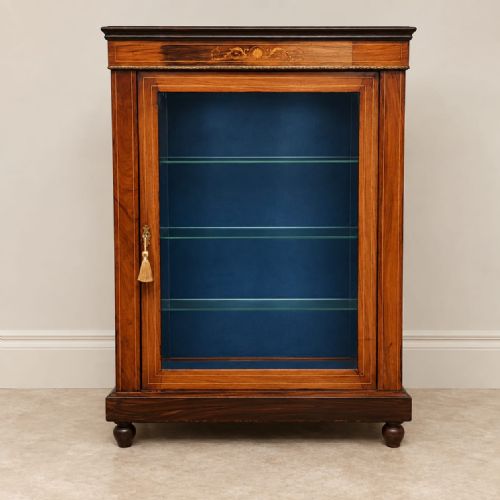
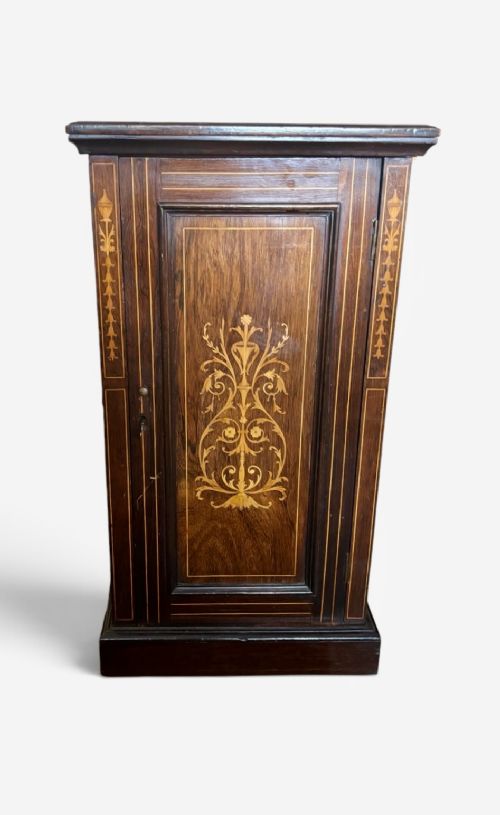
When you search for a small rosewood bookcase, you encounter pieces designed to hold books and display objects within modest footprints. These items span the Regency, William IV, Victorian, and Edwardian periods, stretching from the early nineteenth century into the twentieth.
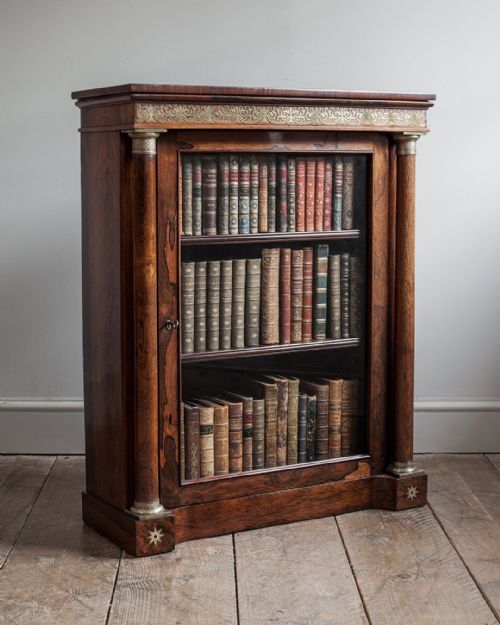
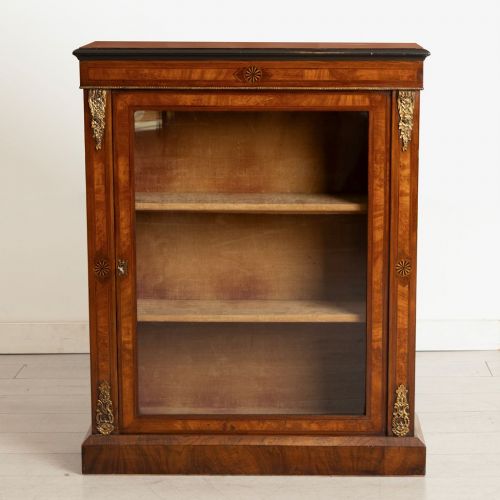
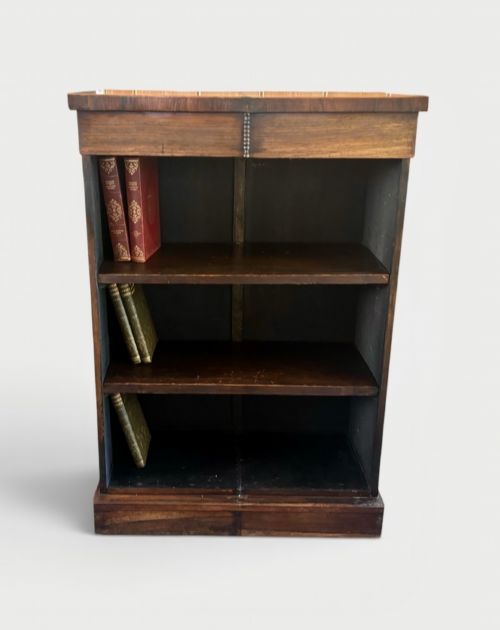
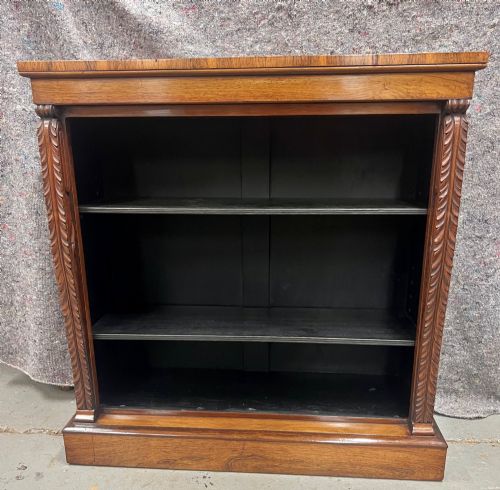
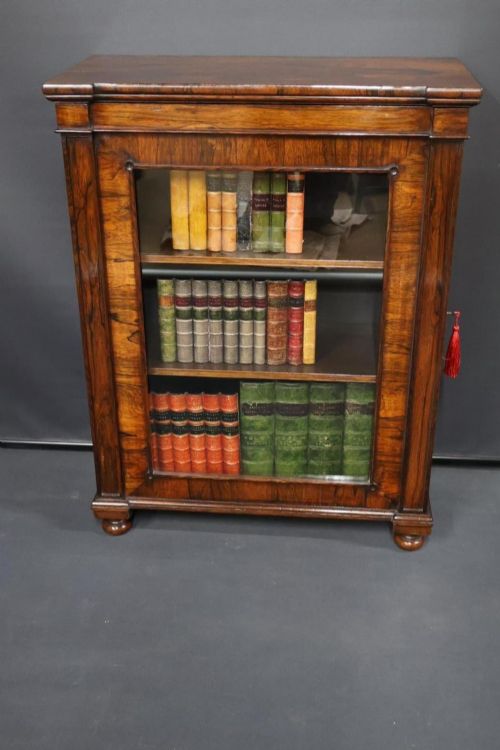
The selections on this page most frequently take the form of open bookcases, dwarf bookcases, and glazed pier cabinets. Many pieces feature neat proportions, standing low to the ground with shelves tailored for domestic libraries.
Origins range from domestic British workshops to Anglo-Indian ateliers, offering variations in enclosed cupboard space, open shelving, and integrated display cabinets.
What varies in quality
The standard of a small rosewood bookcase rests primarily on the choice of timber and the precision of its grain matching. Highly figured veneers and thoughtful timber selection distinguish superior cabinet work from plain surfaces.
Execution of fine details, such as crisp brass inlay, delicate boxwood and satinwood stringing, and well-fitted doors, elevates a piece. Proportions that feel balanced and neat contribute further to the distinction of the construction.
Some nineteenth-century makers evidently believed books deserved to be framed like fine art behind glass doors.
The Small Rosewood Bookcase Glossary
- Rosewood
- A dense, heavily figured timber prized for its dark grain and warm reddish-brown tones. It forms the primary surface material for the cabinets and bookcases listed here.
- Pier cabinet
- A low cabinet designed to fit against the wall space between windows. These pieces often feature glass doors and internal shelving for display.
- Dwarf bookcase
- A low-standing bookcase designed to sit below picture rail height. They offer open shelves or enclosed cupboards in compact dimensions.
- Inlay
- A technique where contrasting materials like brass, boxwood, or ebony are embedded into the wood surface to form decorative patterns. It defines the ornamentation on many Regency and Victorian examples.
- Waterfall bookcase
- A set of open shelves diminishing in depth from bottom to top. This style appears in later twentieth-century interpretations.
Small Rosewood Bookcase: Frequently Asked Questions
How do I distinguish Regency pieces from Victorian ones?
Regency and George IV examples typically display clean architectural lines, often enhanced by brass inlay or understated classical proportions. They date from the early decades of the nineteenth century.
Victorian and later nineteenth-century pieces tend towards heavier ornamentation, incorporating satinwood, boxwood, and burr walnut inlays alongside glazed doors and carved details.
What is the difference between an open bookcase and a pier cabinet?
An open bookcase provides unobstructed access to shelves for storing volumes and displaying decorative objects. They come in dwarf and floor-standing proportions.
A pier cabinet incorporates glazed or solid doors, enclosing the shelving to protect contents from dust while offering a formal surface on top.
Are these bookcases suitable for heavy volumes?
Most small bookcases are built with fixed or adjustable timber shelving designed for standard octavo volumes and general household reading. The sturdy rosewood and mahogany construction provides adequate support for everyday libraries.
Extraordinarily heavy folios or reference sets are better suited to larger, purpose-built library furniture rather than compact dwarf cabinets.