



Carved Rosewood Bookshelves
These carved rosewood bookshelves bring rich timber and classical proportion into a room, offering sturdy display space for a proper library.
Carved Rosewood Bookshelves
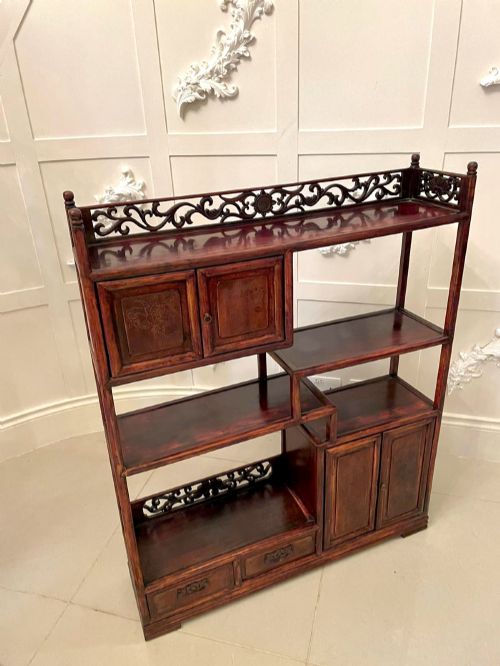
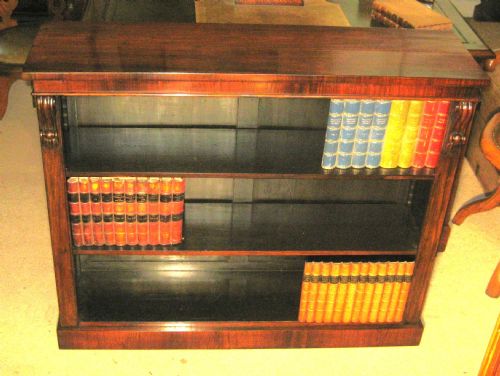
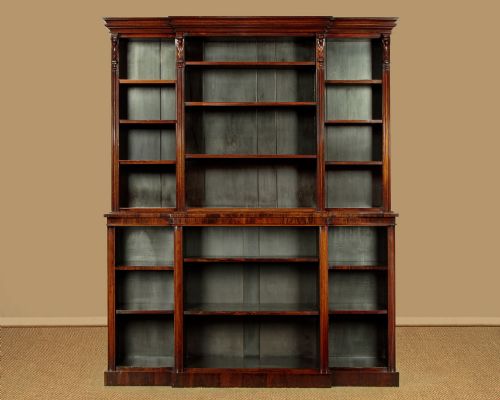
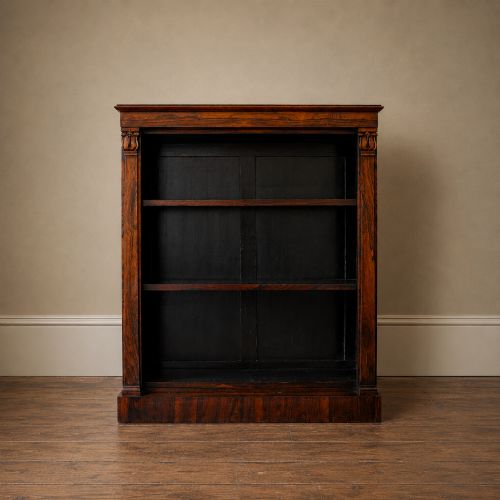
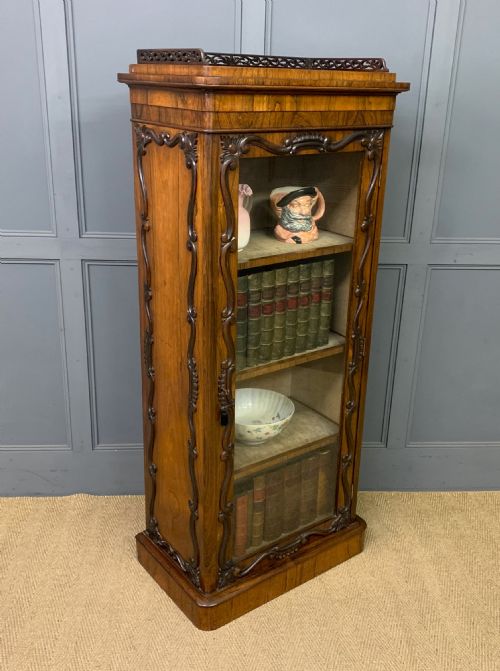
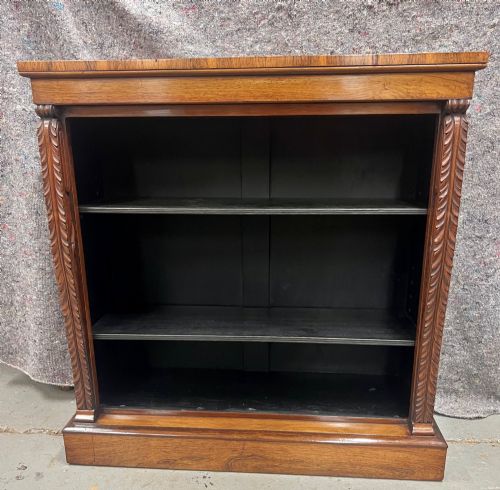
When you search for carved rosewood bookshelves, you encounter heavy timber furniture designed to hold books and display objects with architectural authority. The pieces appearing here span the Regency, Victorian, and Edwardian periods, including open bookcases, breakfront forms, and low shelving units.
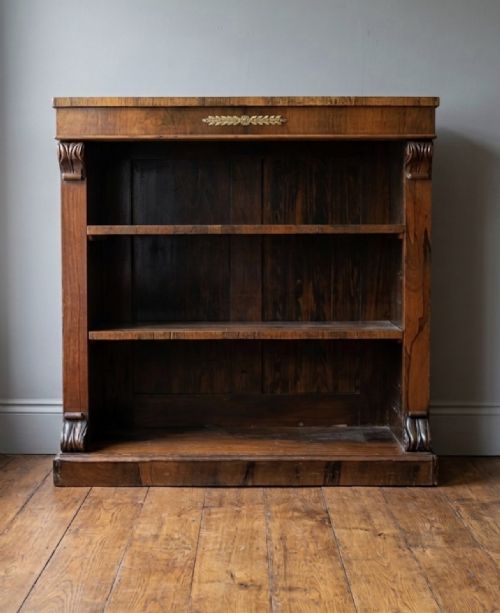
You are most likely to meet open bookcases and breakfront cabinets featuring adjustable shelves and carved corbels. These items utilise dense rosewood, often complemented by marble tops and brass details, originating from workshops across the nineteenth century.
How they were made
Cabinet makers constructed these bookcases using solid rosewood and rosewood veneer applied over secondary timbers such as oak, pine, and softwood. The surfaces frequently incorporate detailed hand-carved corbels and mouldings that define the architectural style of the piece.
Structural additions include inset brass fittings and pink marble tops, requiring precise carpentry to support heavy volumes. Joinery methods of the period ensured that uprights and adjustable shelves bore significant weight without warping.
Some nineteenth-century readers clearly possessed heavy collections, requiring waterfall shelves and marble tops to keep their study organised.
What varies in quality
The distinction between ordinary and exceptional pieces lies in the grain selection of the rosewood and the crispness of the carving. Superior examples display symmetrical figuring across large breakfront surfaces and deep, cleanly executed corbels.
Construction details such as solid timber backs, well-fitted adjustable shelf mechanisms, and integrated marble tops separate standard production items from master cabinet maker outputs like those signed by James Winter.
James Winter
The Carved Rosewood Bookshelves Glossary
- Rosewood
- A dense, heavily figured timber valued for its dark reddish-brown colour and contrasting black grain patterns. It polishes to a high lustre and forms the primary material for these bookcases.
- Breakfront
- A cabinet design where the central section projects forward from the flanking wings. This classical arrangement adds depth and visual rhythm to large bookcases.
- Corbel
- A structural bracket projecting from the face of the bookcase to support the cornice or shelf above. On these pieces, they are frequently carved with scroll or leaf motifs.
- Veneer
- A thin layer of superior rosewood applied over a stable secondary wood like pine or oak. This technique permitted wide, highly figured surfaces without the risk of heavy solid timber splitting.
Carved Rosewood Bookshelves: Frequently Asked Questions
How do I adjust the shelves?
Most period bookcases utilise wooden ratchets, brass studs, or movable pillar supports inset into the interior uprights. You simply lift the shelf slightly to disengage it from the supports and reposition it at the desired height.
Care should be taken not to force tight shelves, as nineteenth-century mechanisms can bind if shifted unevenly.
Are these suitable for heavy books?
The sturdy construction and dense rosewood or hardwood construction of these bookcases make them entirely appropriate for holding large volumes. Adjustable shelving allows you to configure spaces specifically for folios and heavy reference works.
Overloading individual shelves beyond their intended span can cause bowing, so distribute substantial weight evenly.
How do I care for rosewood?
Maintain the timber by keeping the bookcases away from direct sunlight and radiators, which dry out the wood and cause veneers to lift. Dust regularly with a dry, soft cloth and occasionally apply a quality beeswax to nourish the surface.
Avoid silicone-based sprays, as they build up residue and dull the natural patina of the polish.
How do I identify a Regency bookcase?
Regency pieces typically display classical restraint, incorporating clean architectural lines, brass inlay, and restrained rosewood veneers. They often date from the early nineteenth century and reflect influences from Greek and Roman revival styles.
Look for proportion, subtle brass mounts, and structural joinery consistent with the pre-Victorian era.