


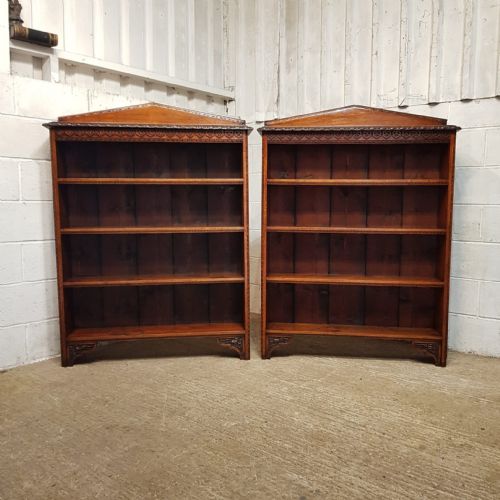


Pair of Open Bookcases
A pair of open bookcases brings symmetrical balance to a room, offering accessible shelving for a collection of volumes.
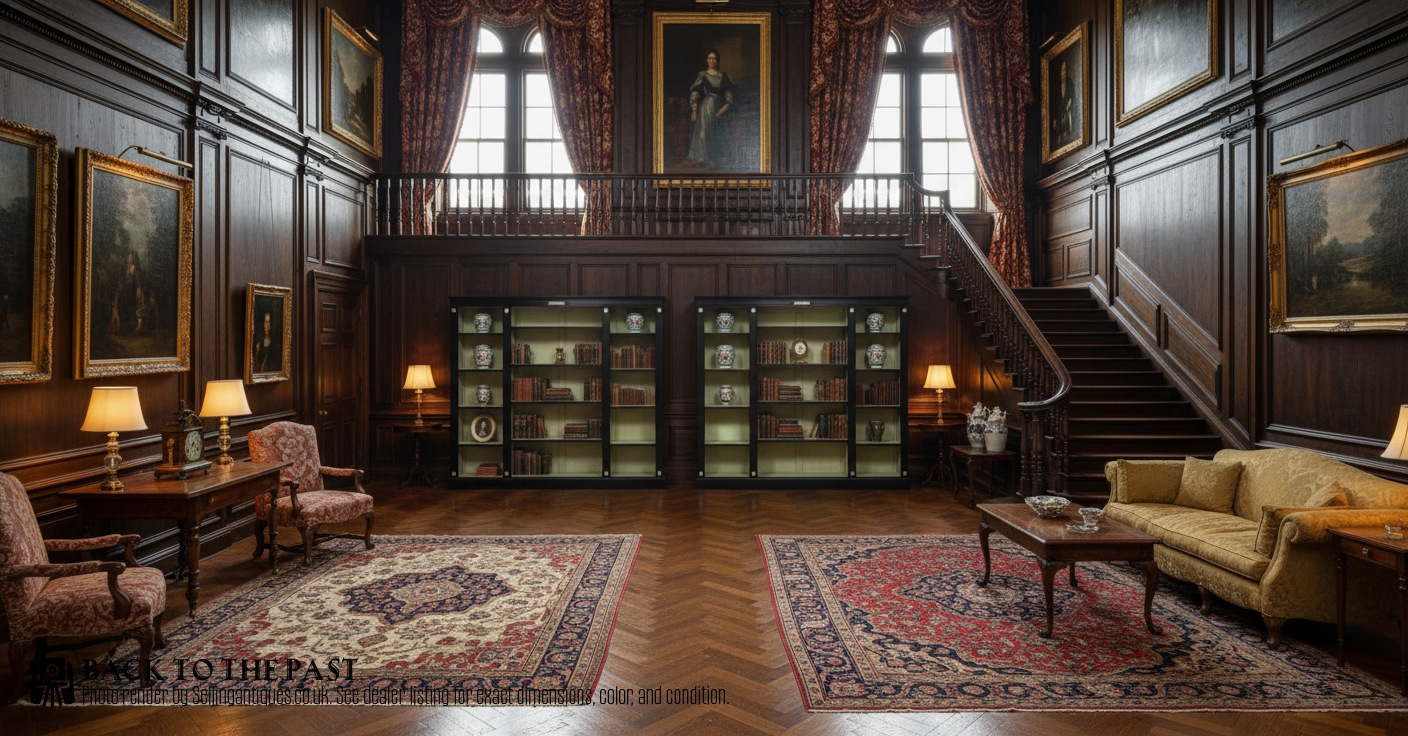
Pair of Open Bookcases
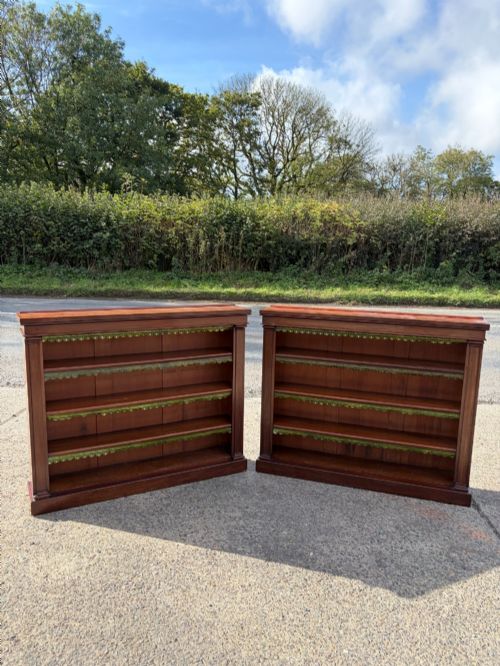
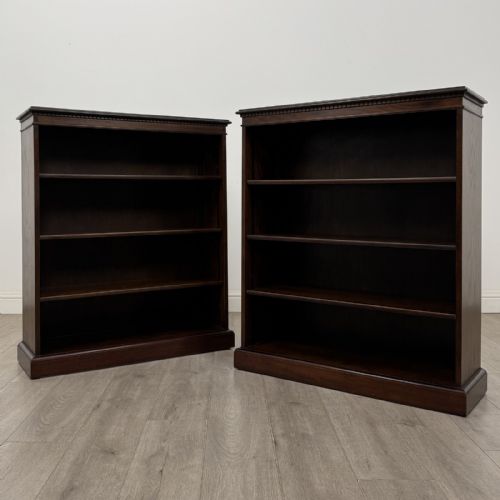
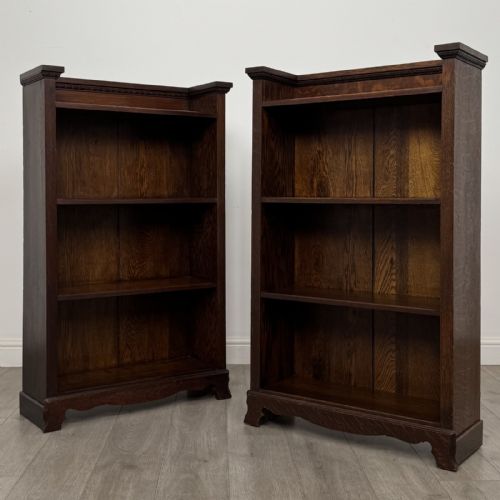
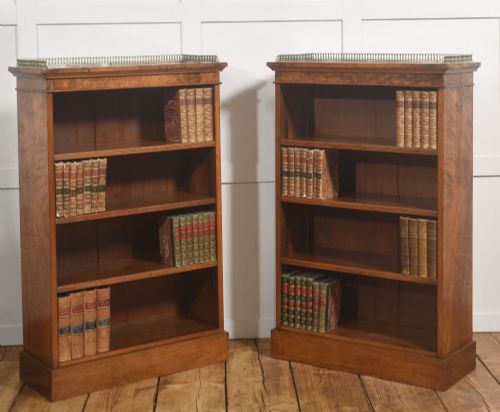
A pair of open bookcases comprises matched shelving units designed to house libraries or display objects without the enclosure of doors. These twin items often anchor either side of a fireplace or window, bringing deliberate architectural symmetry to a room.
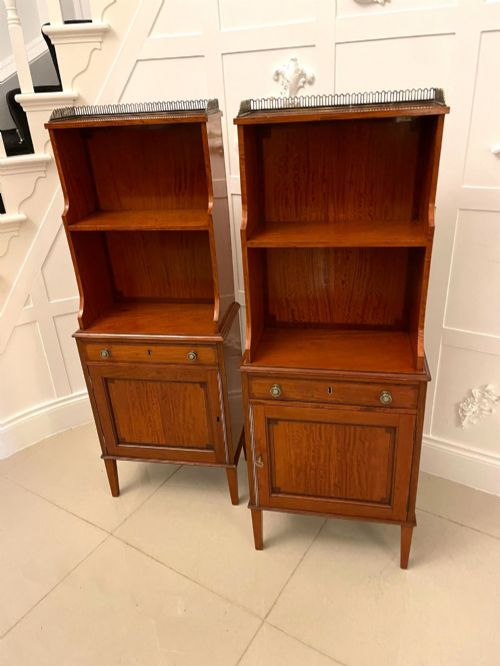
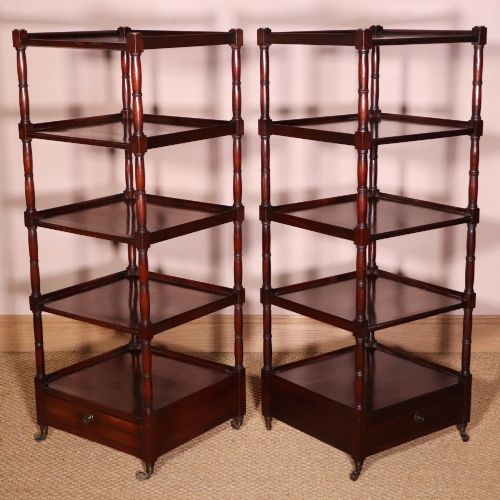
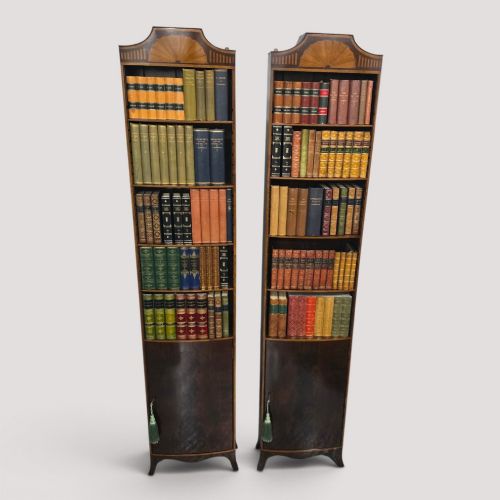
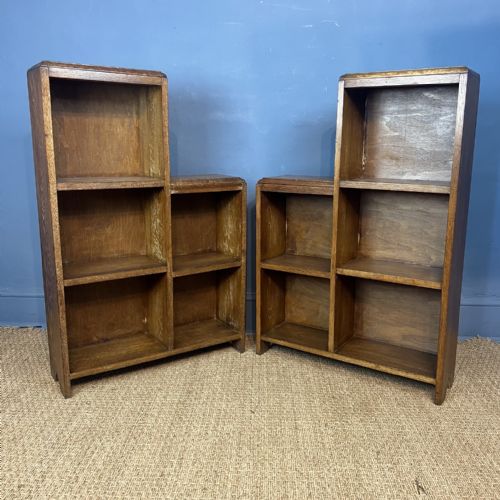
The pieces appearing on this page span several centuries and styles, though mahogany and walnut examples from the nineteenth and early twentieth centuries predominate. Buyers frequently encounter low dwarf versions, breakfront shapes, and stepped waterfall tiers.
Originating largely from British cabinet-making traditions, these dual furnishings also draw on Regency, Edwardian, and Art Deco design aesthetics. They serve utility and display alike, accommodating heavy bindings and lighter ornaments with equal stability.
Materials and Construction
Cabinet-makers relied heavily on dense hardwoods like mahogany, oak, and rosewood, often applying veneers of burr walnut, satinwood, or kingwood to key surfaces. Crossbanding and stringing inlaid details frequently accent the primary timber grains.
Structural integrity relies on traditional joinery, whilst ornamental enrichment appears through brass or ormolu mounts, ebonised touches, and carved mouldings. Adjustable shelving mechanisms allow owners to alter internal shelf heights.
Pair of Open Bookcases Retail Price Guide 2026
Typical asking prices for pair of open bookcases among the pieces listed under this phrase on Sellingantiques today, from the lower quarter to the upper quarter. They describe what is for sale here now, not the wider market.
Some nineteenth-century examples doubled as bedside tables, keeping midnight reading within arm's reach of the pillow.
Distinctions in Quality
The refinement of timber selection separates standard items from exceptional examples, particularly where figured burr walnut, matched rosewood veneers, or choice satinwood are handled by skilled workshops. Finer pieces demonstrate careful grain continuation across the twin units and precise inlay work.
Structural execution also marks the tier of a piece, visible in the handling of breakfront cornices, adjustable shelf supports, and the weight of ormolu mounts. Greater attention to subsidiary timbers and backboards denotes a higher standard of craftsmanship.
Gillows·Heals·Robert Strahan·Richard Bridgens·Wedgwood
The Pair of Open Bookcases Glossary
- Breakfront
- A piece of furniture where the central section projects forward from the flanking outer sections.
- Waterfall bookcase
- A set of open shelves that diminishes in depth from bottom to top, creating a stepped profile.
- Crossbanding
- A strip of veneer laid around the border of a panel so that the grain runs at right angles to the central grain.
- Ormolu
- Gilded bronze used for decorative mounts and accents on fine cabinetry.
- Whatnot
- An open set of multi-tiered shelves used for displaying ornaments or books.
Pair of Open Bookcases: Frequently Asked Questions
How do I style twin bookcases?
Symmetrical placement requires careful consideration of shelf height and weight distribution. Balance heavy folios on lower tiers with lighter objects higher up.
Matching the visual weight of books across both units maintains the intended symmetry of a pair. Leave some space empty to prevent the shelves from appearing overcrowded.
Are the shelves adjustable?
Many nineteenth and twentieth-century examples feature adjustable wooden shelving supported by brass rack strips or wooden pegs. This allows owners to configure heights for various book sizes.
Fixed shelves do appear in certain older or simpler models, so checking internal configurations is advisable for specific storage needs.
Where should I place them?
Traditional placement often positions twin units flanking a fireplace, framing a doorway, or occupying opposite sides of a study. Their finished backs and compact depths also suit alcoves.
Low dwarf versions function well beneath windows or serve dual purposes as bedside tables.
How do I date a pair?
Dating relies on timber choices, construction methods, and stylistic cues such as Regency brass inlay or Art Deco geometric lines. Secondary woods at the back often provide clues to the period.
Revival periods frequently reissued earlier Georgian or Regency forms during the Edwardian era, which expert examination can clarify.