

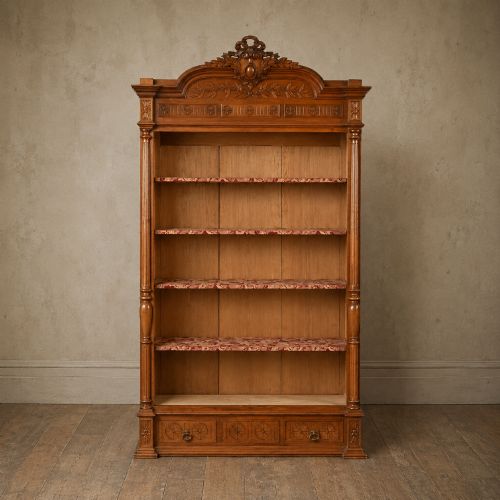
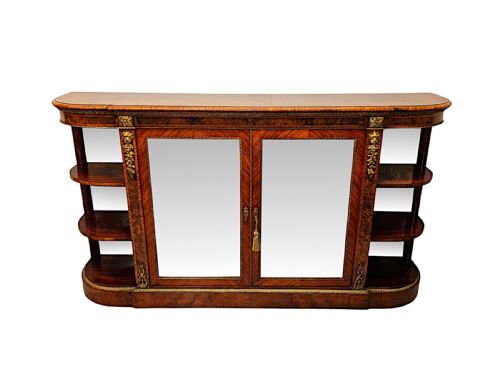
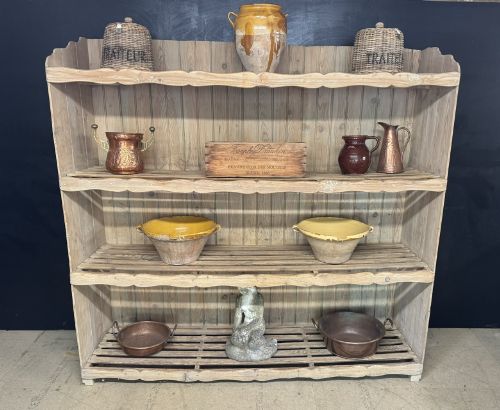
Large Open Display Shelves
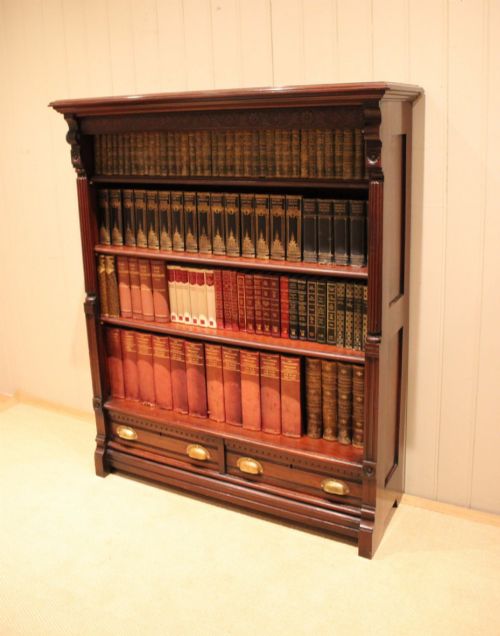
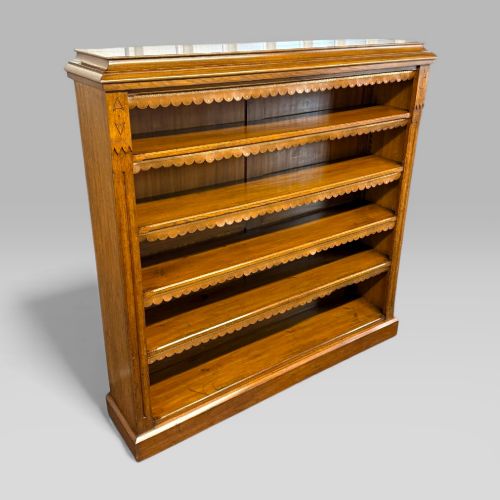
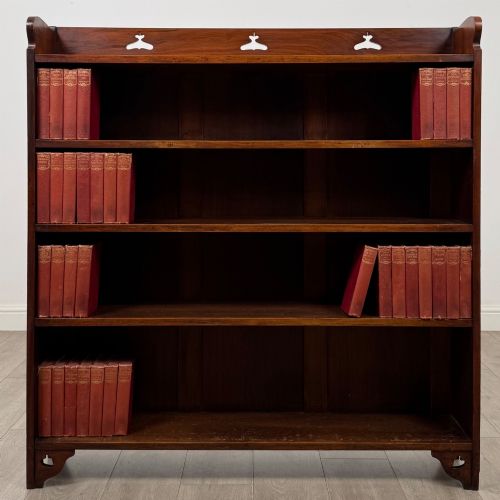
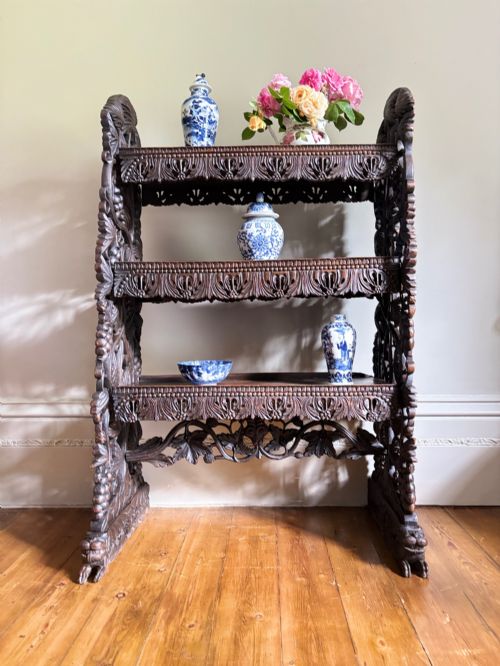
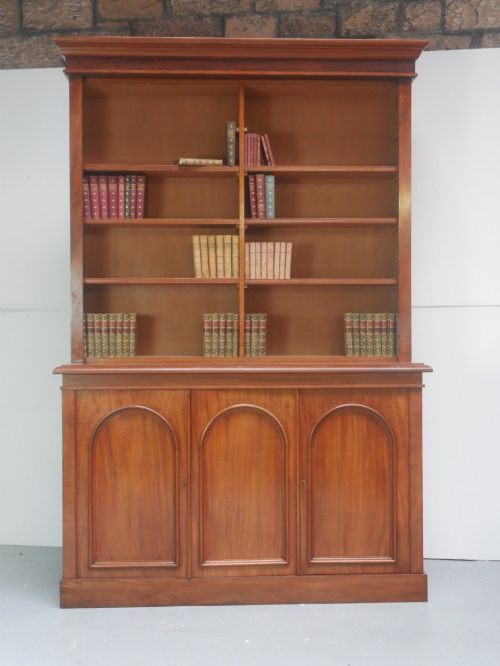
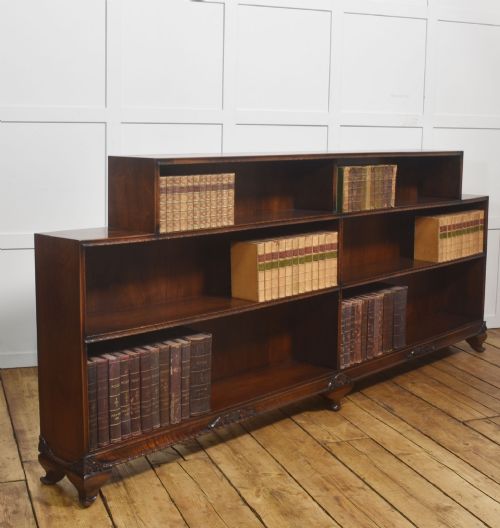
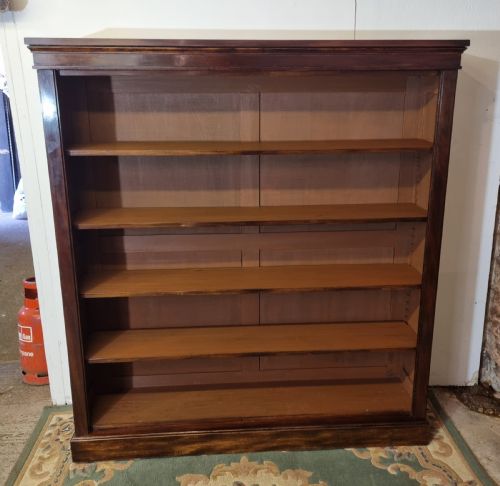
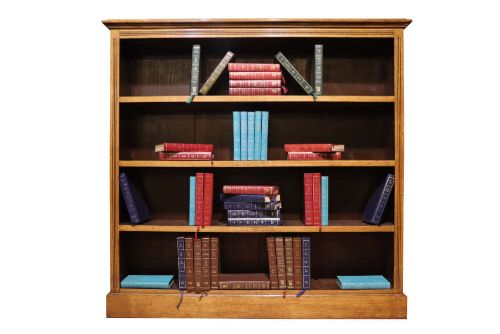
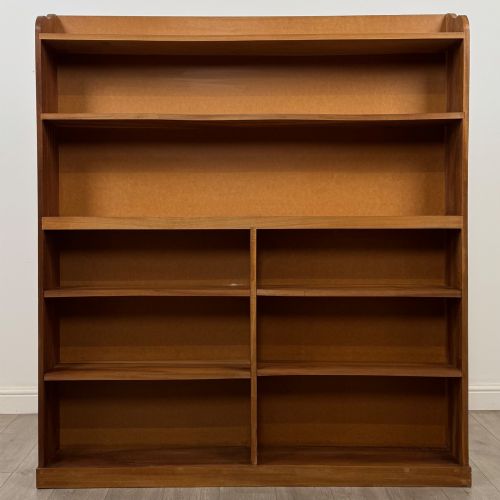
Large open display shelves bring immediate presence to a room, offering generous timber surfaces for heavy volumes and treasured objects.
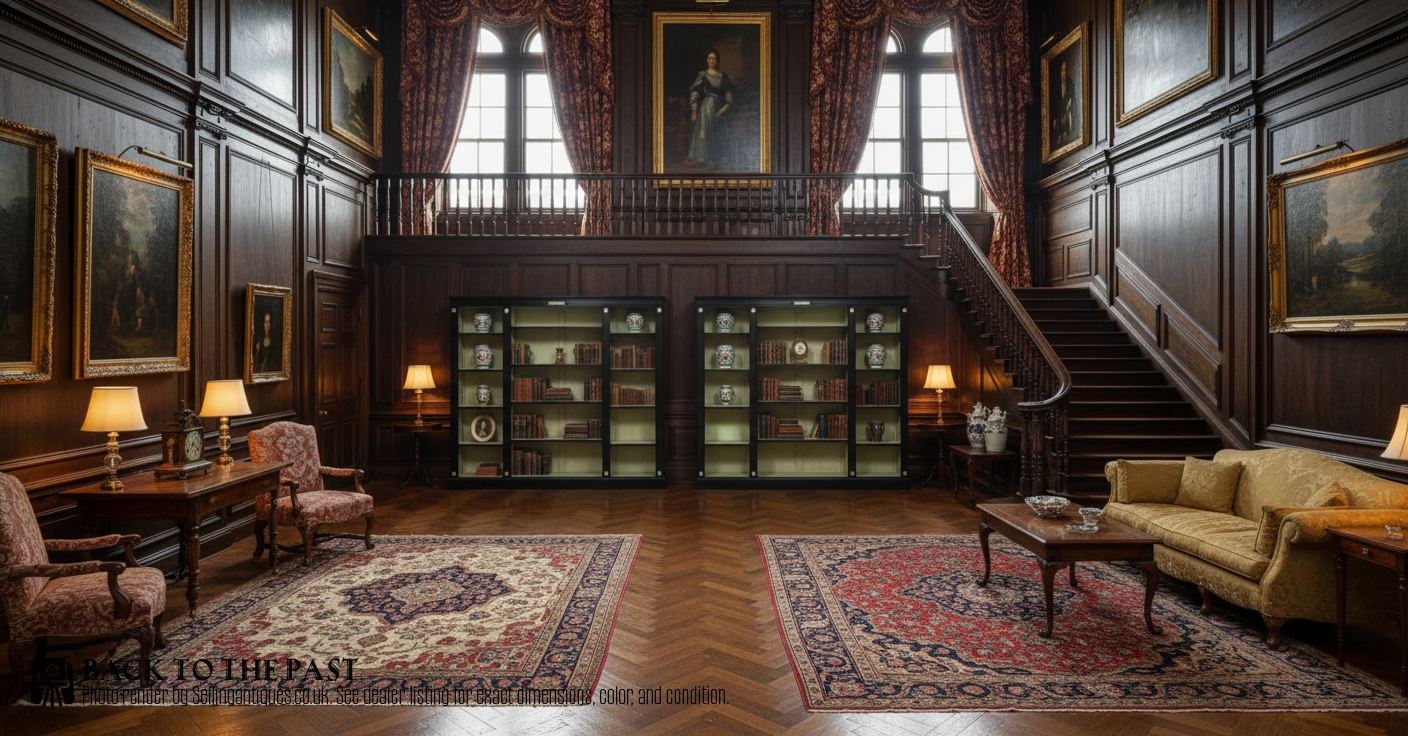
Large Open Display Shelves
Large open display shelves emerge primarily as bookcases and shelving units spanning the nineteenth century and the Edwardian period, often constructed for libraries, drawing rooms and studies. These pieces provide uninterrupted access to books and ornaments, prioritising visibility over enclosed storage.
Origins stretch across British workshops as well as continental and international makers, encompassing French provincial pieces, Japanese cabinets, and Anglo Indian padauk items. Mahogany, oak and walnut dominate the offerings, matched with simpler pine and softwood constructions.
Materials and Construction
Makers utilised solid timbers and figured veneers, applying mahogany, oak, walnut and burr walnut across the principal structures. Secondary woods such as pine and softwood appear in backing boards and internal linings.
Joinery methods rely on traditional pegged and dovetailed joints designed to support heavy shelving loads over long spans. Adjustable shelf mechanisms, using brass studs or wooden ratchets, allow customisation of internal tiers.
Surface treatments range from wax finishes on pine and oak to french polish on mahogany and walnut. Occasional decorative elements incorporate brass hardware, ormolu mounts, marquetry inlay and carved solid wood.
Periods represented on this page range from early and mid-Victorian eras through the Edwardian period into the early twentieth century.
Assessing Quality
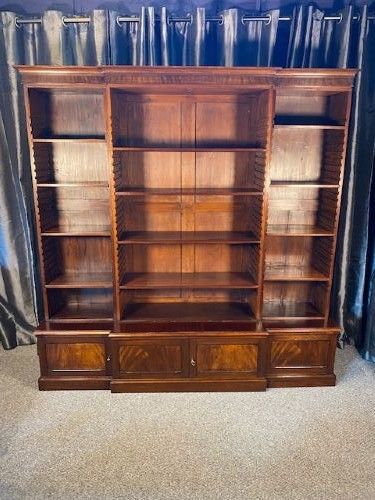
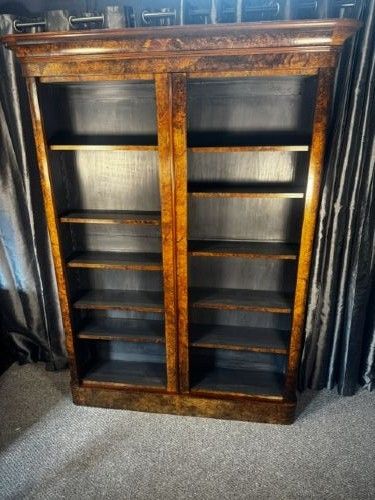
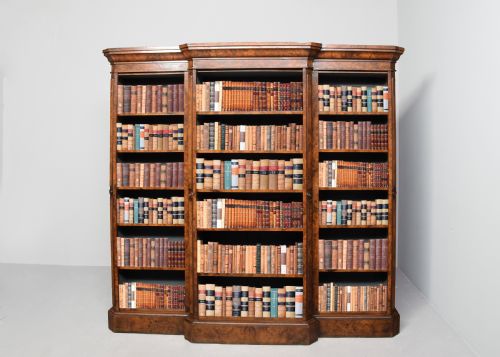
Construction depth dictates structural integrity, separating substantial breakfront library bookcases with heavy plinths from lighter utility shelving. The presence of dense solid hardwoods or meticulously matched burr walnut veneers marks out superior commissions.
Internal engineering defines practical merit, particularly the precision of adjustable shelving systems and the stability of upright columns. Pieces designed by documented makers or possessing bespoke architectural proportions command attention through refined detailing.
Timber selection and grain continuity across wide surfaces reveal the cabinet maker's skill. Fine finishing, including hand-applied polish and restrained decorative inlay, distinguishes individual craftsmanship from standard workshop production.
Gillows·Goodhall Lamb and Heighway·Sir Charles Barry
The Large Open Display Shelves Glossary
- Breakfront
- A piece of furniture featuring a central section that projects forward from the flanking wings. This configuration adds architectural depth to large bookcases.
- Burr Walnut
- Timber taken from the abnormal growth of a walnut tree, yielding highly figured, swirling grain patterns. Cabinet makers prized this material for veneering prominent surfaces.
- Credenza
- A sideboard or cabinet designed for storage and display, often low in profile. In nineteenth-century examples, these pieces occasionally incorporate open shelving or mirrored backs.
- Ormolu
- Gilded bronze mounts applied as decorative ornaments to furniture. This technique appears on high-status nineteenth-century pieces alongside fine timber veneers.
- Shodona
- A Japanese tiered display cabinet or stand popular during the late nineteenth century. These items feature asymmetrical shelving arrangements for displaying ceramics and curios.
Large Open Display Shelves: Frequently Asked Questions
How do I style large open display shelves?
Balance heavy folios and upright books with ceramic vessels and sculptural objects across the available tiers. Leave pockets of empty space to prevent visual crowding and let the timber grain remain visible.
Anchor taller sections with substantial volumes at the base while placing lighter decorative items higher up. Varying the depth and height of objects creates rhythm along the length of the shelves.
Are the shelves adjustable on these bookcases?
Many nineteenth-century and Edwardian open bookcases incorporate adjustable shelving mechanisms using brass pins, side ratchets or wooden notches. This adaptability accommodates varying book heights and collection sizes.
Checking the specific listing details confirms whether the internal uprights retain their original adjustment system. Fixed shelves appear more frequently in rustic pine or specific regional formats.
How do I care for antique timber shelving?
Maintain a stable room environment away from direct sunlight and sudden radiator heat to prevent timber splitting or veneer lifting. Dust regularly with a dry, soft cloth to protect the polished surface.
Apply traditional beeswax sparingly when the wood appears dry, buffing it gently to preserve the natural lustre. Avoid placing damp items or unsealed pots directly onto the wood.