




Pair Victorian Shelving Units
These pair victorian shelving units bring matched utility and period presence into a room, offering dual display surfaces crafted during the nineteenth century.
Pair Victorian Shelving Units
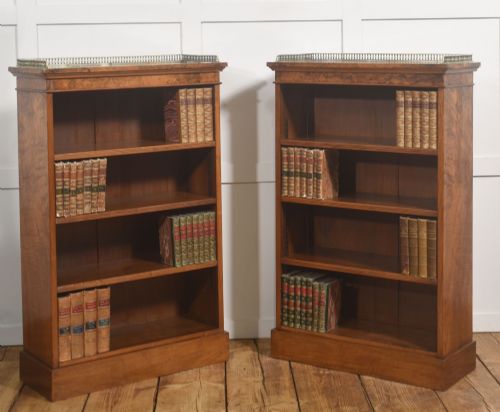
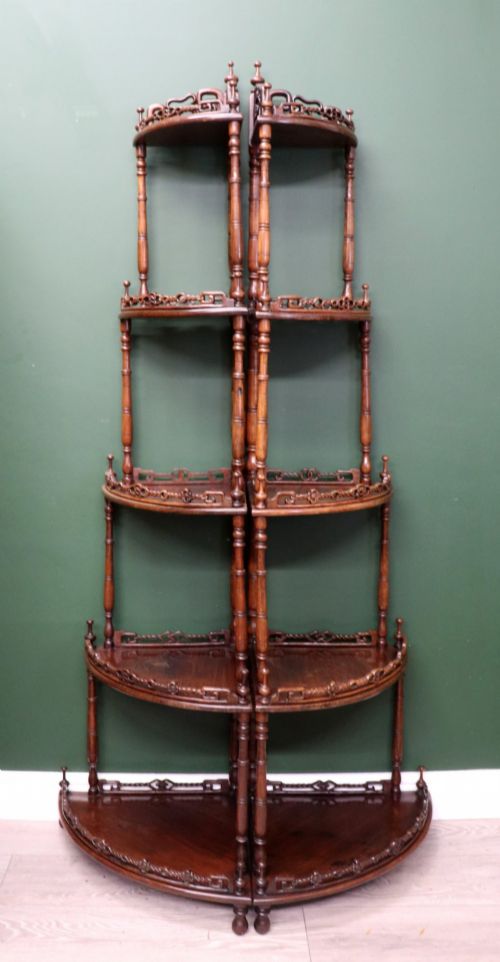
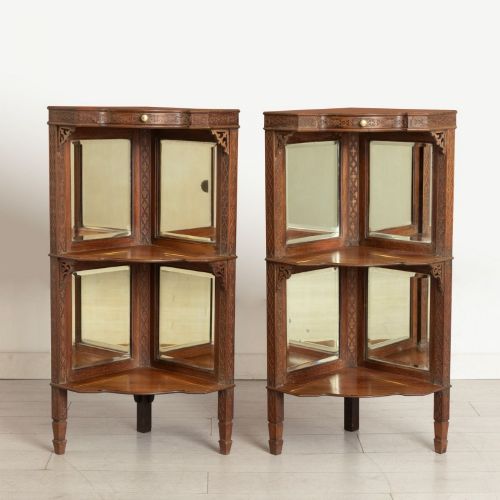
When searching for pair victorian shelving units, buyers encounter dual configurations designed for display and storage, predominantly appearing as bookcases, whatnots, wall shelves, corner shelves, and corner display cabinets. These pieces span the nineteenth century, with specific examples dated across the 1860s, 1870s, and 1880s.
The aesthetic expressions on this page range from standard Victorian and French Country to Victorian Aesthetic Movement and Regency styles. Matching pairs are particularly sought after for symmetry in interior arrangement, often taking the form of open bookcases or tiered whatnots intended for corner or wall placement.
Materials and construction
Makers of these nineteenth-century pieces utilised hardwoods including mahogany, walnut, burr walnut, rosewood, and ebonised timber, alongside painted wood and pine. Construction often incorporates adjustable shelving elements and architectural tiered tiers, designed to hold books or ornamental objects securely.
Decorative detailing on these items includes brass hardware, mirror glass inserts, and fabric elements, reflecting the diverse craftsmanship of the period. Painted finishes and specialised wood selections such as burr walnut provide distinct visual textures across the different cabinet and whatnot forms.
Pair Victorian Shelving Units Retail Price Guide 2026
Typical asking prices for pair victorian shelving units among the pieces listed under this phrase on Sellingantiques today, from the lower quarter to the upper quarter. They describe what is for sale here now, not the wider market.
Several pieces feature adjustable shelving, proving that nineteenth-century readers struggled just as much with awkward book heights as modern collectors do.
Distinguishing quality
The distinction between standard examples and superior pieces rests upon the choice of timber figure, such as richly grained burr walnut or select mahogany, and the refinement of the joinery. Finer specimens display meticulous attention to proportion, especially in multi-tiered whatnots and adjustable library bookcases.
Makers known for high-standard cabinet work, alongside pieces featuring integrated display cabinets with mirror glass or specialised ebonised finishes, represent the upper tier of nineteenth-century production. The coherence of the matching pair further elevates the standing of the pieces.
Edwards & Roberts·Robert Strahan·Wedgwood
The Pair Victorian Shelving Units Glossary
- Whatnot
- A tiered movable piece of furniture with shelves for displaying ornaments, books, or small objects. These items typically feature three or more levels supported by slender uprights or columns.
- Burr Walnut
- A veneer taken from the gnarled growth of a walnut tree, highly prized for its swirling, decorative grain patterns. This material was frequently utilised on high-grade Victorian cabinetry.
- Ebonised
- Wood finished with a dark stain or lacquer to imitate expensive ebony. This technique was popular in nineteenth-century design, particularly within Aesthetic Movement pieces.
- Open Bookcase
- A bookcase lacking doors, allowing immediate access to shelved volumes. Nineteenth-century variants often incorporated adjustable shelving to accommodate books of varying heights.
- Corner Display Cabinet
- A specialised cabinet shaped to fit into the corner of a room, maximising floor space while providing glazed or open shelving for collections.
Pair Victorian Shelving Units: Frequently Asked Questions
How were nineteenth-century shelving units used?
These pieces served primarily in libraries, parlours, and drawing rooms for the organised storage of bound volumes and the display of decorative ceramics or ornaments. Multi-tiered whatnots were typically placed in corners or against walls to utilise domestic space efficiently.
The inclusion of adjustable shelves in library bookcases allowed households to adapt the internal configuration as their book collections expanded over time.
How do I style a matching pair?
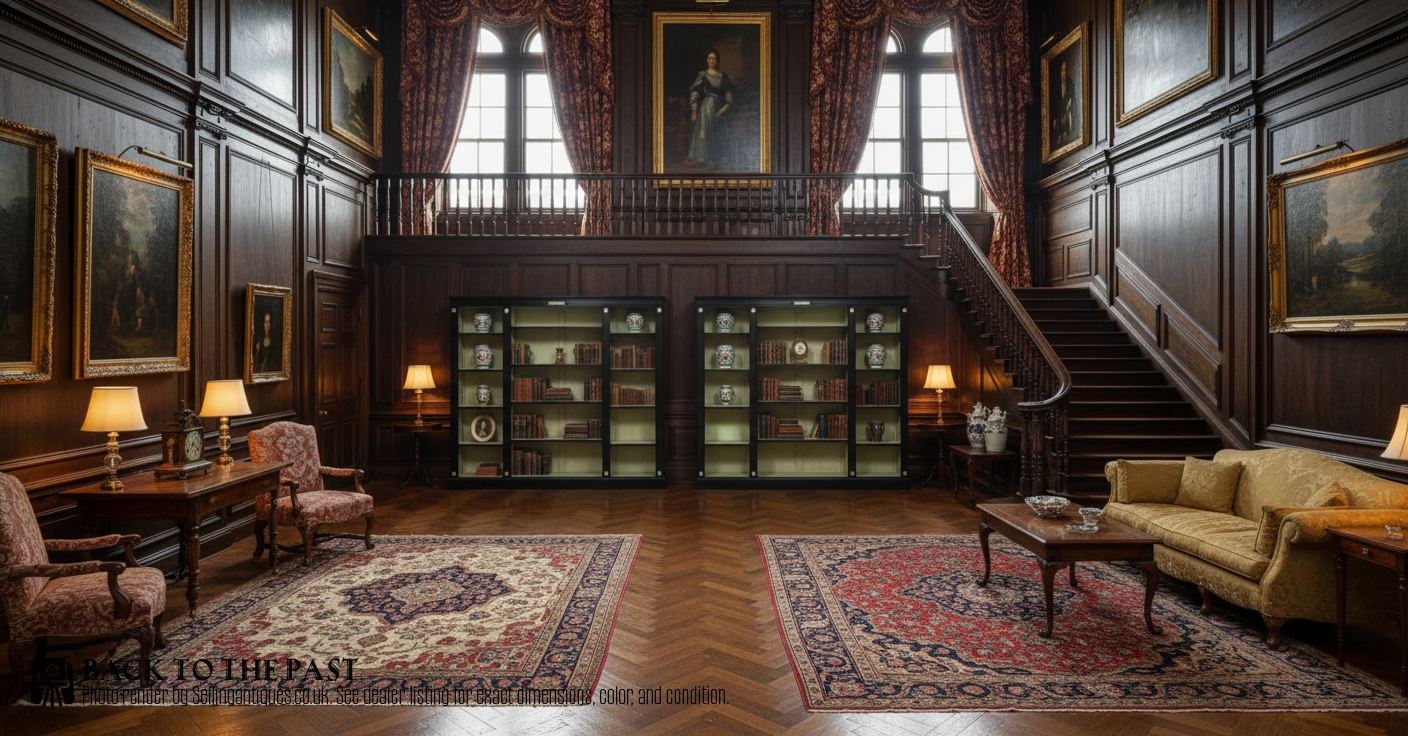
Placing matching bookcases or whatnots symmetrically on either side of a fireplace, window, or doorway creates visual balance within a room. This arrangement establishes a formal anchor for the interior space.
Alternatively, positioning the two units in separate areas of an interconnected room maintains a cohesive design theme without requiring strict mirror-image placement.
What distinguishes Victorian from Regency styles here?
Regency-influenced pieces within this selection often display cleaner classical lines and restraint in ornamentation, reflecting earlier nineteenth-century design principles. Victorian examples generally embrace richer wood figures, more pronounced architectural tiers, and varied surface treatments.
Subtle shifts in proportions and decorative motifs help differentiate the transitional pieces produced across the middle decades of the century.
Are these shelves suitable for heavy books?
Solid hardwood construction in materials like mahogany and walnut provides robust support for standard collections of books. Adjustable library bookcases were specifically engineered to bear the weight of heavy volumes.
Lighter whatnots and wall-mounted versions are better suited for display items, smaller editions, and decorative objects rather than dense rows of large folios.