

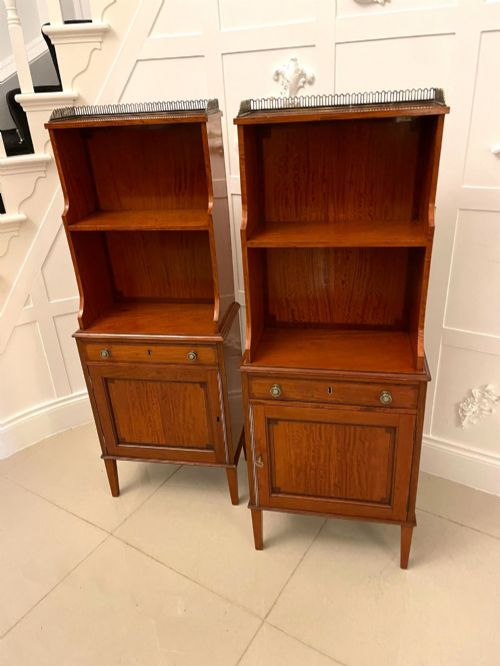
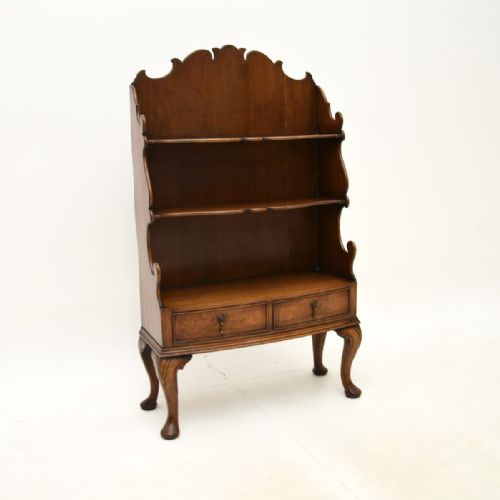
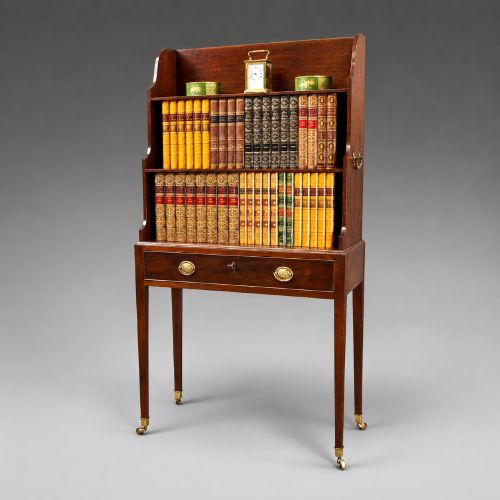
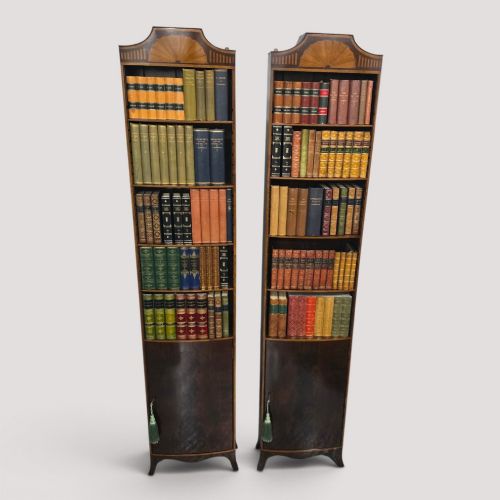

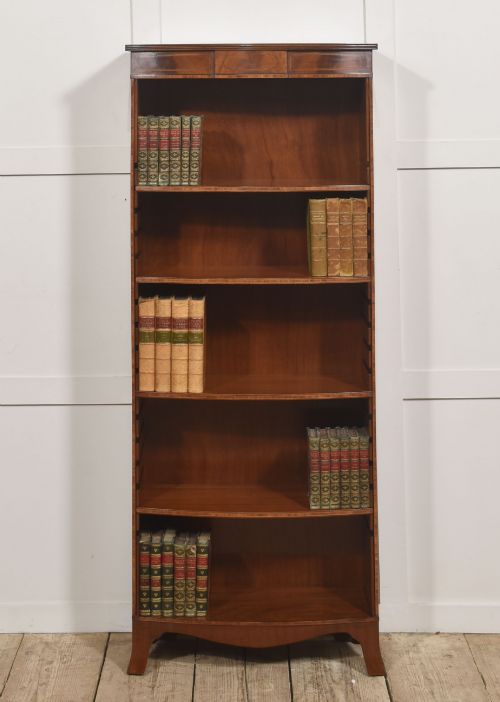
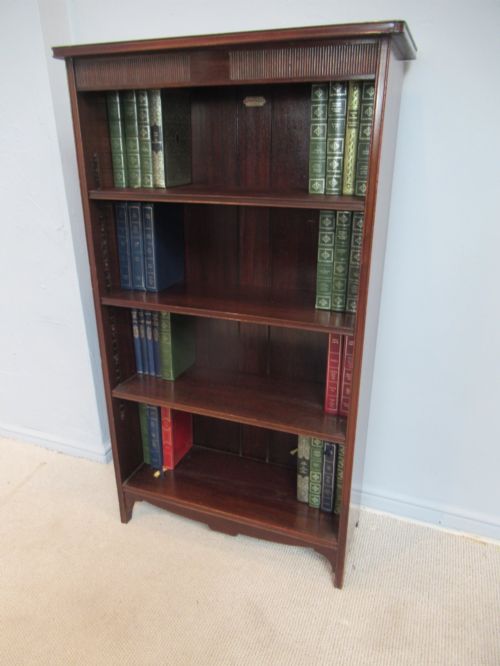
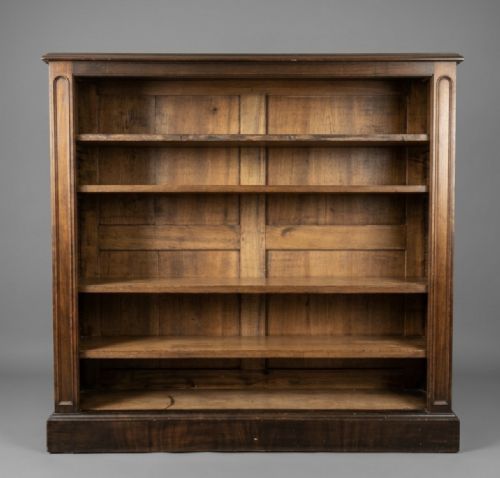
Georgian Style Bookshelf
A georgian style bookshelf brings architectural proportion and rich timber grain to a room, offering practical display space for a collection.
Georgian Style Bookshelf
When you search for a georgian style bookshelf, you encounter pieces designed to hold volumes while adding formality to an interior. The selection ranges from compact cascading tiers to large breakfront library pieces.
You meet many revival interpretations dating from the Edwardian era and the early twentieth century, alongside genuine eighteenth and nineteenth century examples. Mahogany predominates, accompanied by walnut, satinwood, and yew wood.
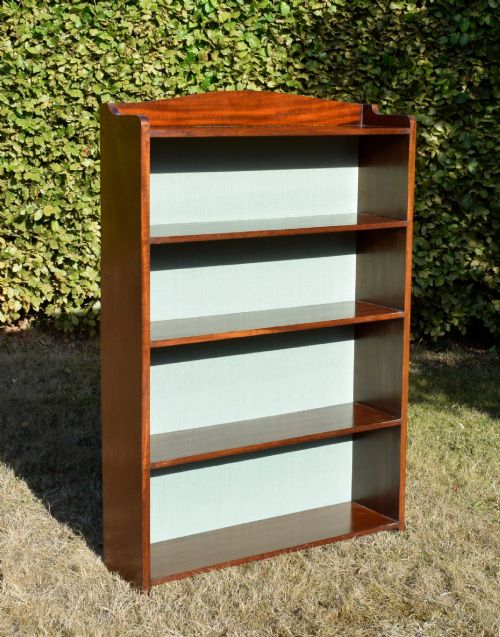
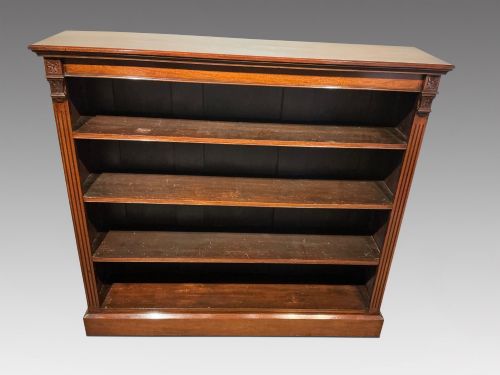
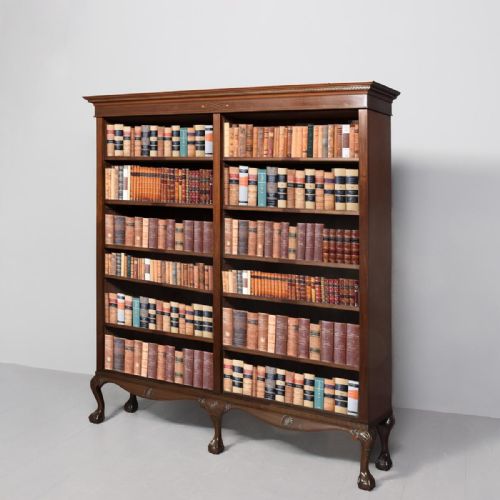
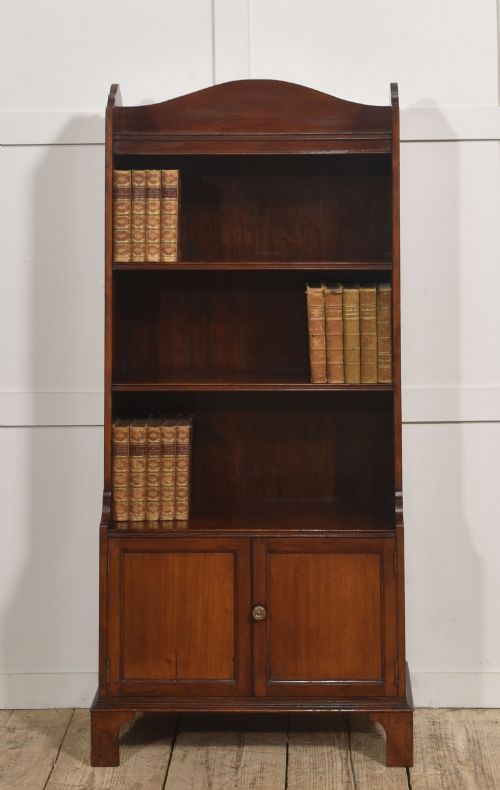
Formats vary from open shelving to cabinets with lower cupboards or drawers. Architectural cornices and slender proportions define the aesthetic across the centuries represented.
How they were made
Cabinet makers utilised solid timbers and choice veneers, applying mahogany, burr walnut, and satinwood to structural carcases of pine or oak. Grain matching creates movement across expansive backboards and drawer fronts.
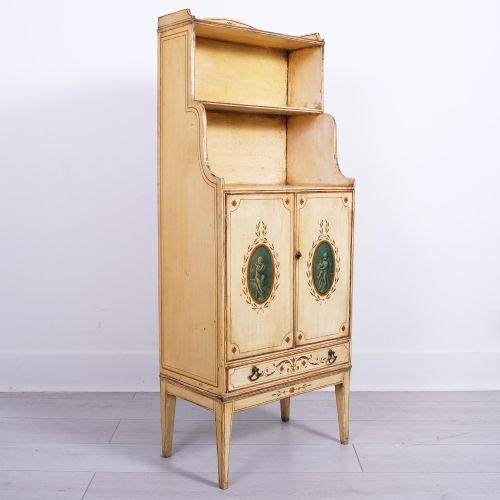
Surfaces receive traditional polishing techniques that accentuate the natural figure of the wood. Simulated paint finishes also appear, mimicking finer timbers through decorative brushwork.
Georgian Style Bookshelf Retail Price Guide 2026
Typical asking prices for georgian style bookshelf among the pieces listed under this phrase on Sellingantiques today, from the lower quarter to the upper quarter. They describe what is for sale here now, not the wider market.
The listings on this site feature mahogany, walnut, satinwood, and oak across periods spanning from the eighteenth century to the 1930s.
What varies in quality
The choice of timber underpins the distinction between standard production and exceptional examples. Highly figured burr walnut, rich mahogany, and finely matched satinwood veneers elevate the visual impact of a piece.
Execution of decorative details such as crossbanding, inlaid friezes, and carved mouldings demonstrates the maker's skill. Crisp joinery in the shelving supports and drawer construction ensures enduring stability.
Gillows·Waring and Gillows
The Georgian Style Bookshelf Glossary
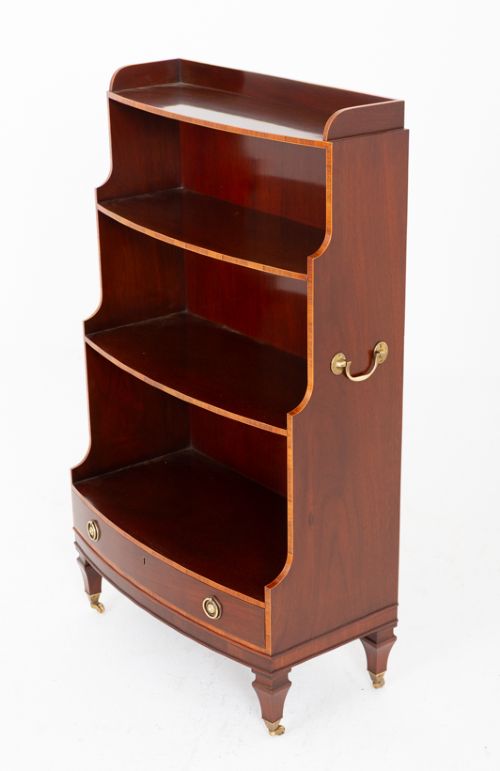
- Waterfall bookcase
- A tiered shelving unit where each successive shelf steps back from the one below, creating a cascading silhouette.
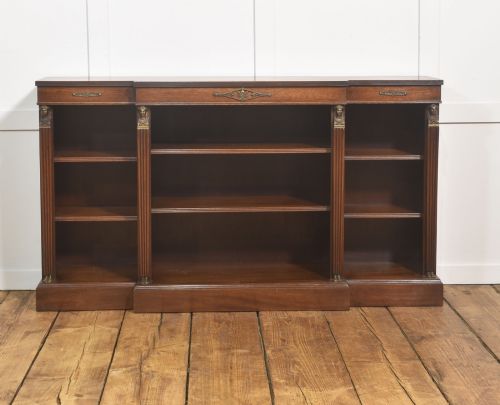
- Breakfront
- A cabinet design where the central section projects forward from the flanking wings, adding architectural depth.
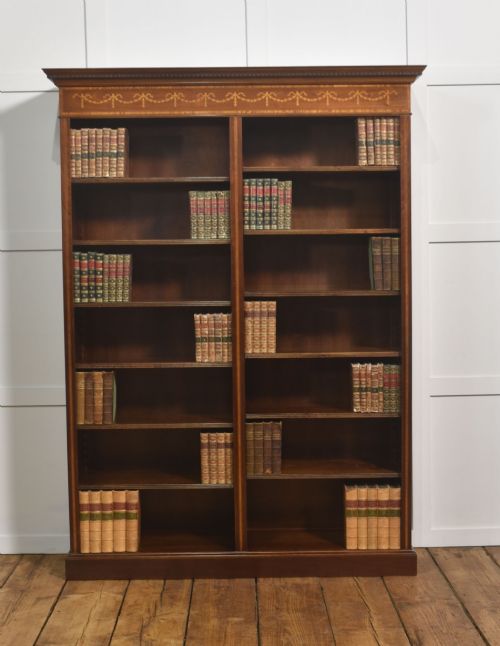
- Frieze
- The broad horizontal band situated just below the cornice, often decorated with inlay or contrasting veneers.
- Crossbanding
- A decorative border technique where veneer strips run perpendicular to the main grain of the panel.
- Stringing
- Fine inlaid lines of contrasting wood used to create geometric borders around panels and drawer fronts.
Georgian Style Bookshelf: Frequently Asked Questions
How do I distinguish revival pieces from eighteenth century originals?
Revival pieces often date from the Edwardian period or the early twentieth century, carrying distinct machine-sawn timber characteristics.
Original eighteenth century examples show hand-tool marks, older secondary woods, and natural timber shrinkage consistent with age.
Where should I place a breakfront bookcase?
A breakfront bookcase requires a principal wall in a study, library, or drawing room where its architectural proportions can be appreciated.
Ensure adequate clearance for any flanking furniture, as the central section projects outward into the room.
Are the shelves adjustable on these bookcases?
Many open bookcases and cabinets feature adjustable shelving supported by wooden rack strips or brass pins.
This allows you to alter shelf heights to accommodate books of varying sizes.