






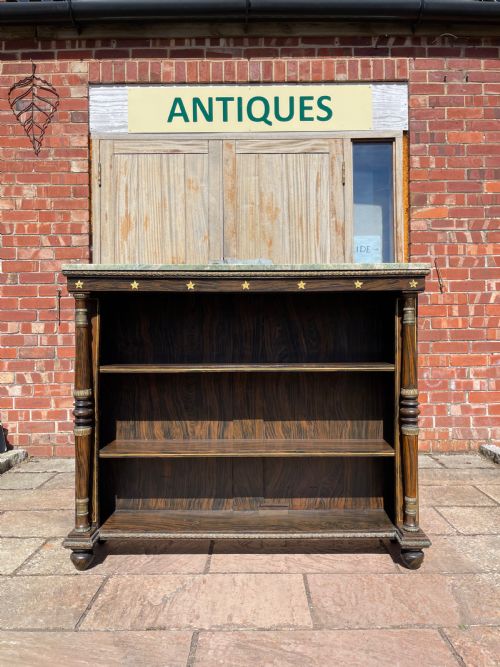
Low Rosewood Bookshelf
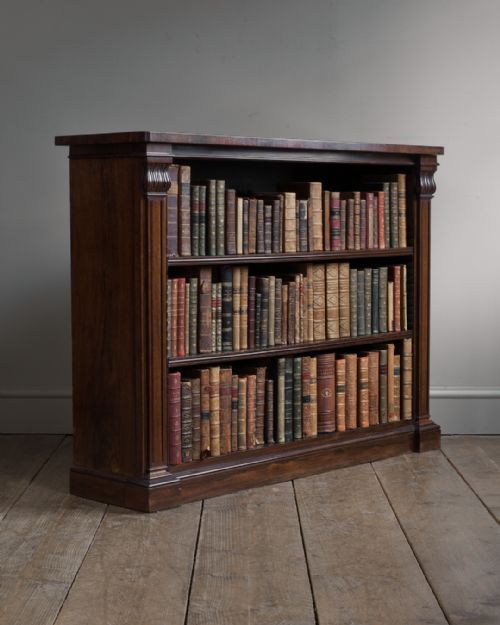
A low rosewood bookshelf brings rich grain and accessible display height to a room, offering both open shelving and compact proportions.
Low Rosewood Bookshelf
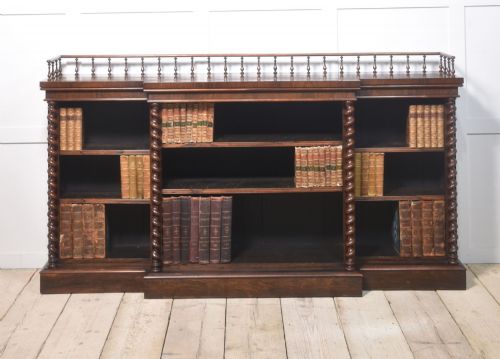
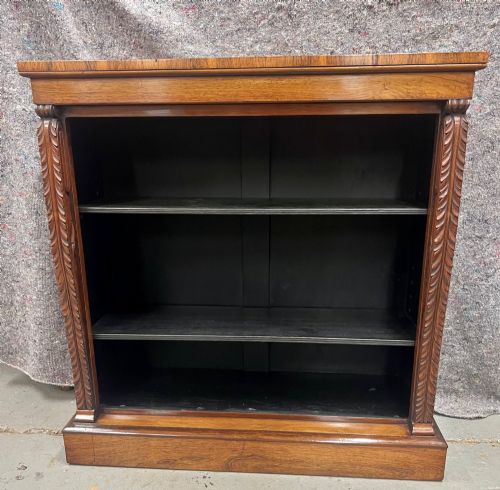
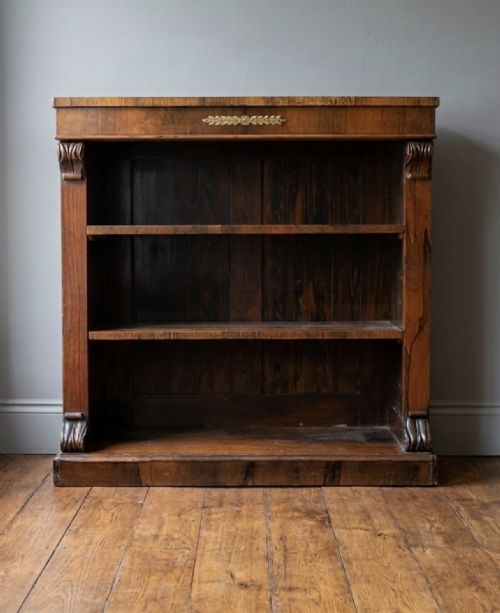
When you search for a low rosewood bookshelf, you encounter open bookcases, waterfall shelves, and side cabinets designed to sit comfortably below eye level. These pieces predominantly date from the nineteenth century, spanning the Regency, William IV, and Victorian periods.
The most common formats on this page are open bookcases with adjustable shelves, alongside occasional breakfront designs and waterfall tiers. Most examples utilise solid timber or rosewood veneer over secondary woods, often paired with contrasting materials like marble or brass.
Origins range from standard English cabinetmaking of the Georgian and Victorian eras to more distinctive Anglo-Indian interpretations. Buyers select these items to hold volumes while introducing deep, warm timber tones to a study or drawing room.
How they were made
Cabinetmakers constructed these bookcases using dense tropical hardwoods, frequently applying rosewood veneer over a softwood or oak carcase to achieve rich surface figuring. Brass inlay, parcel gilt accents, and carved corbels frequently embellish the frame.
Many examples incorporate fitted marble tops in white or pink hues, while specialised variants feature leather-lined dummy books or tiered waterfall graduations. Shelving was routinely made adjustable using pegged wooden supports or brass rack strips.
Low Rosewood Bookshelf Retail Price Guide 2026
Typical asking prices for low rosewood bookshelf among the pieces listed under this phrase on Sellingantiques today, from the lower quarter to the upper quarter. They describe what is for sale here now, not the wider market.
Listings span the nineteenth century, capturing Regency, William IV, and Victorian periods alongside Anglo-Indian craftsmanship.
What varies in quality
Quality reveals itself in the selection of the timber veneer and the precision of subsidiary details such as brass inlay and carved corbels. Superior pieces display continuous, well-matched grain patterns across the front fascia rather than haphazard patching.
Structural integrity also separates standard items from finer works, evident in the snugness of joints, the true alignment of breakfront carcases, and the smooth operation of adjustable shelving systems. The presence of integrated elements like original marble tops or leather detailing elevates the standing of the piece.
The Low Rosewood Bookshelf Glossary
- Rosewood
- A dense, heavily figured timber prized for its dark purple-brown grain and polished lustre. It was widely utilised across Regency and Victorian cabinetmaking.
- Waterfall bookcase
- A set of open shelves that steps back progressively from bottom to top, creating a cascading profile. These pieces often feature graduated tiers.
- Breakfront
- A cabinet design where the central section projects forward from the flanking wings. This architectural arrangement adds depth and formal presence to low bookcases.
- Corbel
- A projecting bracket carved from wood, supporting the upper shelf or cornice. They appear frequently on mid-nineteenth-century library furniture.
- Goncalo Alves
- An exotic hardwood with striking variegated grain, sometimes grouped or confused with rosewood in nineteenth-century furniture. It yields a remarkably dense and heavy carcase.
Low Rosewood Bookshelf: Frequently Asked Questions
How do I date a rosewood bookcase?
Dating relies on stylistic markers and construction methods evident in the piece. Regency and William IV examples often feature brass inlay, parcel gilt, or architectural corbels, whereas later Victorian items tend toward simpler open formats.
Secondary woods inside the carcase and the mechanism used for adjustable shelving also offer clues. Examining the depth of the rosewood veneer and any accompanying marble tops helps narrow the decade of production.
Are the shelves usually adjustable?
Many nineteenth-century open bookcases feature movable shelving supported by wooden bearers or early metal ratchets. This practicality allowed owners to accommodate varying heights of volumes.
When inspecting a piece, check whether the support system appears original to the carcase. Fixed shelves do occur, particularly in smaller waterfall designs or specific cabinet configurations.
What is an Anglo-Indian rosewood bookcase?
Anglo-Indian pieces reflect furniture made in India during the British colonial period, combining traditional British forms with intricate local carving techniques. They frequently showcase dense floral or foliage motifs across the rosewood surfaces.
These items stand apart through their deeply sculpted decoration and distinct regional craftsmanship. They introduce a different sculptural quality compared to standard domestic workshop production.
How should I care for rosewood veneer?
Rosewood benefits from stable indoor humidity and protection from direct sunlight, which can fade the deep natural tones of the timber. Regular dusting with a soft, dry cloth preserves the polished finish.
Avoid placing damp objects or excessive moisture directly onto the wood or any integrated marble surfaces. Gentle application of appropriate natural waxes helps maintain the lustre without buildup.