
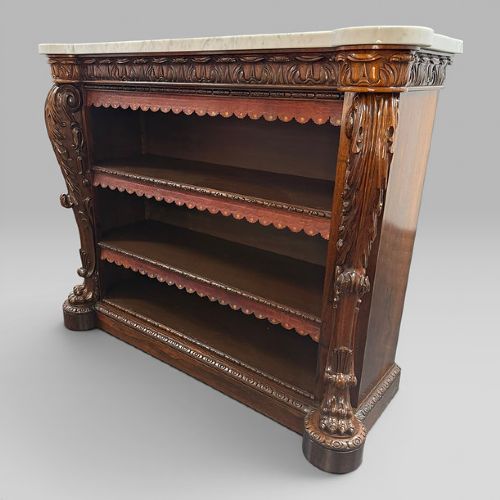


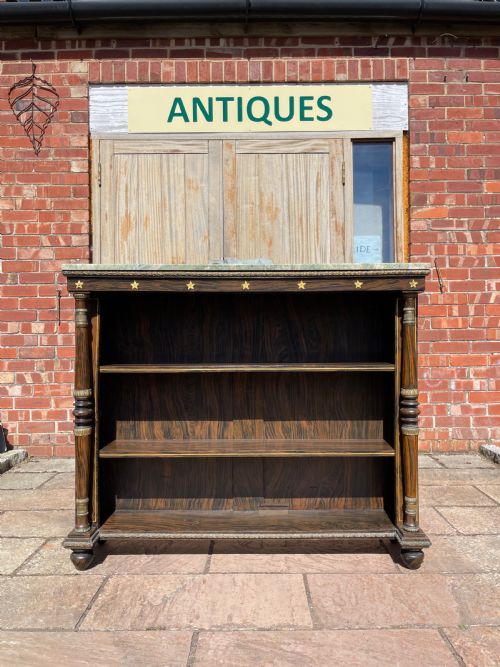


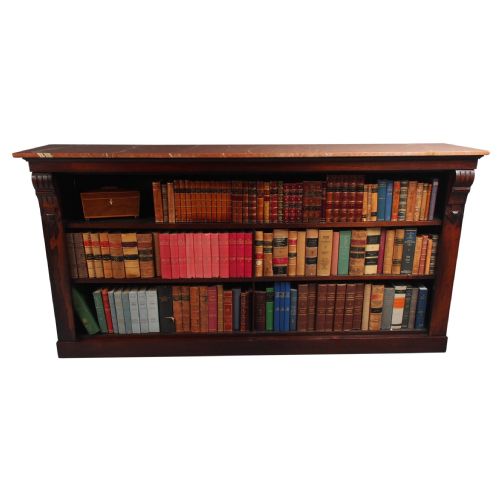
Marble Top Open Bookcase
A marble top open bookcase brings solid weight and accessible shelf space together, making it a practical centrepiece for any study or drawing room.
Marble Top Open Bookcase
A marble top open bookcase is a low cabinet designed to hold books while providing a sturdy stone surface for display. You will most frequently meet rosewood and mahogany examples dating from the nineteenth century, spanning Regency, William IV, and Victorian periods.
The form often crosses over with side cabinets and dwarf bookcases, occasionally featuring open fronts or leather dummy books. Pieces originate from British workshops as well as French makers, reflecting a demand for formal yet accessible library furniture.
Makers utilised various timbers, mounting marble slabs in white, pink, mottled, or painted faux porphyry variations. These low bookcases sit comfortably beneath windows or against panelled walls without blocking light or views.
How They Were Made
Cabinet makers constructed these pieces primarily using rosewood and mahogany, often applying rosewood veneer over softwood carcases. Satinwood inlay and brass or ormolu mounts added decorative contrast to the dark timbers.
Stone masons shaped the marble tops to fit each cabinet precisely, providing a cool and resilient horizontal surface. Parcel gilding, gold leaf, and simulated paint techniques finished the ornamental details on select pieces.
Some nineteenth-century bookcases feature clever leather dummy books to conceal storage or simply amuse visitors.
What Varies in Quality
The distinction between standard and exceptional pieces lies in the choice of timber figure and the integration of the stone top. Elaborate ormolu mounts, parcel gilding, and fine satinwood inlay elevate the visual weight of a cabinet.
Attribution to known workshops or superior proportions, such as dwarf heights or breakfront forms, separate standard utility furniture from high Regency and William IV commissions.
Gillows·Collinson and Lock·Durand
The Marble Top Open Bookcase Glossary
- Ormolu
- Gilded bronze mounts applied for decorative effect. These brass and bronze ornaments appear frequently on French and Regency furniture.
- Rosewood
- A dense, dark timber with distinct figuring utilised extensively during the Regency and William IV periods. It provides a rich ground for brass inlay and gilding.
- Bibliotheque
- A French term for a large bookcase or cabinet. These pieces often feature glass doors or open shelving with stone tops.
- Parcel Gilt
- Partially covered or accented with gold leaf. This technique highlights carved details and mouldings against dark wood.
- Dwarf Bookcase
- A low bookcase designed to sit below picture rail height. These low proportions keep walls open and accommodate display objects on top.
Marble Top Open Bookcase: Frequently Asked Questions
What are marble top open bookcases used for?
These low cabinets hold frequently read volumes while providing a durable surface for lamps, clocks, or decorative objects. Their open fronts allow for easy access to books without the obstruction of doors.
Placed in studies or drawing rooms, they offer functional storage that maintains an open feel in the interior space.
How do I care for the marble top?
Wipe the stone surface regularly with a soft, damp cloth to remove dust and prevent grit from scratching the polish. Avoid acidic liquids like citrus juice or vinegar, which can etch marble.
Use protective coasters under glasses and heavy items to preserve the finish of the stone over years of daily use.
How do I distinguish Regency from Victorian examples?
Regency pieces often display crisper classical proportions, parcel gilding, and fine ormolu mounts on rosewood. They frequently incorporate architectural details drawn from classical antiquity.
Victorian examples tend to use mahogany or walnut alongside heavier mouldings and more robust overall proportions. Construction methods also shift slightly as industrial techniques advanced through the nineteenth century.
Are these bookcases suitable for modern rooms?
Their low profile makes them ideal for contemporary spaces, fitting easily beneath windows or television screens. The combination of warm timber and cool stone integrates smoothly into diverse interior schemes.
They provide practical shelving without dominating the vertical height of a room.