
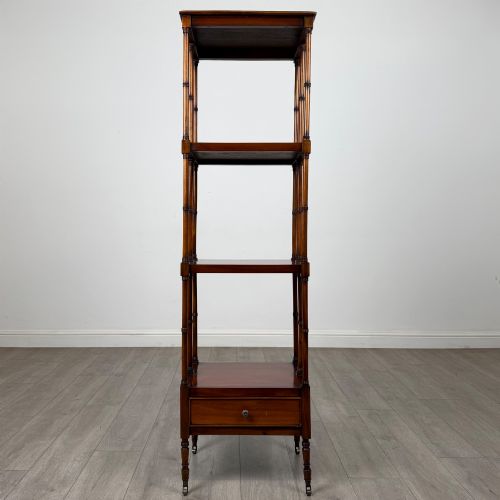
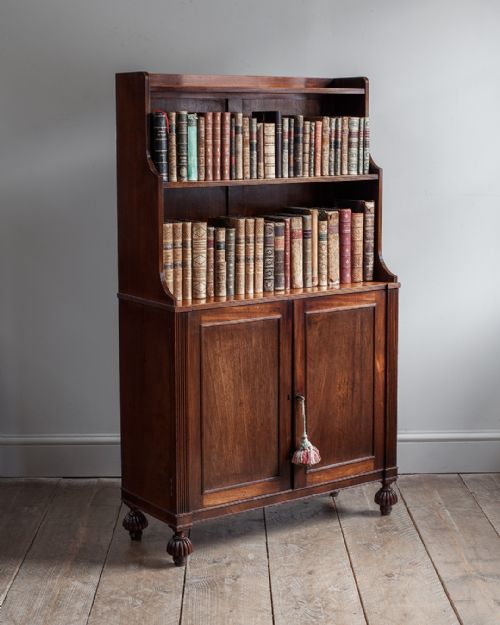
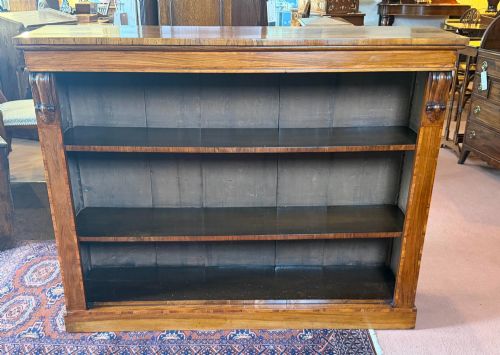
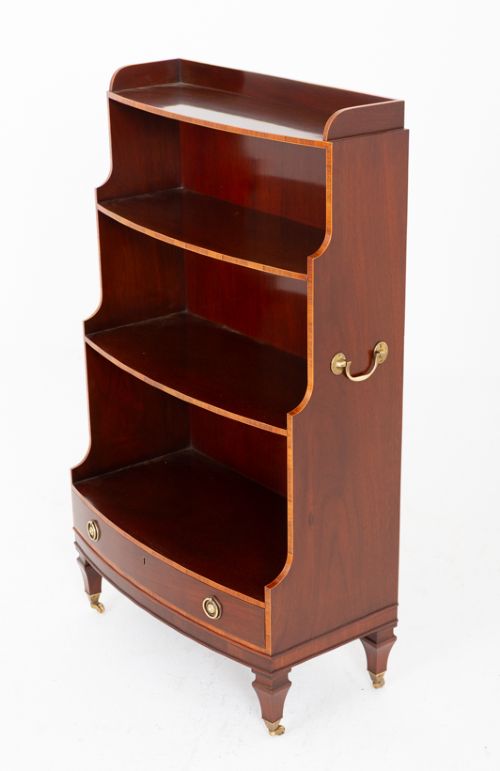
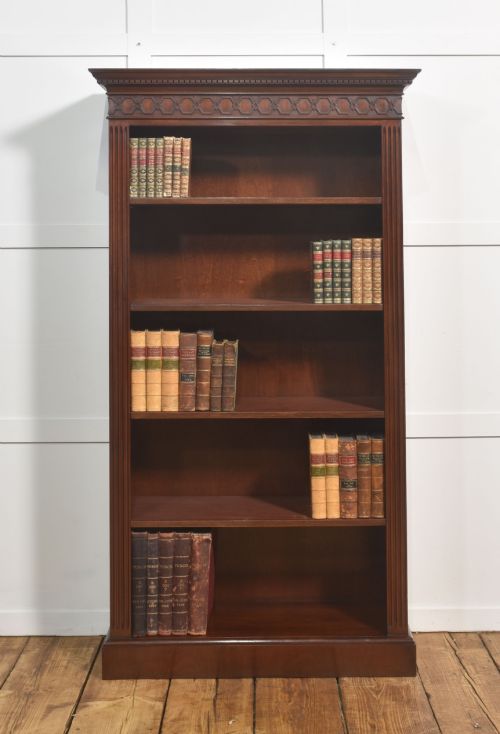
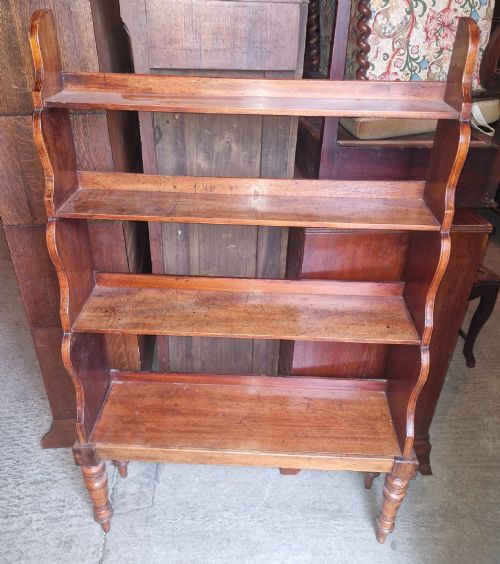
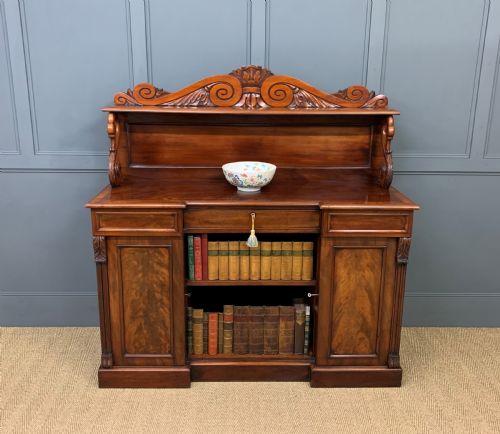
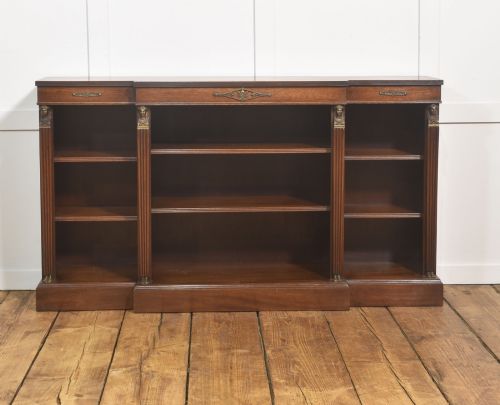
Regency Open Shelves
These regency open shelves combine architectural proportion with accessible storage, making them a practical centrepiece for any room.
Regency Open Shelves
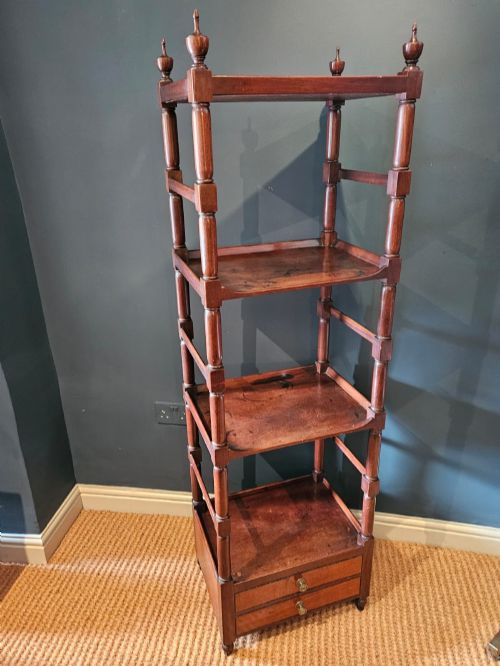
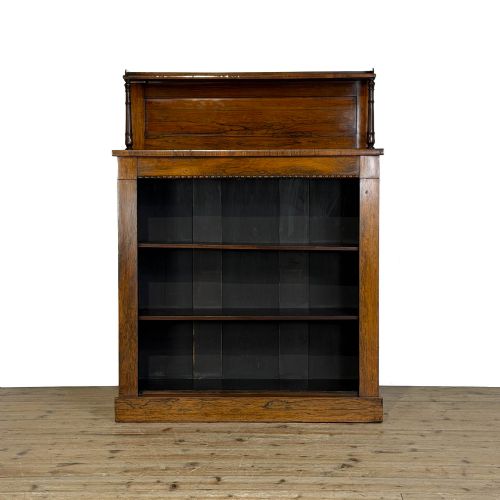
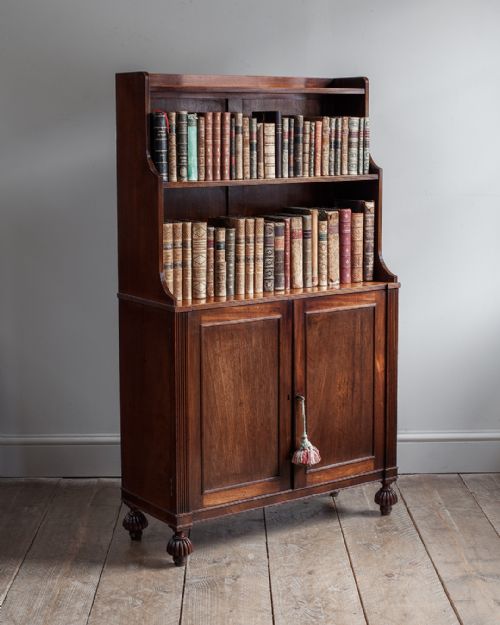
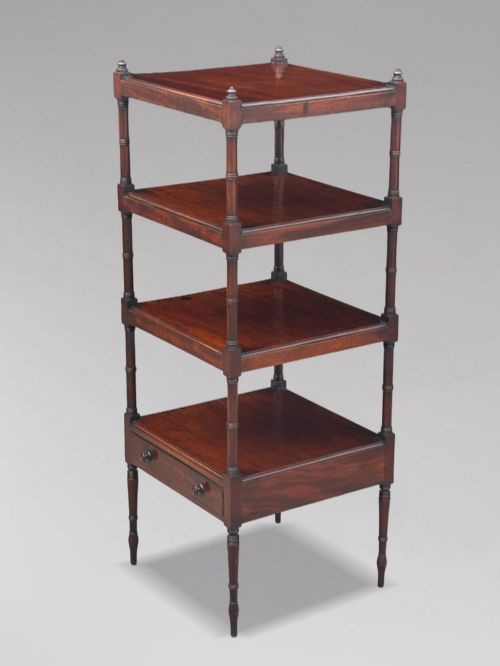
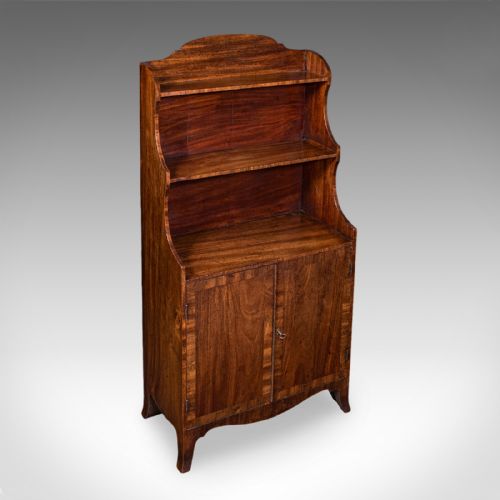
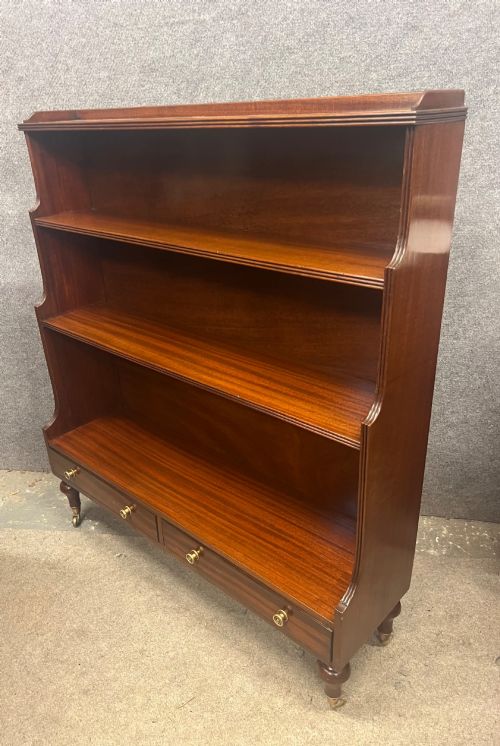
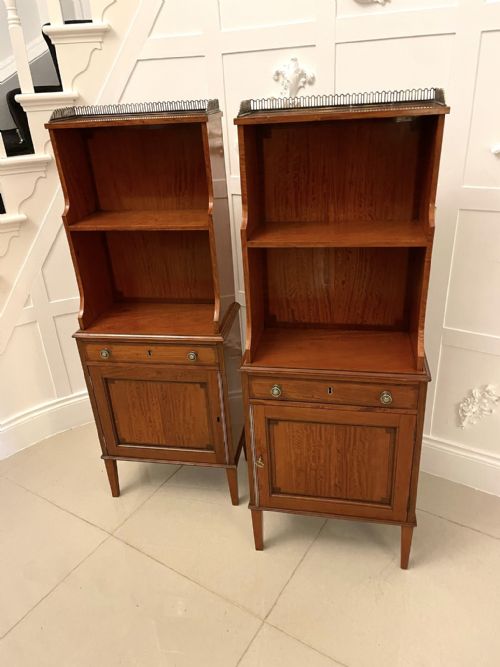
When you search for regency open shelves, you enter a category of low bookcases, tiered what-nots, and wall-mounted display units designed for everyday utility. The pieces seen here span the 19th century alongside later revival periods, bringing classical architectural lines into domestic spaces.
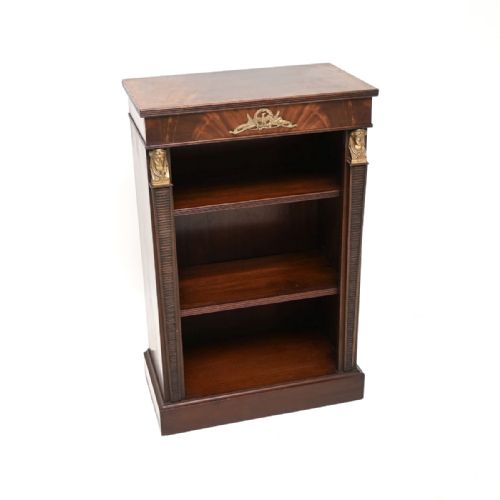
Mahogany and rosewood dominate the forms, frequently appearing in dwarf proportions or cascading waterfall tiers. You will encounter freestanding library shelves alongside pieces featuring lower cupboards or brass inlays, reflecting the versatile demands of period interiors.
How they were made
Cabinet makers utilised dense tropical hardwoods, selecting figured mahogany, flame mahogany, and rich rosewood for visible surfaces. These timbers were often finely veneered over secondary woods, providing stable foundations for tiered shelving and breakfront carcasses.
Metalwork played a distinct structural and decorative role, incorporating brass inlays, ormolu mounts, and delicate gallery rails. Marble tops also appeared on select pieces, adding weight and a cool tactile contrast to the polished timber frames.
Listings feature pieces spanning the 19th century alongside Edwardian and 1930s revival periods, executed in mahogany, rosewood, oak, and pine.
What varies in quality
The distinction between standard utility pieces and exceptional items lies in the choice of timber and the crispness of the joinery. Selected grain patterns in flame mahogany or matched rosewood veneers elevate the visual impact of a bookcase significantly.
Refinement in secondary details, such as precision in brass inlay work and the integration of adjustable shelving mechanisms, separates workshop standards. Pieces bearing attribution to established makers display a higher degree of sculptural confidence in their mouldings and tier supports.
Gillows
The Regency Open Shelves Glossary
- Waterfall bookcase
- A tiered shelving unit where each successive shelf steps back from the one below it, creating a cascading profile popular in the 19th century.
- Whatnot
- A freestanding piece of furniture consisting of multiple open shelves for displaying ornaments or books, often fitted with small drawers or turned supports.
- Breakfront
- A cabinet design where the central section projects forward from the flanking wings, adding architectural depth to large bookcases.
- Chiffonier
- A low sideboard or cabinet featuring shelves or a superstructure on top, combining enclosed storage with open display.
- Ormolu
- Gilded bronze ornamentation applied to furniture for decorative contrast, frequently seen on classical revival pieces.
Regency Open Shelves: Frequently Asked Questions
What are regency open shelves?
These are low bookcases, tiered what-nots, and wall-mounted shelving units constructed primarily during the 19th century and subsequent revival eras. They provide open display space for books and decorative objects while maintaining a low profile in a room.
Such pieces range from simple freestanding pine and mahogany shelves to elaborate rosewood designs featuring brass inlay and marble tops.
How were open shelves used historically?
In period libraries and drawing rooms, these shelves held working volumes, music collections, and prized ornaments within easy reach of the occupier. Their open construction placed books directly on display rather than hiding them behind glazed doors.
Tiered what-nots additionally served to exhibit ceramics and small sculptures, functioning as both storage and decorative furniture.
How do I style these in a modern home?
The low proportions of dwarf bookcases and waterfall units allow them to sit beneath windows or against plain walls without dominating the floor space. They work well in studies, living rooms, and hallways for organising book collections or displaying collections.
Pairing the rich tones of mahogany and rosewood with neutral walls lets the grain patterns and classical proportions stand out naturally.
How can I tell period pieces from revivals?
Examining the timber construction, secondary woods, and joint methods helps distinguish original 19th-century pieces from later Edwardian and 20th-century revivals. Period pieces often exhibit hand-cut joinery and signs of age within the unpolished interior sections.
Stylistic cues such as brass inlay techniques and specific neoclassical motifs also align particular pieces with the Regency era or its later revivals.