




Regency Rosewood Buffet
A regency rosewood buffet brings rich grain and understated elegance to a room, offering practical surface space and enclosed storage.

Regency Rosewood Buffet
When you search for a regency rosewood buffet, you are looking at substantial nineteenth-century low furniture designed for serving and storage in the dining room or parlour.
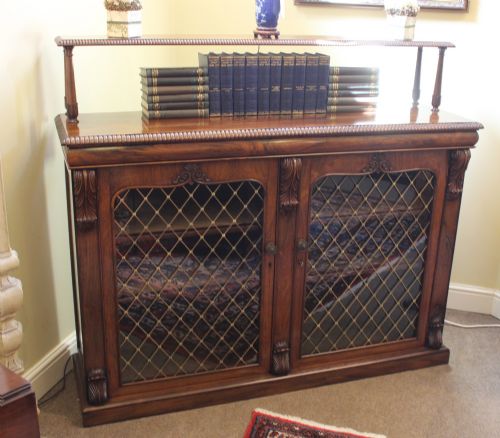
The pieces on this page appear predominantly as side cabinets, chiffoniers, and low sideboards originating from the nineteenth century, including the Regency and William IV periods.
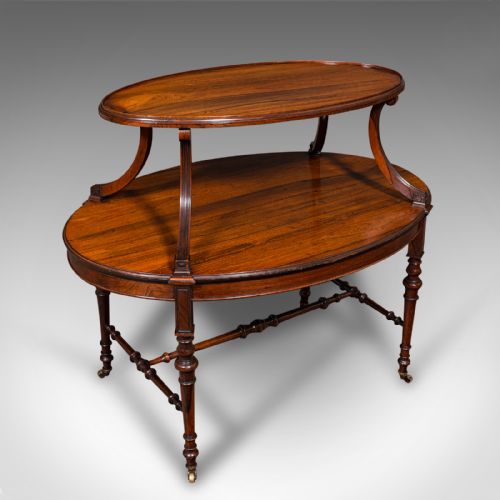
Formations vary from compact two-tier butler's buffet stands and small chiffoniers to larger four-door breakfront cabinets and credenzas.
Materials and Construction
Cabinet makers utilised dense rosewood veneer over secondary timbers, often accentuating the rich, dark grain patterns across the primary facades.
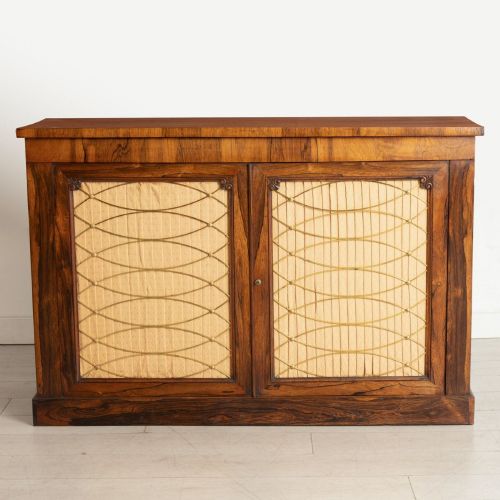
Brass detailing frequently appears as inlay, grilles, or hardware, providing a bright metallic contrast to the dark timber.
Internal linings incorporate secondary woods such as mahogany, while upper sections occasionally integrate mirror glass, fabric panels, or silk backings.
Factors of Quality
The distinction between ordinary and superior pieces rests on the choice of rosewood veneer and the precision of its matching across doors and drawer fronts.
Hardware integrity, such as original brass grilles and functional locks, elevates a piece above those altered or repaired with later replacements.
Structural complexity, seen in breakfront forms or integrated brass and glass elements, marks the higher tiers of cabinet making.
Gillows
The Regency Rosewood Buffet Glossary
- Chiffonier
- A low sideboard or cabinet, typically featuring enclosed shelving below and sometimes a raised tier or mirror above. This form became particularly popular during the Regency and Victorian eras.
- Breakfront
- A cabinet design where the central section projects forward from the flanking outer sections. This architectural arrangement creates depth and visual interest in large sideboards.
- Veneer
- A thin layer of superior rosewood applied to a stable core timber to display decorative grain patterns without using solid exotic wood throughout. Skilled application ensures durability.
- Credenza
- A low cabinet or sideboard lacking legs, sitting flush to the floor or on a minimal plinth. They serve similar storage and display functions to sideboards.
Regency Rosewood Buffet: Frequently Asked Questions
What is a regency rosewood buffet used for?
These pieces served historically for storing dining china, glass, and silverware while providing a flat surface for serving food and displaying decorative objects.
Today, they function well in living rooms, hallways, or dining spaces as media consoles, storage cabinets, or display surfaces.
How do I identify a Regency period piece?
Regency furniture typically dates from the early nineteenth century, exhibiting classical proportions, restrained ornamentation, and architectural symmetry.
Look for distinctive materials like rosewood combined with brass inlay or grilles, reflecting the neoclassical taste of the era.
What is the difference between a chiffonier and a sideboard?
A chiffonier is generally smaller and more compact, often including a raised shelf or gallery on top and enclosed lower cupboards.
Sideboards are traditionally larger dining room pieces designed for extensive storage and serving during meals.
How do I care for antique rosewood furniture?
Keep rosewood furniture out of direct sunlight and away from heat sources to prevent the wood and veneer from drying out or cracking.
Dust gently with a soft cloth and apply appropriate furniture wax sparingly to maintain the natural lustre of the timber.