
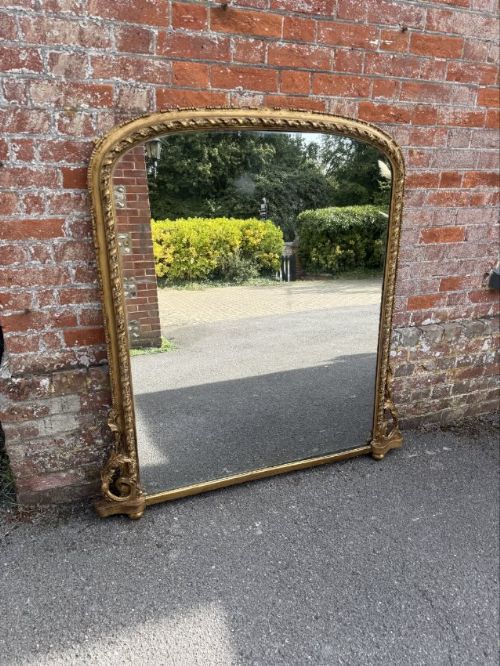
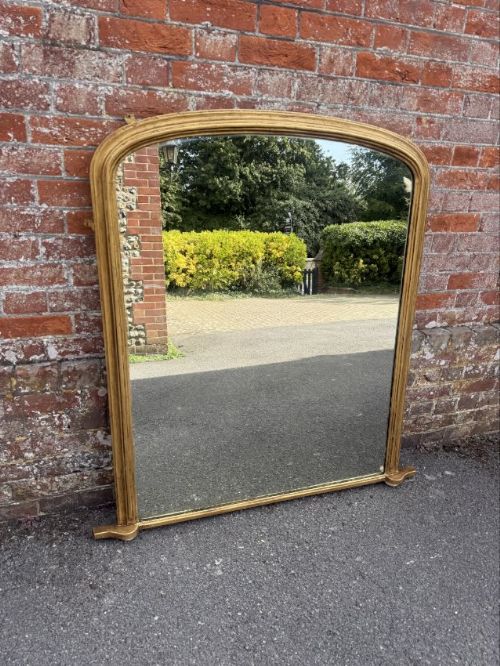
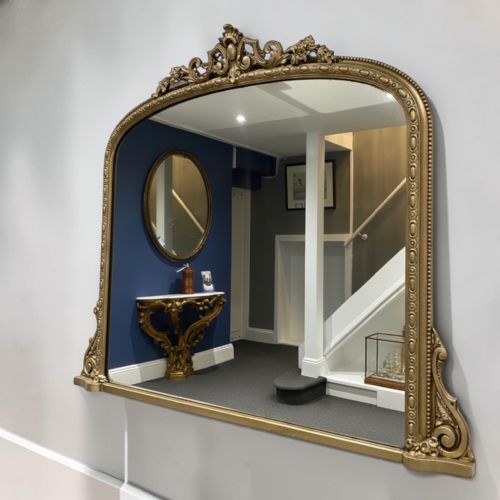
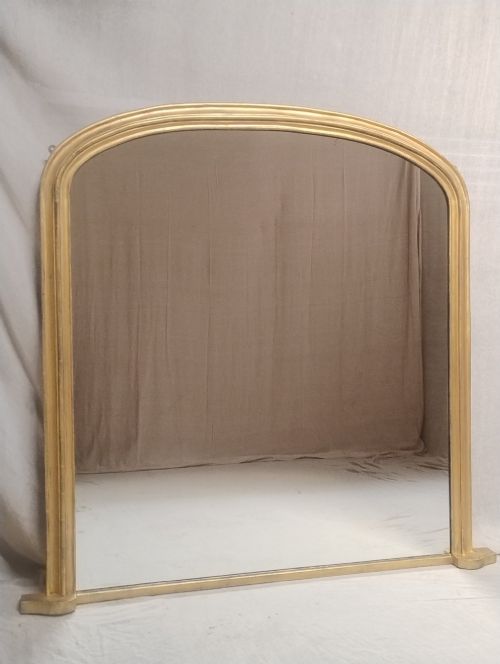

Gilt Arched Overmantle
A gilt arched overmantle brings scale and reflected light to a high-ceilinged room, drawing the eye naturally to the fireplace below.
Gilt Arched Overmantle
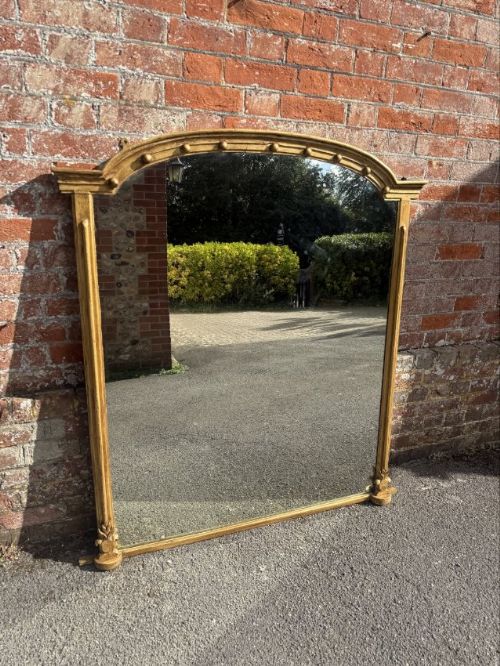
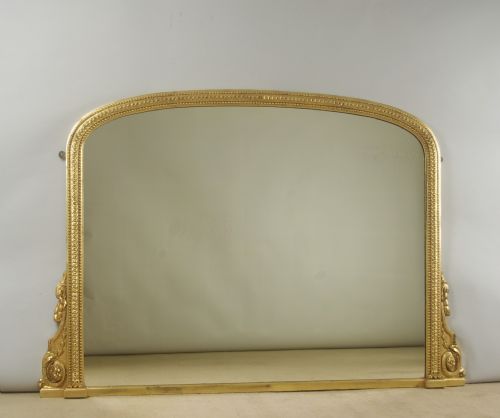
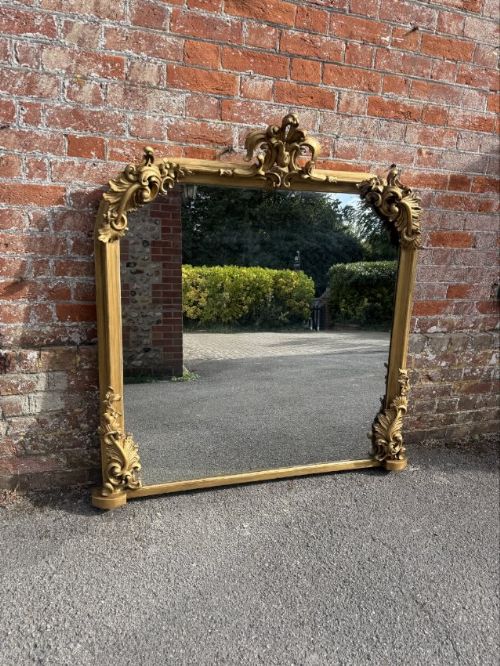
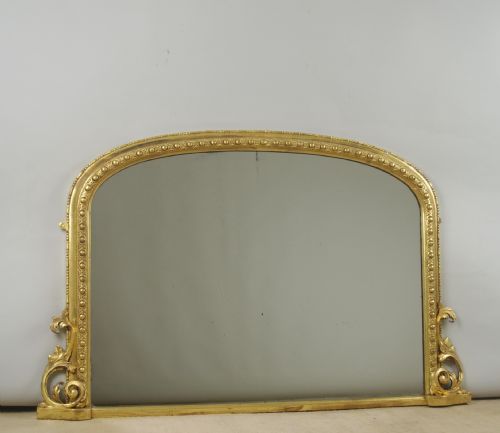
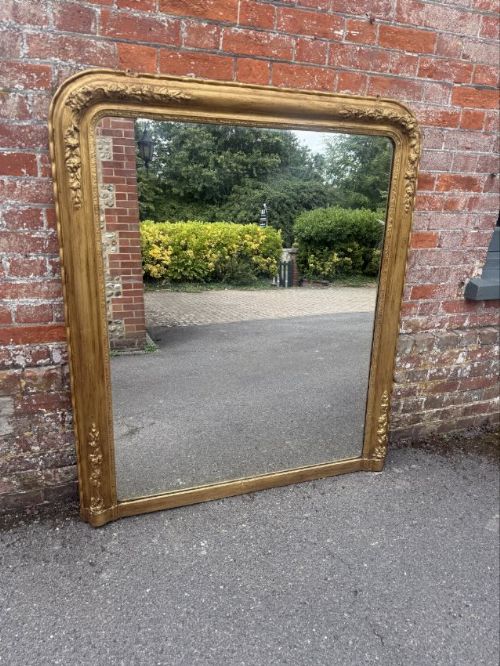
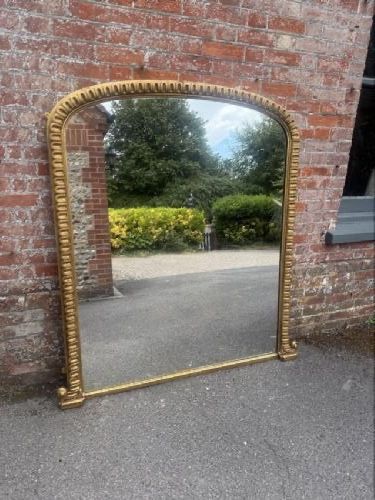
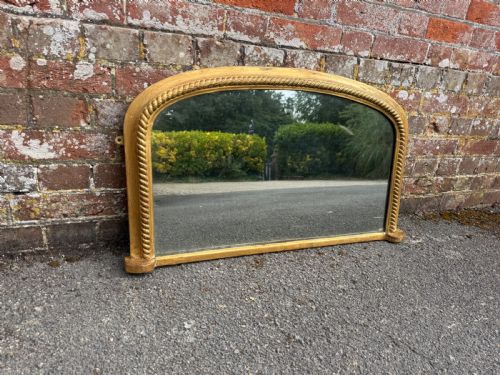
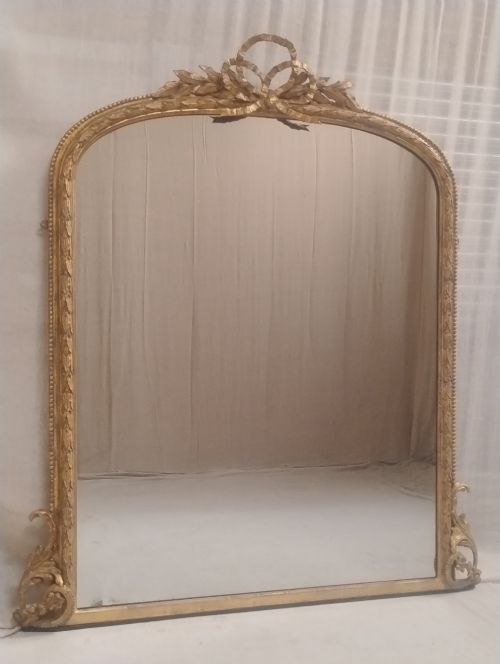
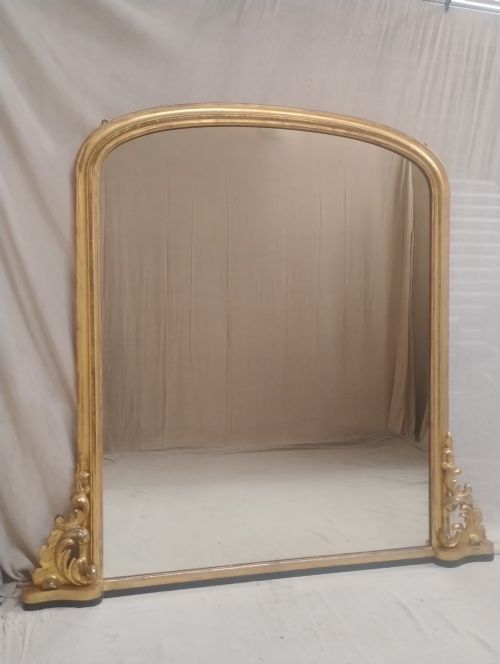
A gilt arched overmantle is a substantial wall mirror designed specifically to hang above a fireplace mantelpiece. These pieces originate predominantly from the nineteenth century, spanning periods from the eighteen-fifties through to nineteen hundred, with a strong Victorian presence.
Buyers encounter large wall-hanging formats defined by curved or arched upper frames. English nineteenth-century examples dominate the selection, alongside pieces reflecting French Chateau, Louis Philippe, and Rococo Revival influences.
The primary function remains commanding interior presence, often functioning as a central statement piece within a room. Many examples measure well over a metre in height, proportioned to anchor the space above a hearth.
How they were made
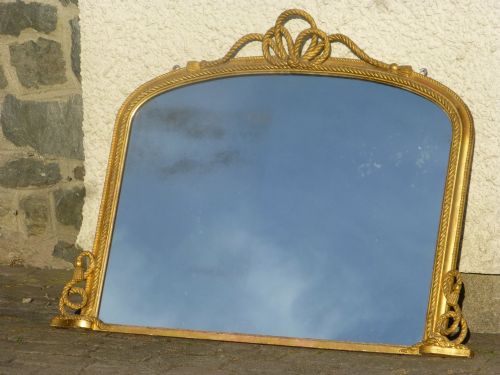
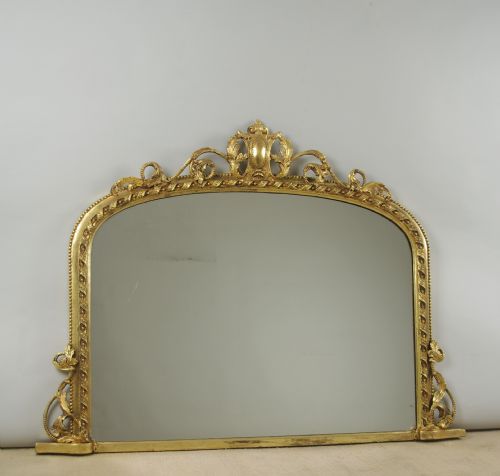
Makers built the structural carcases from carved wood, applying layers of plaster and gesso to build up intricate surface ornament before gilding. This composition material allowed artisans to model complex floral motifs, rope twists, or ribbed mouldings.
Finishers applied gold leaf or applied gilt treatments directly over the prepared gesso grounds. Mirror glass was then fitted into the rebate, secured behind the heavy wooden frames.
The listings span from eighteen-fifty to nineteen hundred, encompassing Victorian, Regency, and Rococo Revival design styles.
What varies in quality
Quality depends upon the crispness of the original carved wood and gesso ornament. Deeper relief modelling and sharper detailing in frames with rope twist, tulip, or hour glass patterns indicate superior craftsmanship.
The integrity of the gilding and the survival of original mirror glass separate standard examples from exceptional statements. Finer pieces retain their original gilded surfaces without heavy re-working, preserving the historic depth of the finish.
The Gilt Arched Overmantle Glossary
- Gesso
- A plaster-based mixture applied to wooden frames as a smooth ground for gilding. It is built up in layers before being carved or moulded.
- Giltwood
- Timber that has been coated with gold leaf or metallic gilt finish. This technique protects the wood while providing a brilliant reflective surface.
- Overmantel
- A mirror or decorative piece created to sit directly on or hang immediately above a mantelpiece. These objects were traditionally scaled to match the width of the fireplace surround.
- Rope twist
- A carved decorative moulding resembling the strands of a twisted rope. This motif appears frequently on nineteenth-century frames to add textural movement.
- Composition
- A moulded paste of whiting, resin, glue and oil pressed into decorative ornaments. It allowed makers to produce elaborate repeating patterns efficiently.
Gilt Arched Overmantle: Frequently Asked Questions
Where should an overmantle mirror hang?
These mirrors traditionally hang centrally on the chimney breast directly above a fireplace mantelpiece. The arched top helps draw the sightline upward in rooms with high ceilings.
Positioning the base just above the mantel shelf balances the weight of the frame against the hearth below.
Are these mirrors heavy to mount?
Nineteenth-century frames built from solid wood, gesso and thick glass possess considerable weight. Proper wall anchors and load-bearing fixings into solid masonry or studwork are essential for safe installation.
Professional hanging ensures the substantial frame remains secure against the chimney breast.
How do I date a Victorian overmantle?
Dating relies on combining the stylistic evidence of the frame with construction methods and materials. Pieces from the eighteen-fifties and sixties often feature deep gesso mouldings and specific revival motifs.
Comparing the style of the wood carving and mirror plate characteristics helps narrow down the decade of manufacture.
Can these mirrors be used without a fireplace?
While originally designed for hearths, these large arched mirrors function effectively on any expansive wall. Hung low above a low piece of furniture, they create the illusion of a fireplace surround and introduce ample light.
Their substantial scale allows them to anchor large empty wall spaces in living rooms or hallways.