
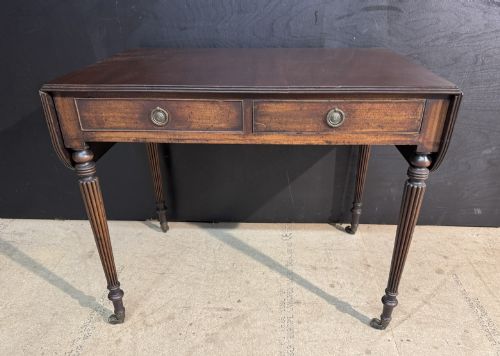
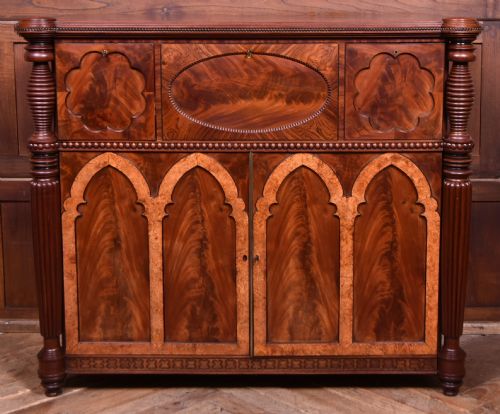
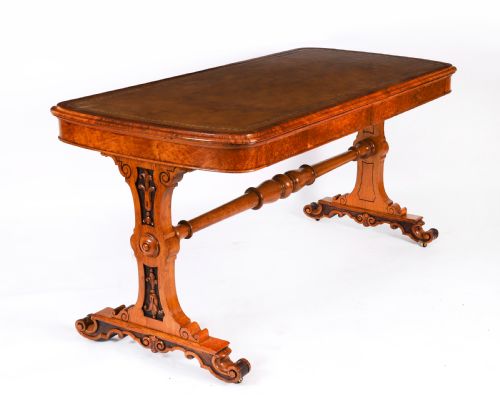
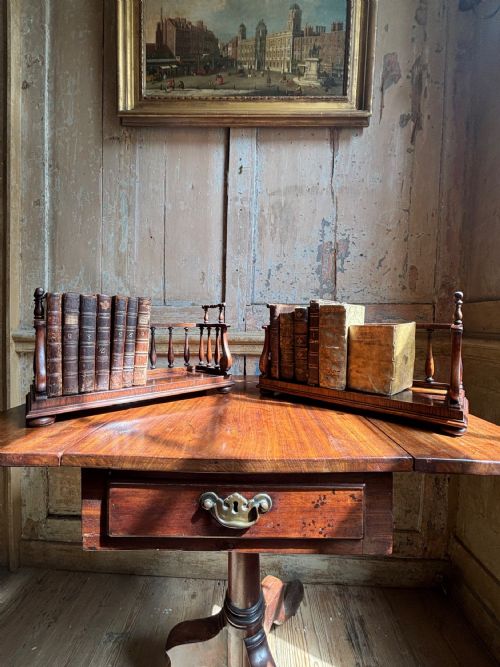
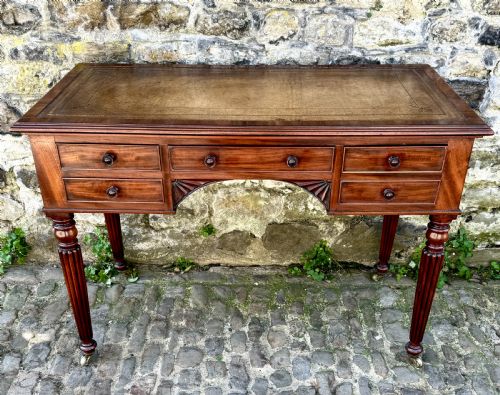
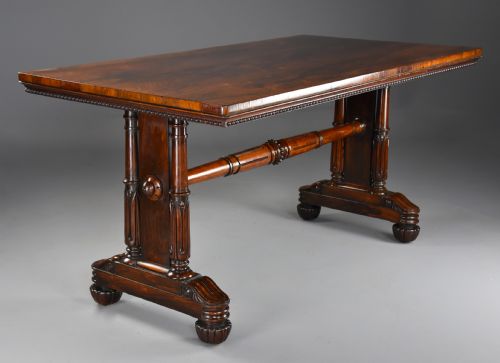
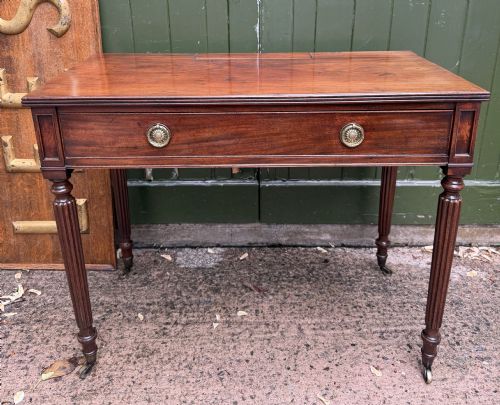
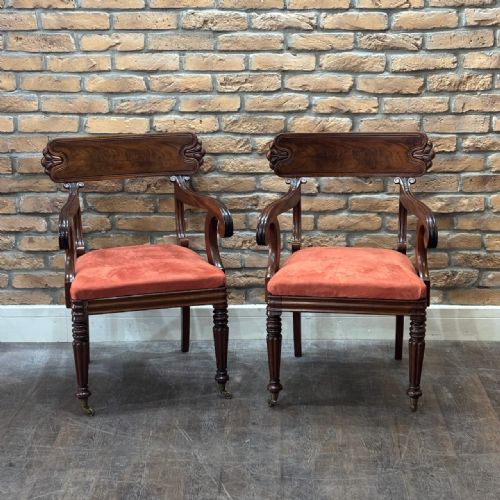


Gillows Style Desk
A gillows style desk brings substantial Lancaster cabinet-making tradition into a room through clean lines and fine timber.
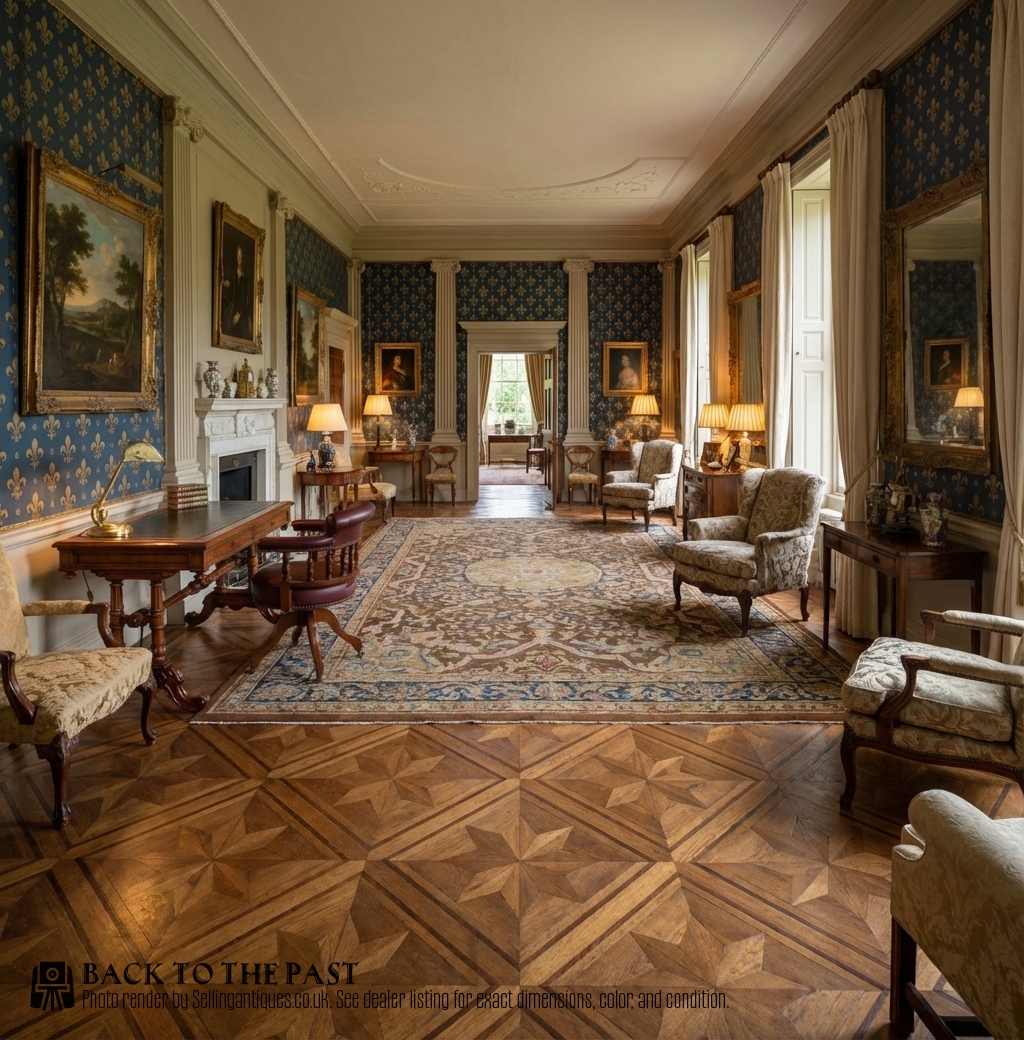
Gillows Style Desk
A gillows style desk encompasses writing tables, library tables, and Davenport forms rooted in Georgian, Regency, and Victorian periods. Buyers seeking this phrase look for exceptional proportions, neat brass hardware, and practical working surfaces designed for serious correspondence.
The pieces on this page appear in mahogany, rosewood, walnut, and satinwood, often featuring leather inserts and turned legs. Writing tables and partner desks dominate the selection, reflecting the practical demands of nineteenth-century studies and libraries.
How they were made
Cabinet-makers relied on dense tropical hardwoods like Cuban mahogany and rosewood, frequently incorporating secondary woods such as oak and pine in drawer linings. Timber selection focused on grain figure, utilising burr walnut, pollard oak, and birdseye maple for visual depth on primary surfaces.
Joinery relied on tight dovetailing for drawer construction and sturdy brass fittings including Bramah locks and castors. Surfaces often received hand-tooled leather writing panels framed by crossbanding and fine stringing.
Gillows Style Desk Retail Price Guide 2026
Typical asking prices for gillows style desk among the pieces listed under this phrase on Sellingantiques today, from the lower quarter to the upper quarter. They describe what is for sale here now, not the wider market.
Several desks manage to look both scholarly and aerodynamic, as though built for rapid correspondence during tea.
What varies in quality
Quality rests in the crispness of the timber carving, the precision of the drawer dovetails, and the weight of the brass mounts. Superior examples show seamless crossbanding and careful matching of grain across drawer fronts and tops.
The refinement of internal secondary woods and the presence of original locks distinguish high workshops from lesser commercial production. A well-proportioned frame with balanced leg turning separates finer pieces from standard utilitarian versions.
Gillows of Lancaster·Bruce James Talbert·James Winter and Son·Waring and Gillow
The Gillows Style Desk Glossary
- Davenport
- A small compact desk featuring a sloping writing surface above a pedestal of drawers. The form gained popularity during the Regency period for boudoir and parlour use.
- Partners desk
- A large double-sided writing table designed for two people to sit opposite one another. These pieces typically feature banks of drawers and cupboards on both faces.
- Secretaire
- A cabinet or desk incorporating a drop-front writing flap that conceals small drawers and pigeonholes. It combines storage with a dedicated writing surface.
- Crossbanding
- A decorative border of veneer laid around the perimeter of a tabletop so the grain runs perpendicular to the centre. This technique frames the primary wood panel.
- Bramah lock
- A high-security cylindrical lock invented by Joseph Bramah in the late eighteenth century. These mechanisms appear on superior desks and provide reliable security.
Gillows Style Desk: Frequently Asked Questions
What is a gillows style desk?
A gillows style desk refers to writing furniture that follows the robust construction and refined classical design associated with the historic Lancaster firm. These pieces range from compact Davenporters to large library tables.
They reflect cabinet-making standards established during the Georgian and Regency periods, prioritising utility alongside architectural proportion and fine mahogany or rosewood surfaces.
How do I date a desk?
Dating relies on observing timber choices, leg turning styles, and construction methods like drawer dovetailing. Regency pieces often feature rosewood with brass inlay, while Victorian examples show heavier oak or walnut.
Hardware such as locks and castors also provides clues, as does the presence of secondary woods like oak versus later pine linings inside the drawers.
Where should I place a library table?
Library tables and partner desks work best freestanding in the centre of a room rather than pushed against a wall. Their finished backs and all-round detailing suit open interior spaces.
Ensure adequate clearance around the table for chairs and movement, keeping the leather writing surface away from direct, strong sunlight.
How do I care for leather writing surfaces?
Leather panels require gentle cleaning with a dry or barely damp cloth to remove dust. Avoid harsh chemical cleaners that strip the natural oils from the hide.
Applying a specialised leather dressing periodically helps maintain suppleness and prevents the surface from cracking under regular use.