
Library Writing Desk
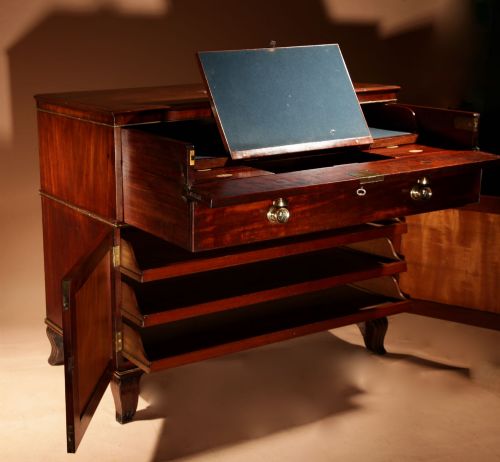
When you examine a library writing desk, you see a heavy piece intended for study, correspondence and the management of papers.
Library Writing Desk
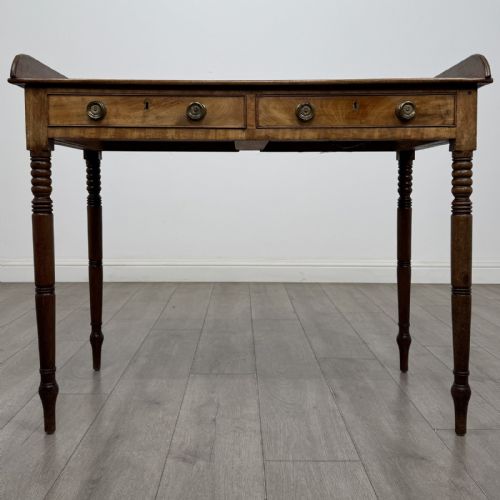
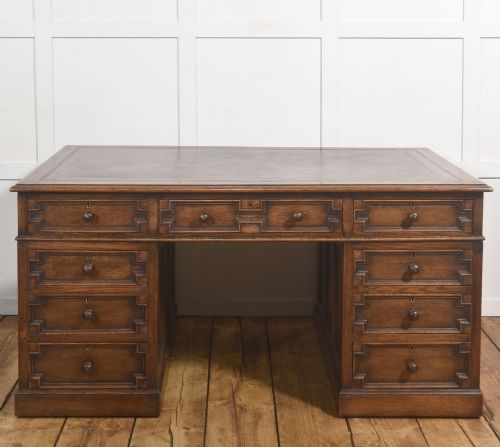
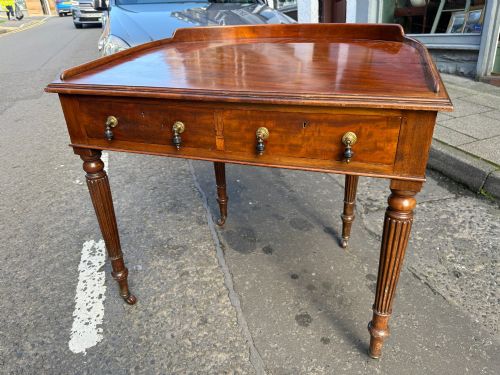
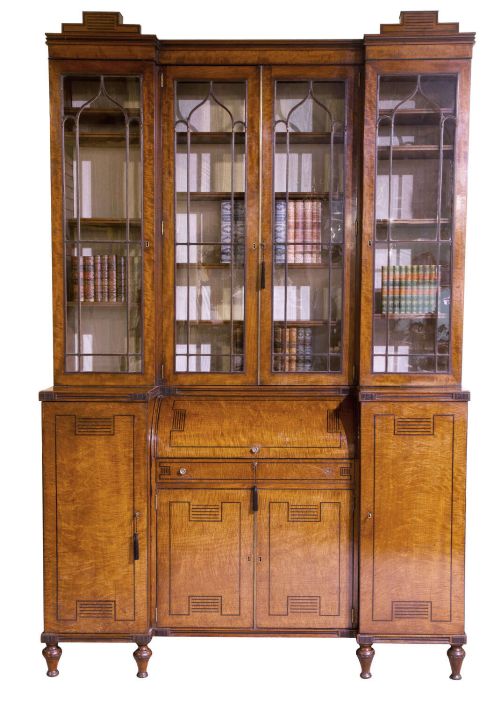
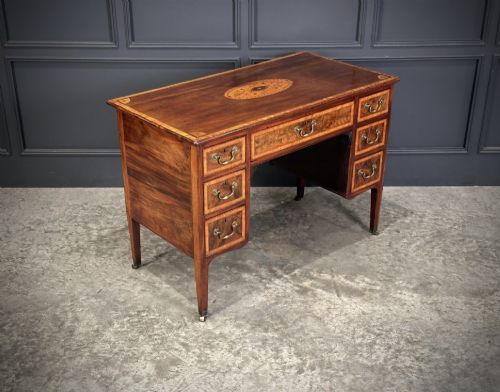
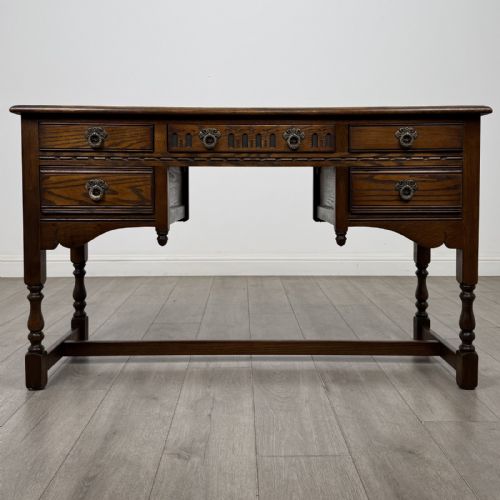
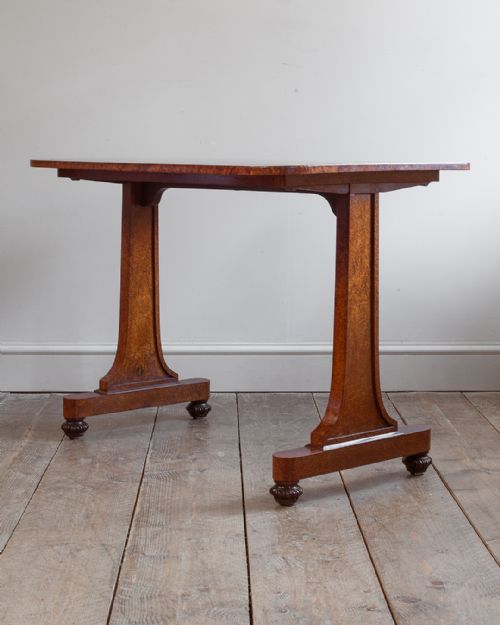
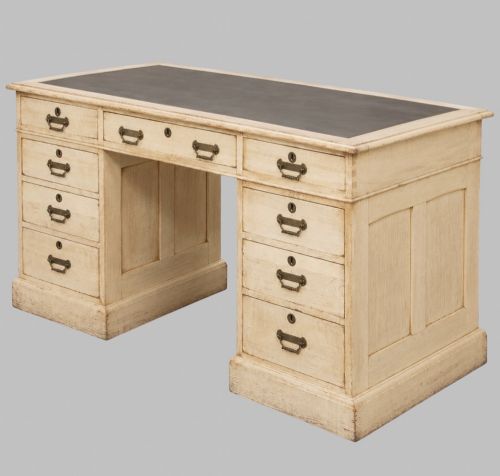
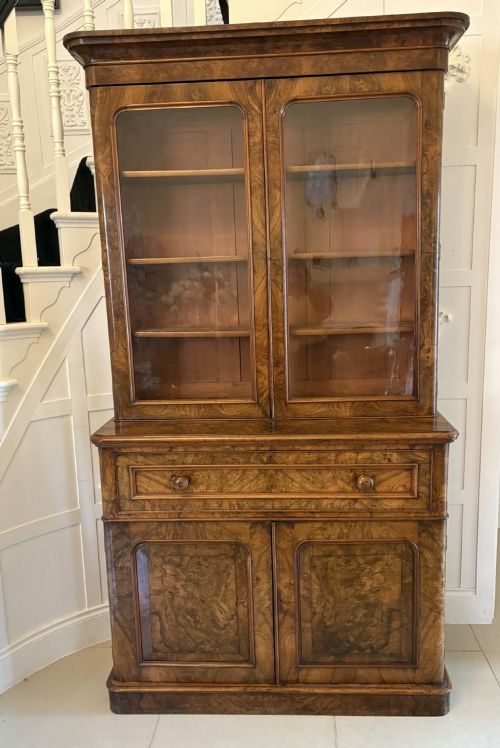
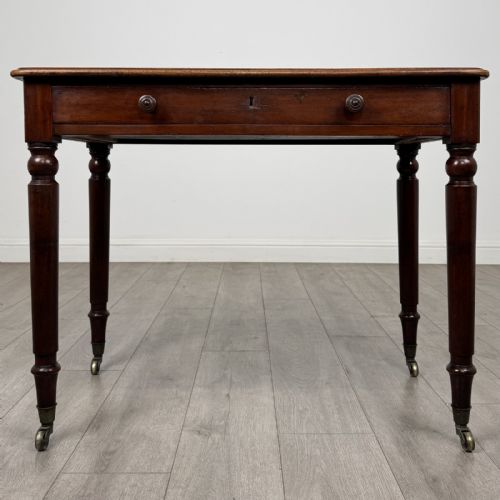
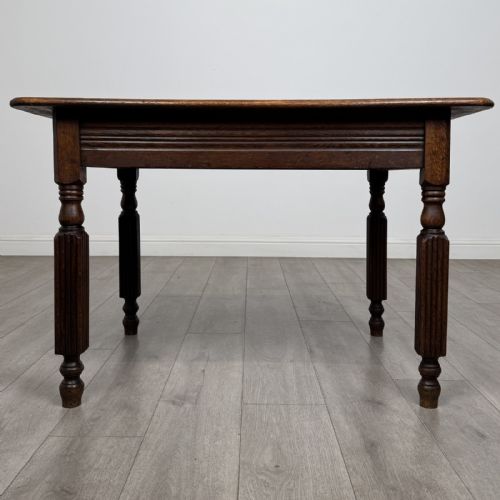
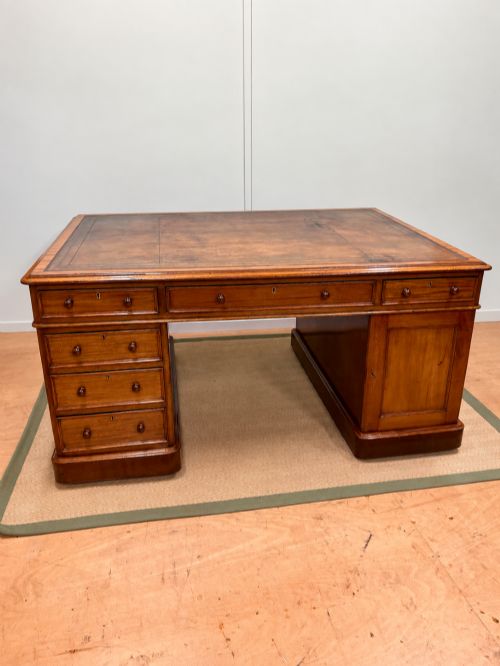
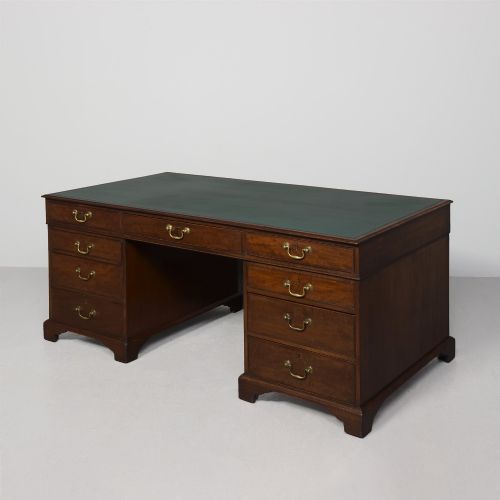
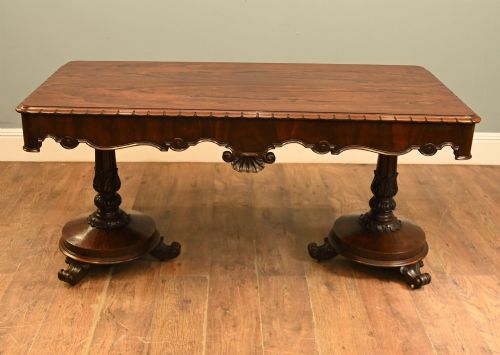
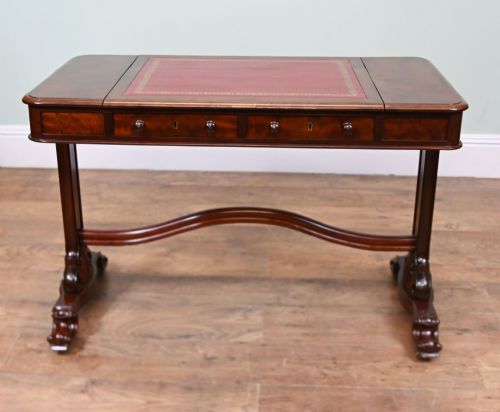
A library writing desk spans several formats, from pedestal desks and partners tables to freestanding writing tables and drum tables. Buyers search for these pieces to anchor a study or library with traditional furniture designed for serious writing and book storage.
The Victorian period and the nineteenth century supply the vast majority of these examples, alongside pieces from the Regency, William IV and Edwardian eras. Mahogany, oak and rosewood dominate the surviving stock, often surfaced with leather writing panels.
Pedestal formats and double-sided partners desks appear frequently, offering drawers on both sides for shared use. Smaller writing tables and revolving drum tables provide alternative options for domestic rooms where space is more limited.
Materials and Construction
Cabinetmakers relied on dense timbers such as mahogany, oak, rosewood and walnut, building structural carcases designed to withstand decades of daily use. Brass fittings, including handles and castors, appear alongside gilt bronze or ormolu mounts on finer French-influenced examples.
Writing surfaces typically feature inset panels of tooled leather, sometimes surrounded by crossbanded veneers or boxwood stringing. Carved wooden elements, turned legs and pedestal pillars demonstrate the joinery skills of nineteenth-century workshops.
Listings feature woods including mahogany, oak, rosewood, walnut and satinwood, spanning the Regency, Victorian and Edwardian periods.
Distinctions in Standard
The selection of timber grain and the crispness of carved mouldings separate standard production items from workshop pieces made by named makers. Figured veneers, such as burr walnut or flame mahogany, indicate a higher tier of production.
Original hardware, including brass locks and stamped handles, preserves the integrity of a desk. Superior pieces display precise dovetail joints in the drawer construction and well-executed secondary woods that remain stable over time.
Gillows of Lancaster·Edwards and Roberts·Maple and Co·Francois Linke·Trollope and sons·Johnstone and Jeanes·Waring and Gillow
The Library Writing Desk Glossary
- Partners Desk
- A double-sided pedestal desk designed for two people to work opposite each other, featuring drawers or cupboards on both faces.
- Bureau Plat
- A French freestanding writing table with drawers in the frieze, unattached to a wall and finished on all sides.
- Drum Table
- A circular library table with a rotating or fixed top surrounded by drawers, supported on a central pillar with spreading feet.
- Pedestal Desk
- A heavy desk comprising two upright banks of drawers supporting a single top writing surface.
- Ormolu
- Gilded bronze mounts applied to furniture for decorative enrichment, common on nineteenth-century continental-style pieces.
Library Writing Desk: Frequently Asked Questions
What is a partners desk?
A partners desk is a double-sided pedestal desk designed so two individuals can sit and work opposite each other.
These pieces feature matching sets of drawers or cupboards on both sides, making them suitable for placement in the centre of a large room rather than against a wall.
How do I care for a leather desk top?
Leather desk inserts require gentle cleaning with a damp cloth and occasional treatment with appropriate leather dressings to prevent cracking.
Avoid using harsh chemical cleaners or excess water, which can damage both the leather surface and the surrounding wooden veneers.
Were these desks used in offices?
Many nineteenth-century pedestal desks served in professional offices, legal chambers and private libraries.
Their robust construction and numerous locking drawers provided secure storage for ledgers, correspondence and writing instruments.
How do I distinguish a Regency desk from a Victorian one?
Regency desks typically display cleaner classical lines, simpler bracket feet or sabre legs, and restraint in ornamental carving.
Victorian examples often exhibit heavier proportions, bolder grain patterns in the mahogany or walnut, and more elaborate turned supports or castors.