






Antique Secretaire Table
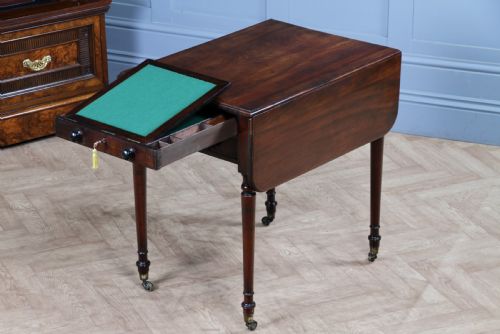
An antique secretaire table combines the disguised utility of a writing drawer with the form of a freestanding side table, desk, or cabinet.
Antique Secretaire Table
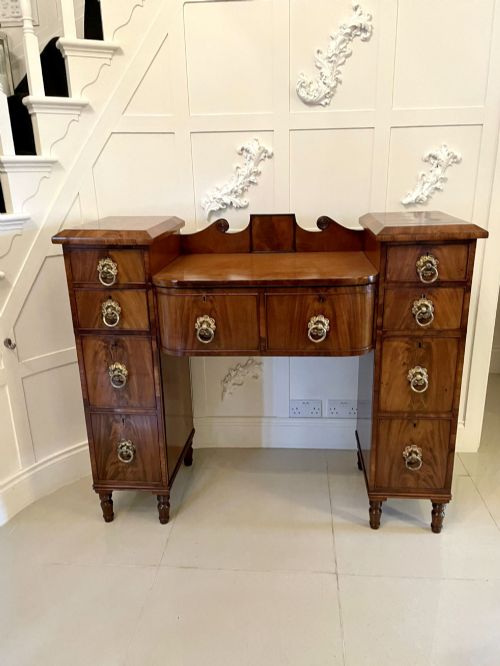
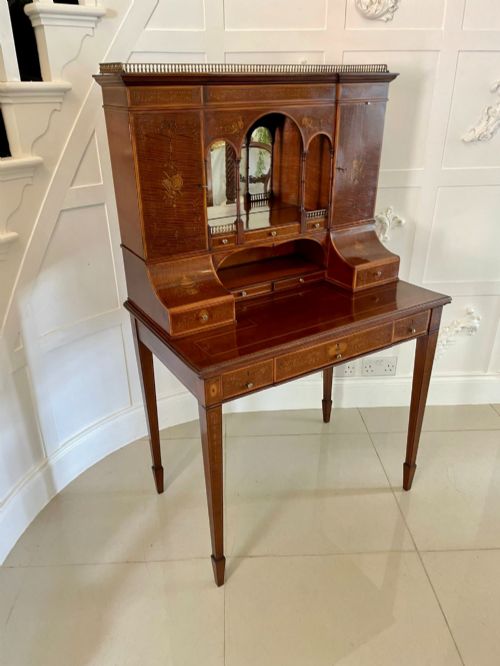
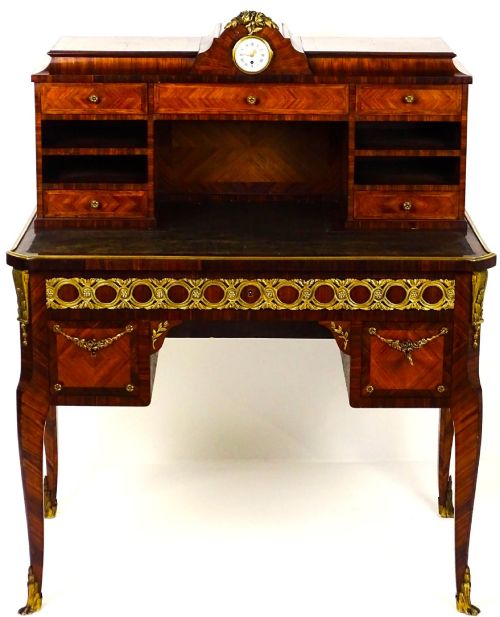
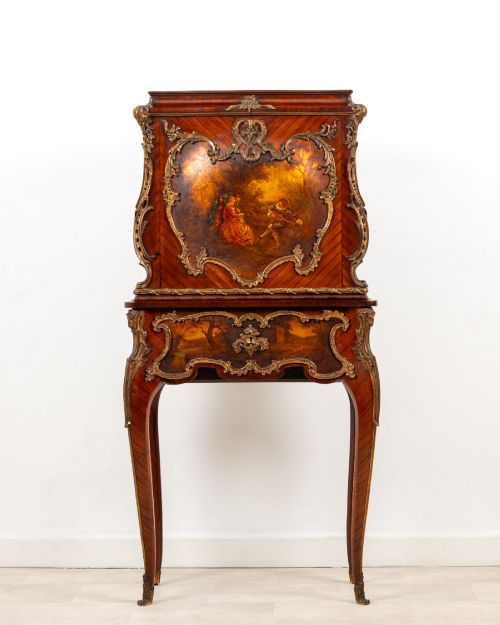
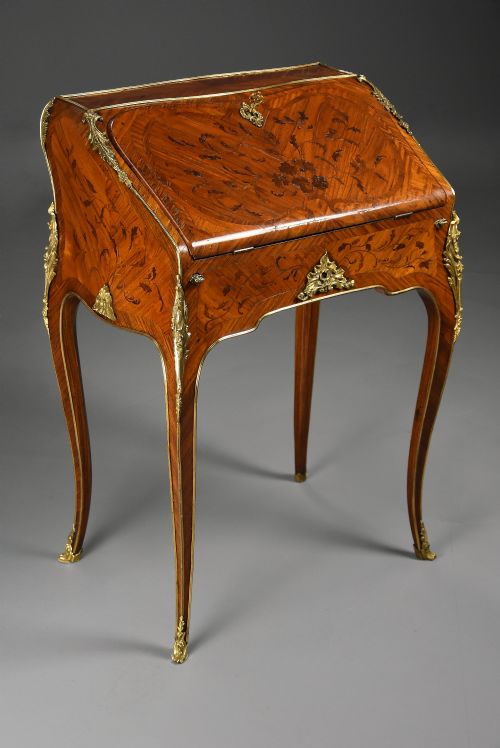
The antique secretaire table encompasses an array of writing forms from the eighteenth and nineteenth centuries, including kneehole desks, side tables, and freestanding writing cabinets. Buyers searching this phrase meet pieces ranging from Georgian mahogany side tables with fitted drawers to elaborate French kingwood cylinders and Louis XV revival pieces.
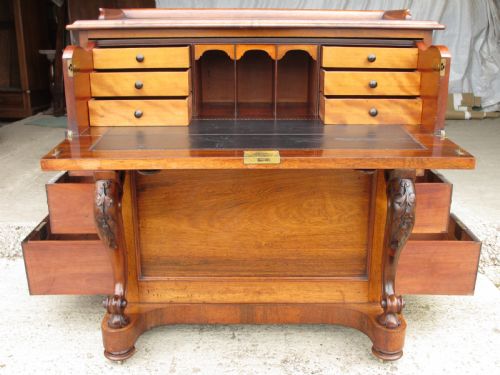
Many examples utilise a drop-down fall-front drawer or abattant panel to conceal pigeonholes and small compartments, effectively masking a writing surface within a compact frame. These items frequently emerge from Georgian workshops or Victorian revival periods, incorporating styles such as Sheraton, Louis XVI, and Directoire.
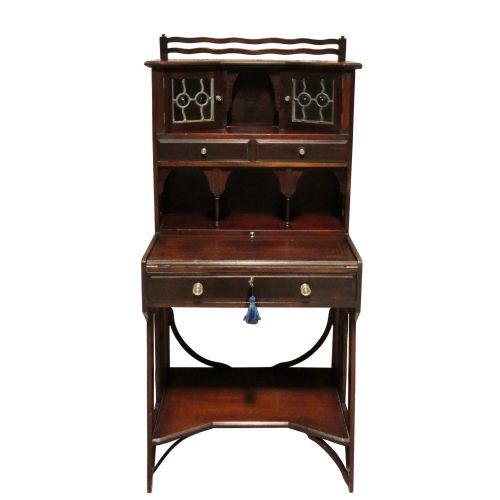
The assortment spans straightforward oak and walnut kneeholes to marquetry-inlaid mahogany work tables and glazed bookcases. Each variant provides a dedicated writing space while maintaining the domestic scale of a refined side table or bureau.
Distinctions in quality
Quality rests upon the selection of timber veneers and the precision of the internal fittings within the writing drawer. Superior pieces display crisp carving, uncompromised structural integrity in the drawer linings, and original locking mechanisms.
The refinement of the ormolu mounts, the subtlety of the marquetry, and the harmonious integration of the drop-front mechanism separate standard production from master workshops.
Materials documented across the inventory include solid mahogany, kingwood, burr walnut, oak, brass, ormolu, glass, and leather.
Paul Sormani·Gillows
The Antique Secretaire Table Glossary
- Secretaire
- A desk or cabinet featuring a concealed writing drawer or drop-down writing flap. This primary feature distinguishes the form from standard tables and chests.
- Ormolu
- Gilded bronze mounts applied for decorative effect on French and revival furniture. It frequently frames the key areas of eighteenth-century and nineteenth-century cabinets.
- Abattant
- A drop-down front panel on a cabinet or desk that opens to form a writing surface. It conceals internal stationery compartments when closed.
- Kingwood
- A dense, heavily figured exotic timber utilised extensively in French cabinet making. Its dark grain provides strong contrast when paired with brass or ormolu.
- Kneehole desk
- A compact desk featuring a central recess for the legs, flanked by pedestals of small drawers. This form is common in eighteenth-century walnut and mahogany examples.
Antique Secretaire Table: Frequently Asked Questions
How do I use a secretaire table today?
These tables function well as compact writing desks or laptop stations in a study or living room. The drop-front drawer offers concealed storage for stationery and small items when the writing surface is not in use.
Their domestic scale allows them to fit easily into smaller spaces where a full-sized partner desk would overwhelm the room.
How do I identify a Georgian secretaire table?
Georgian examples are constructed primarily in solid mahogany or oak, relying on proportion, bracket feet, and minimal brass hardware rather than elaborate mounts. The interior drawers often feature hand-cut dovetailing and secondary woods such as oak or pine.
Checking the secondary timbers and the construction of the drawer linings helps confirm the eighteenth-century origin.
Are French and English secretaire tables constructed differently?
French pieces from this category frequently employ kingwood, tulipwood, and gilt ormolu mounts in styles reflecting the Louis XV and Louis XVI revivals. English versions lean towards mahogany and walnut, emphasising architectural lines, bracket feet, and practical internal fittings like Bramah locks.
While both utilise drop-front mechanisms, the decorative vocabulary on French examples tends towards ornate marquetry and cast bronze.