
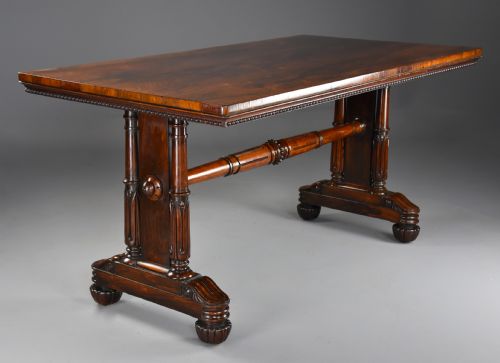
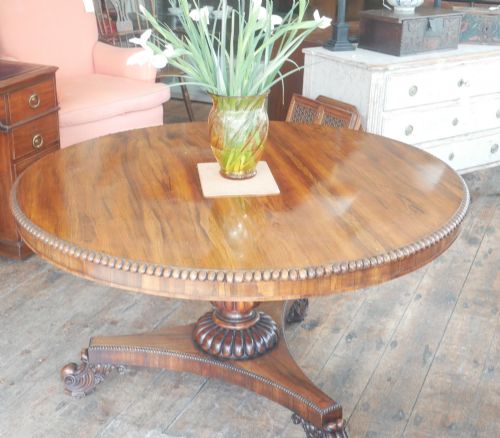


Gillows Centre Table
A gillows centre table brings refined Lancaster and London cabinet-making directly into the middle of a room.
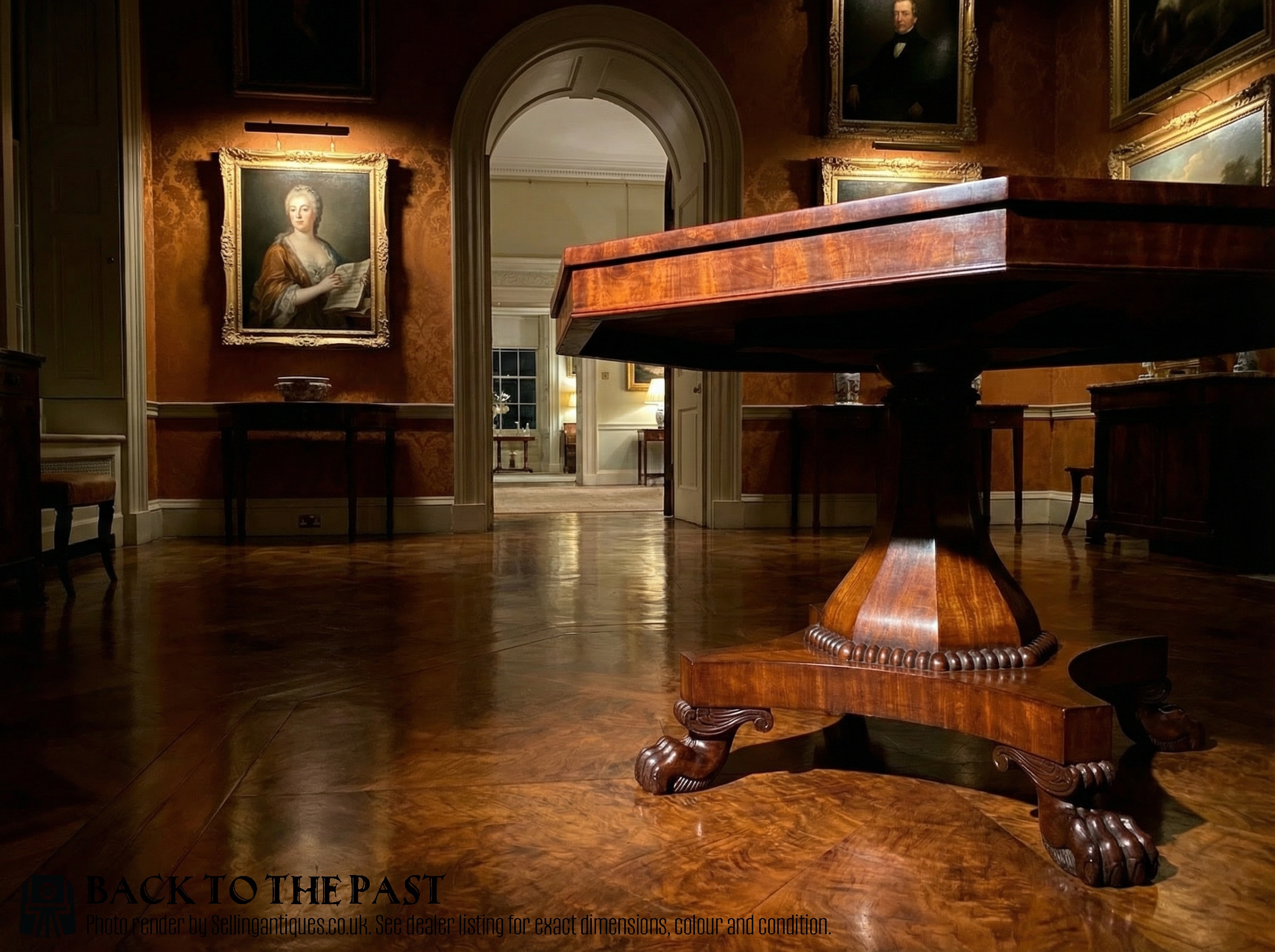
Gillows Centre Table
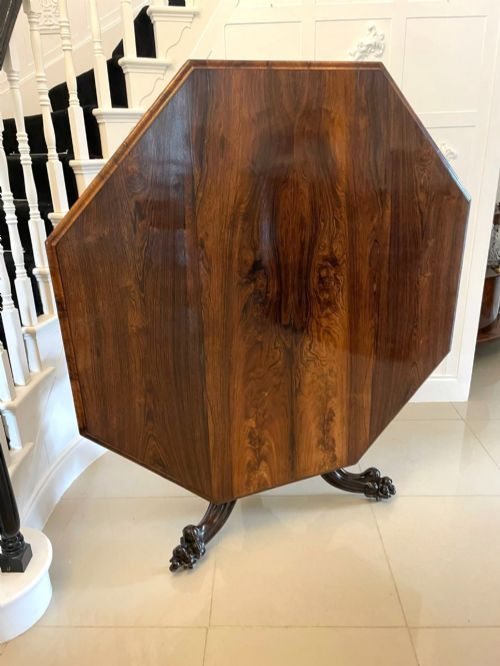
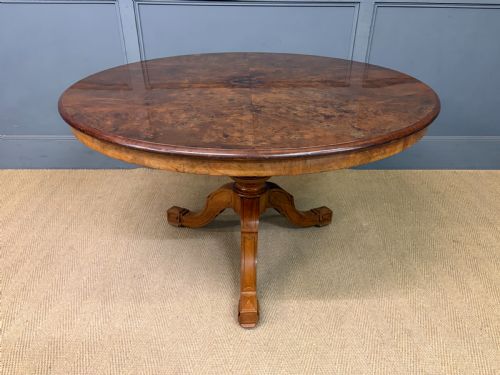
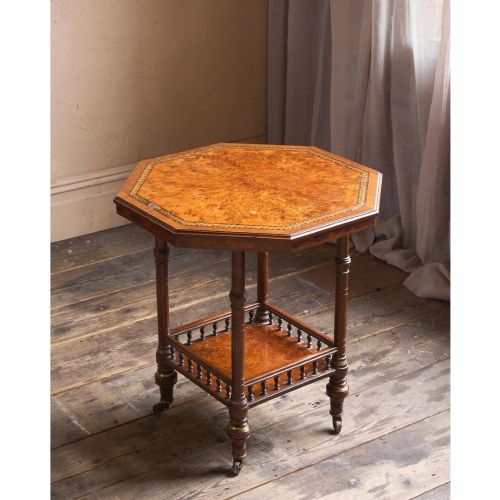
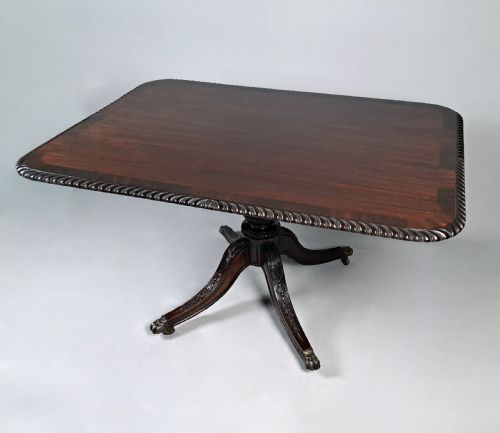
A gillows centre table occupies a prominent position in a room, designed to be viewed from all sides rather than pushed against a wall. These pieces appear in forms such as library tables, dining tables, breakfast tables, and writing tables across Regency, Georgian, and Victorian periods.
The most common examples on this page date from the nineteenth century and the Regency period, constructed in rich woods with circular, oval, or octagonal tops. Makers utilised pedestals, twin pedestals, and end supports to anchor these substantial pieces solidly on the floor.
How They Were Made
Cabinet-makers selected dense timbers like mahogany and rosewood, frequently incorporating decorative veneers such as amboyna, burr walnut, and birds eye maple across the tops and friezes. Brass inlay, parcel gilt, and glass components added contrasting highlights to the polished wooden surfaces.
Construction relied on stable internal carcases of oak or secondary woods beneath the show timbers, supporting tilt mechanisms on circular breakfast tables and solid drawer framing on writing and library tables.
Several tables here are multi-talented enough to double as sewing stations, breakfast spots, and library desks all before noon.
What Varies in Quality
Quality rests upon the selection of timber figures and the precision of the cabinet-making, where matched veneers and tight joints distinguish the finest workshops from standard production. Grain alignment across drawers and pedestal mounts reveals the underlying care taken during construction.
The sophistication of secondary details, including finely cast brass mounts, crisp carving, and well-figured amboyna or rosewood surfaces, elevates an ordinary piece into a superior example.
Gillows of Lancaster and London
The Gillows Centre Table Glossary
- Centre table
- A freestanding table finished on all sides intended to stand away from the walls in the middle of a room. These pieces served diverse functions including dining, library work, and general display.
- Library table
- A large rectangular or octagonal table designed for books and papers, typically fitted with frieze drawers. They frequently feature leather-inset tops suitable for writing.
- Tilt top
- A tabletop mounted on a hinged mechanism that allows the surface to pivot vertically for storage against a wall when not in use. This clever engineering was popular on circular breakfast tables.
- Amboyna veneer
- A highly decorative and dense wood veneer prized for its speckled, swirling grain pattern. Workshops applied it selectively to highlight specific panels and borders on elite furniture.
- Parcel gilt
- A surface decoration where selected carved details or mouldings receive a thin application of gold leaf while the surrounding wood remains exposed. This technique emphasises structural lines.
Gillows Centre Table: Frequently Asked Questions
How do I care for rosewood and mahogany?
Keep wooden surfaces away from direct sunlight and heat sources to prevent the natural oils from drying out and the veneers from lifting. Regular dusting with a soft, dry cloth maintains the polished finish without requiring heavy chemical polishes.
Feed the timber periodically with appropriate wax to preserve the depth of the grain and protect the antique surface.
What is the difference between a breakfast table and a library table?
Breakfast tables generally feature a circular or oval top supported by a central pedestal, and many incorporate a tilt mechanism for convenient storage. Library tables are typically larger and rectangular with frieze drawers designed for paperwork and books.
Both forms served multiple domestic purposes in nineteenth-century interiors depending on the room's layout.
How do I identify a piece from the Regency period?
Regency furniture draws inspiration from classical antiquity, displaying clean architectural lines, rosewood or mahogany timbers, and occasional brass inlay. Proportions are balanced and restrained, focusing on the natural grain of the wood rather than heavy carving.
Pedestals often feature bold geometric forms supported by platform bases with sabre legs.