




Inlay Walnut Library Table
An inlay walnut library table brings rich grain and precise marquetry into a room, serving as a practical desk or a central display piece.
Inlay Walnut Library Table
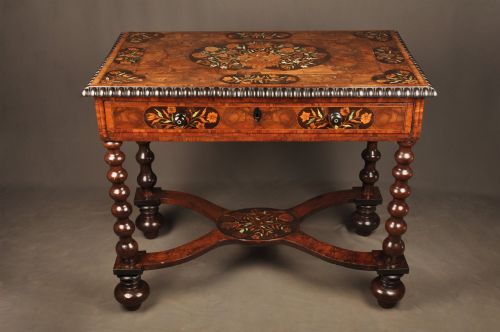
An inlay walnut library table combines domestic utility with decorative ambition, functioning as a writing desk, centre table, or freestanding partner piece. These pieces emerge across several periods, from seventeenth-century Dutch creations to nineteenth-century Victorian designs and early twentieth-century interpretations.
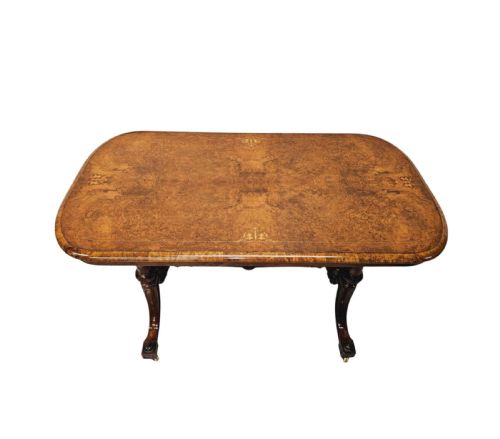
Most examples encountered on this page belong to the nineteenth century, particularly the Victorian era, where burr walnut and marquetry flourished. Makers constructed these tables to occupy the middle of a room, applying decorative details to all sides rather than pushing them against a wall.
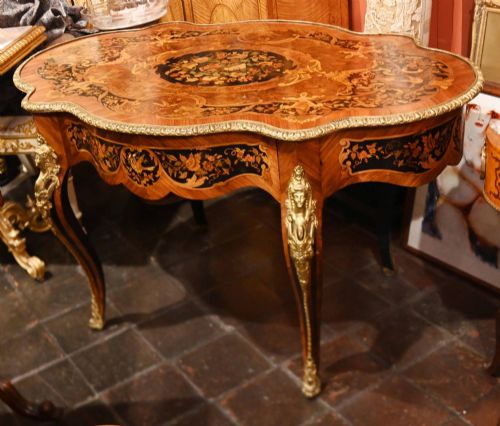
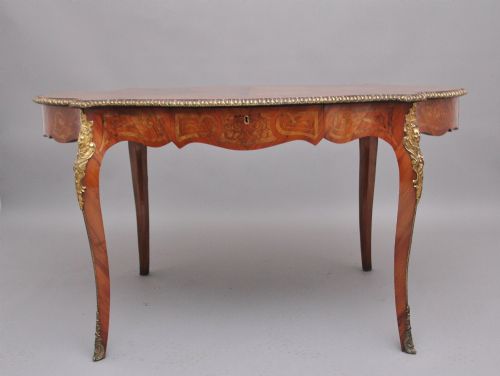
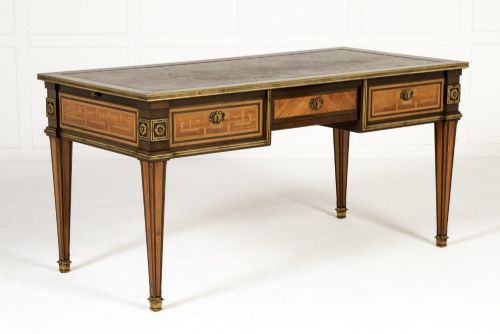
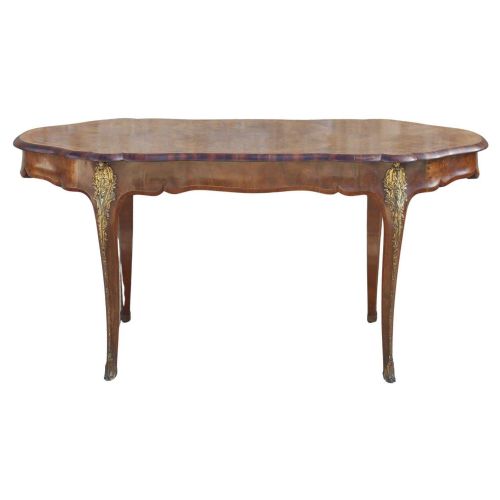
Forms vary from serpentine desks with cabriole legs to octagonal centre tables and bureau plat designs. Walnut remains the constant foundation, augmented by brass mounts, leather writing surfaces, and intricate floral or geometric wood patterns.
Materials and construction methods
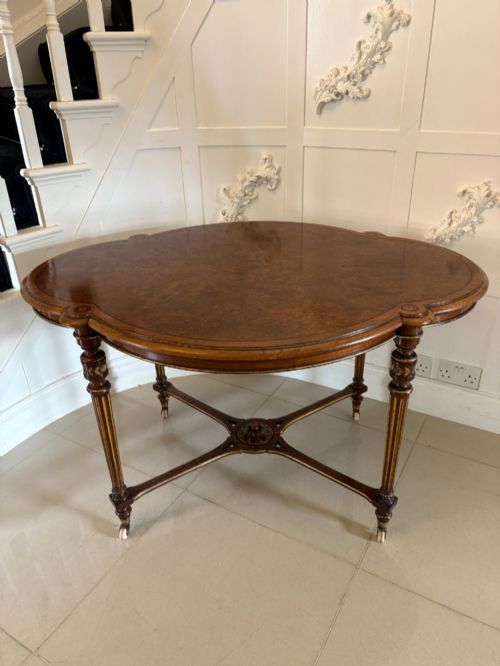
Cabinet makers utilised walnut timber, often selecting burr walnut or oyster veneers to display lively, figured grain patterns across the top surface. These veneers demand careful application over a stable secondary wood base to prevent warping over time.
Marquetry and parquetry ornamentation involved cutting contrasting woods, fruitwoods, and light or dark veneers to form floral scrolls or geometric tiles. Brass ormolu mounts and bronze sabots often finished the corners, aprons, and cabriole legs.
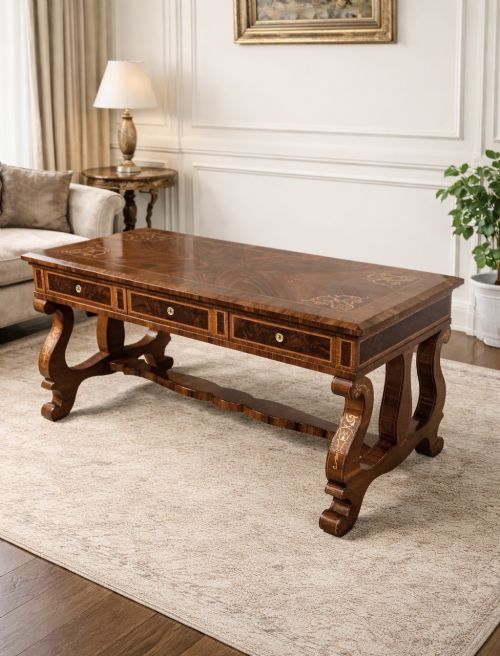
Writing surfaces frequently incorporated inset panels of tooled leather, whilst structural frames relied on traditional joinery, stretcher supports, or twin pedestals to sustain the weight of the dense hardwood.
The listings show walnut, burr walnut, and ebonised wood paired with marquetry, leather, and ormolu across Victorian and seventeenth-century periods.
Distinctions in construction and design
The sophistication of the timber selection dictates the visual impact of an inlay walnut library table. Superior pieces employ symmetrical burr walnut or masterclass marquetry that flows logically across drawers, aprons, and the entire top surface.
Hardware integration separates standard production from exceptional workshops. Finely chased ormolu mounts, well-fitted brass details, and hand-tooled leather writing inserts reflect greater investment in materials and labour by the maker.
Structural harmony also defines the upper tier of these tables. Proportions remain balanced, legs join the apron with rigid precision, and double-sided or freestanding examples exhibit equal decorative consideration on every visible elevation.
Gill & Reigate·Gillows·James Winter
The Inlay Walnut Library Table Glossary
- Marquetry
- Decorative veneer work forming pictures or patterns using various woods. Craftsmen assemble these delicate wood segments to create floral sprays or architectural scenes across tabletops.
- Burr walnut
- Timber taken from a tree growth showing complex, swirling grain patterns. This highly prized wood produces rich, mottled surfaces on nineteenth-century desks.
- Ormolu
- Gilded bronze used for decorative mounts on furniture. It adds metallic contrast to walnut frames and cabriole legs.
- Bureau plat
- A flat-topped writing desk, often freestanding with drawers in the frieze. French makers popularised this refined form during the eighteenth and nineteenth centuries.
- Parquetry
- Geometric mosaic woodwork arranged in regular patterns like cubes or herringbone. It frequently decorates the borders of seventeenth and eighteenth-century tables.
Inlay Walnut Library Table: Frequently Asked Questions
Can I use an inlay walnut library table for daily work?
These tables were originally built for writing and administrative duties, making them suitable for modern laptop use or paperwork. Many feature leather inserts that provide a durable writing surface.
Care should be taken to protect the polished walnut and delicate marquetry from moisture, excessive heat, and heavy daily wear. Using blotters or desk pads helps preserve the antique finish.
Where should I place a centre table in my home?
A centre table is designed to be viewed from all angles, making it ideal for the middle of a study, library, or large drawing room. Because the decoration often wraps around the entire perimeter, it does not need to sit against a wall.
Ensure there is sufficient walking space around the piece to appreciate its proportions and any double-sided drawers or parquetry work. Positioning it away from direct sunlight protects the walnut veneer from fading.
How do I distinguish Victorian walnut from earlier periods?
Victorian examples often showcase heavy use of burr walnut veneer, scrolling cabriole legs, and elaborate floral marquetry influenced by revived continental styles. They frequently incorporate brass mounts and fitted interior stationery compartments.
Earlier pieces from the seventeenth or eighteenth centuries tend to display simpler structural silhouettes, oyster veneer arrangements, or starker geometric parquetry without the ornate embellishments common in the nineteenth century.