

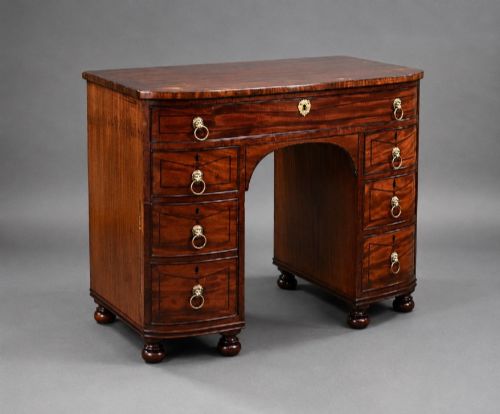
Regency Pedestal Desk Table
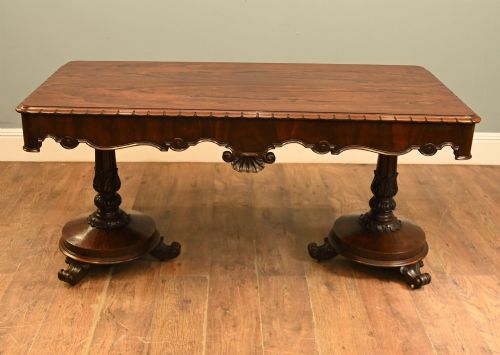
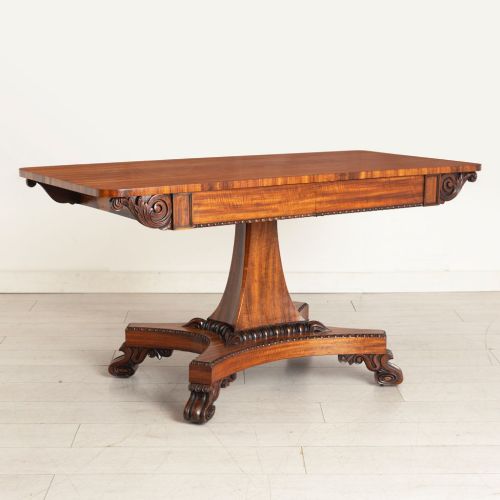
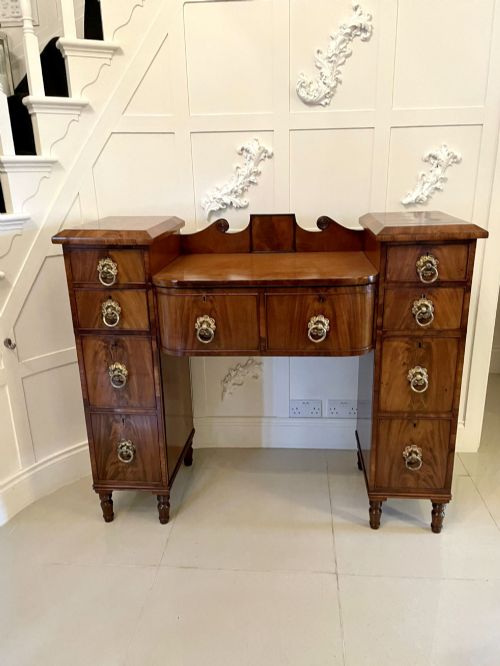
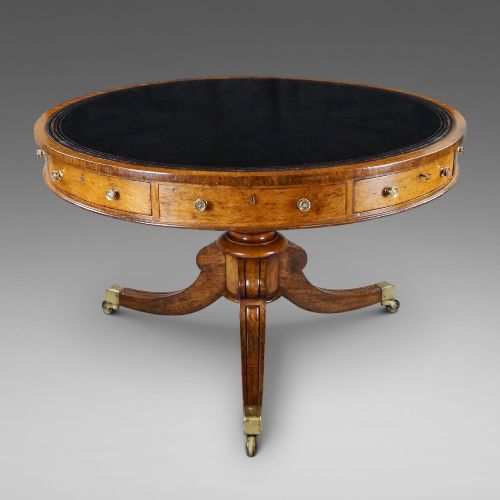
These regency pedestal desk table examples are substantial freestanding pieces built for serious study and correspondence, rendered in rich timber.
Regency Pedestal Desk Table
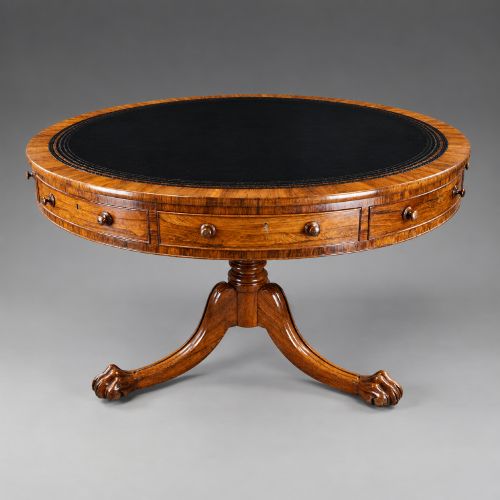
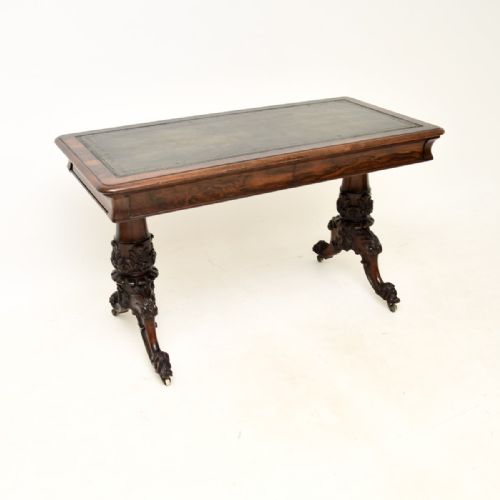
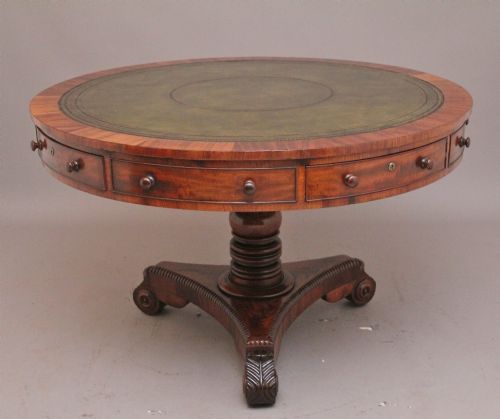
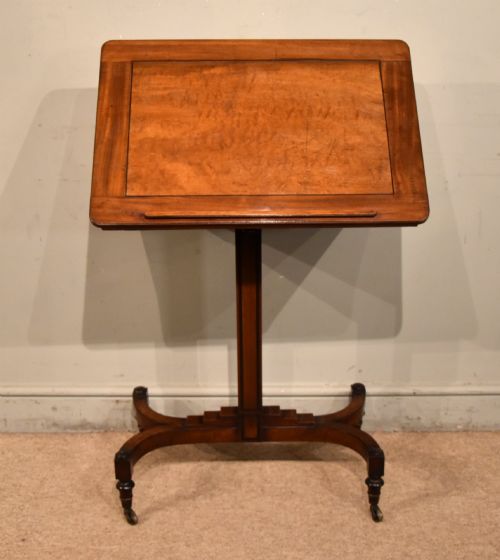
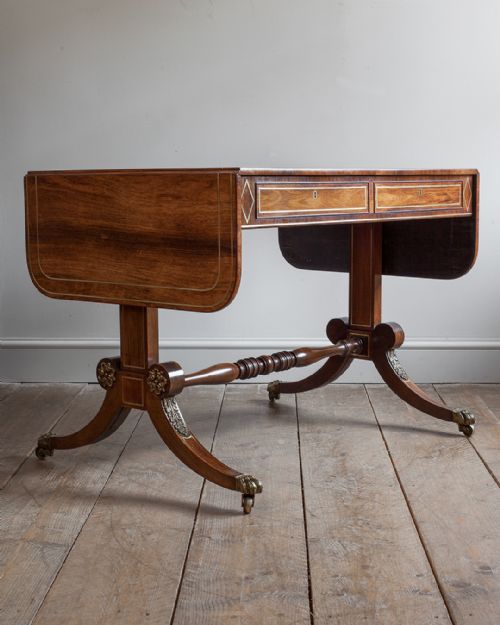
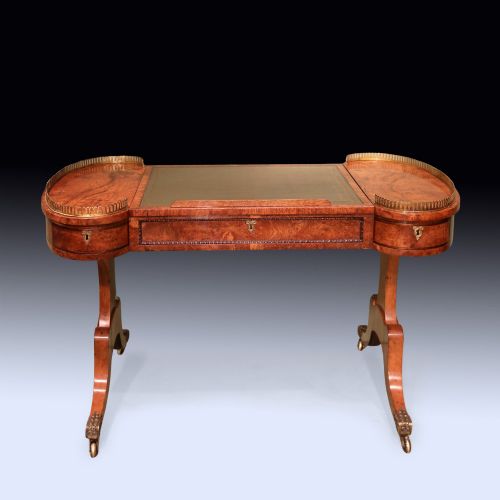
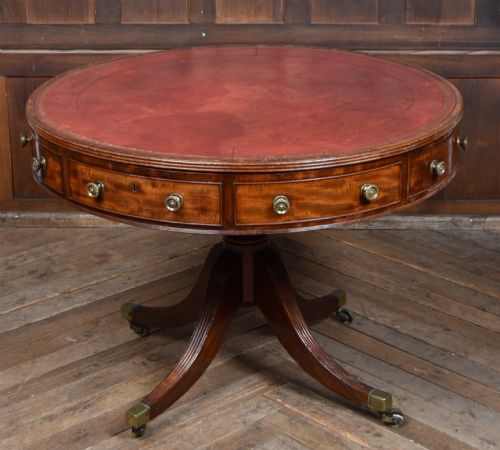
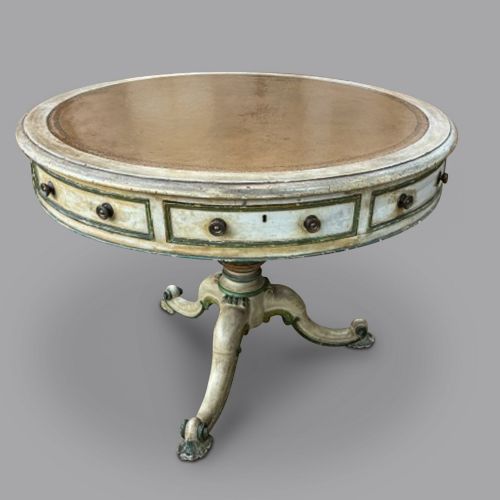
A regency pedestal desk table brings together formal writing desks, library tables, and freestanding drum tables designed to occupy the centre of a room rather than sit against a wall. The pieces listed span the nineteenth century, including Georgian, Regency, William IV, and Victorian iterations, with specific forms such as sofa tables, writing tables, and rotating drum tables.
Mahogany and rosewood dominate the selection, alongside oak, burr oak, goncalo alves, and burr root maple, frequently paired with fitted leather writing surfaces and brass hardware. These variants reflect the refined domestic and institutional interiors of the early nineteenth century and later revival periods.
How they were made
Cabinet makers utilised dense native and exotic timbers, selecting figured mahogany and richly grained rosewood for primary surfaces, while oak served structural components. Timber was expertly turned, carved, and polished to highlight natural grain patterns.
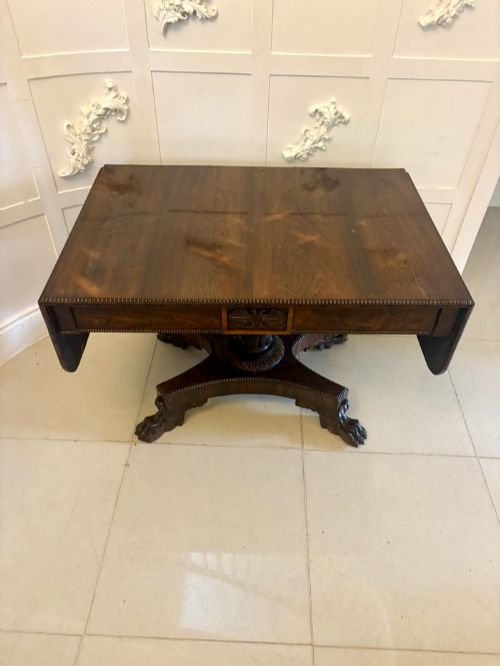
Specialist elements included inset leather tops for writing surfaces, inlaid brass details, and cast bronze or carved wooden feet such as lions paw supports. Drop-flap mechanisms, rotating drum tops, and pedestal bases required precise joinery to ensure stability and smooth operation.
Listings feature rosewood, mahogany, oak, and goncalo alves across periods spanning Georgian, Regency, and Victorian eras.
What varies in quality
Quality rests upon the choice and matching of timber veneers, where highly figured rosewood, burr oak, or goncalo alves elevate a piece above standard mahogany constructions. The sophistication of carved details, such as classical lion paw feet or intricate brass inlay, defines the upper tier.
Structural integrity in freestanding forms depends upon robust pedestal engineering and the preservation of original mechanisms, such as rotating drums or drop flaps. Pieces retaining distinct regional characteristics or documented origins display greater depth of craftsmanship.
Williams and Gibton·Gillows of Lancaster
The Regency Pedestal Desk Table Glossary
- Drum table
- A circular library table with a deep top containing drawers around the circumference, usually mounted on a central pillar and platform base.
- Sofa table
- An oblong freestanding table with drop leaves at either end, traditionally placed in front of a sofa during the Regency period.
- Goncalo alves
- A dense exotic hardwood with striking contrasting grain patterns, utilised for high-status cabinet work in the nineteenth century.
- Library table
- A large freestanding table designed for the centre of a room, used for reading and writing rather than dining.
- Pedestal base
- A central column support resting on a plinth or splayed legs, providing stability for heavy tables without corner legs.
Regency Pedestal Desk Table: Frequently Asked Questions
Where do you place a drum table?
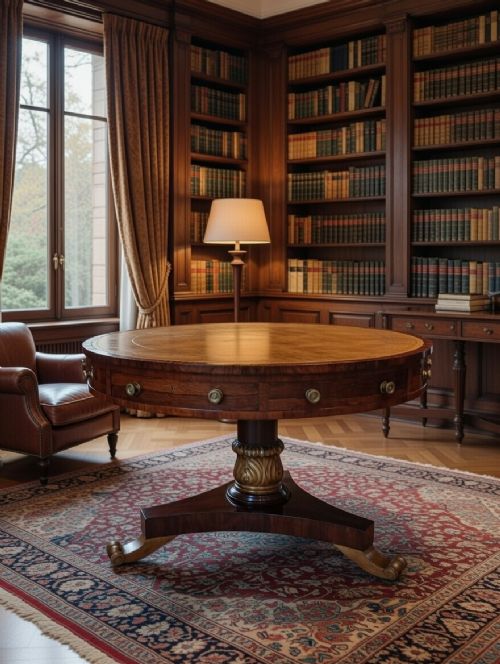
These circular tables are designed to stand in the centre of a room rather than against a wall, allowing access to drawers from any angle.
Their freestanding nature makes them effective focal points in libraries, studies, or large living spaces.
What is the difference between a sofa table and a writing table?
Sofa tables feature drop leaves on the short sides and were originally proportioned to sit behind or beside seating furniture.
Writing tables are generally fixed-size desks equipped with flat, often leather-lined tops intended specifically for correspondence.
How do I identify a William IV table?
William IV pieces date from the 1830s and typically exhibit heavy, robust proportions with dark rosewood or mahogany timbers.
They frequently feature bold carved details such as lotus leaf pedestals or heavy scrolled feet.
Are these tables suitable for daily use?
Many examples were built for active library or study use, incorporating sturdy pedestal bases and durable timber construction.
Leather writing surfaces and solid pedestals allow them to function effectively as modern desks or centre tables.