




Gilded Wooden Candlesticks
These gilded wooden candlesticks bring warm candlelight and rich texture to a room, offering centuries of European craftsmanship.
Gilded Wooden Candlesticks
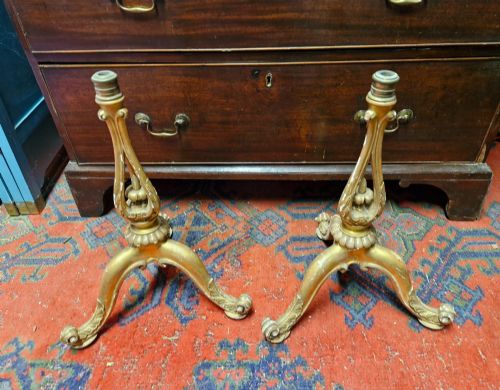
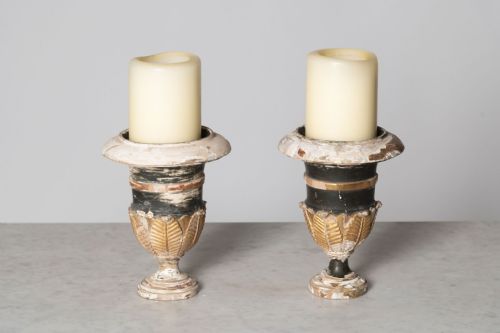
When you search for gilded wooden candlesticks, you encounter items shaped from timber, gesso, and gold leaf, designed to catch and reflect candlelight. The pieces on this page span the eighteenth and nineteenth centuries, taking the form of pairs, prickets, altar sticks, and standard lamps.
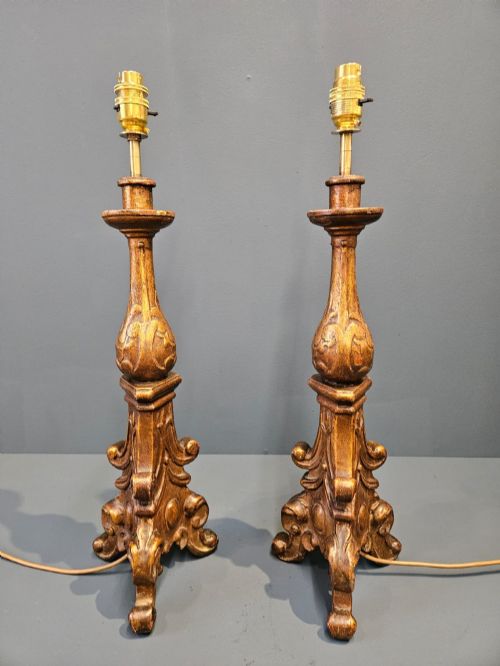
Italian, French, and English workshops created these items in styles ranging from Baroque and Rococo to Neoclassical and Victorian. Many original candleholders have subsequently been adapted into table lamps or standard lamps while retaining their carved wooden bases.
How they were made
Artisans carved solid wood or treen into intricate forms, often applying layers of gesso to create a smooth surface for detail work. Gold leaf or silver leaf was then laid over the preparation layers, sometimes utilising mecca varnish to impart a warm tone.
Makers finished the surfaces by burnishing the metal leaf or leaving certain areas matte to create contrast. Iron and brass components occasionally appear in structural parts or pricket spikes.
Listings feature items from the eighteenth century through the Victorian era, utilising giltwood, gesso, and carved wood.
What varies in quality
The depth and crispness of the wood carving distinguish finer examples from simpler production, particularly in acanthus leaves, scrollwork, and figural elements. Superior pieces retain their original gilding with minimal later touch-ups.
Proportion and scale dictate the visual presence of a pair, with taller altar sticks and balanced standards demanding greater joinery skill. The integrity of the underlying gesso and wood substrate also determines the longevity of the object.
The Gilded Wooden Candlesticks Glossary
- Giltwood
- Wood that has been coated with gold leaf or metal leaf over a prepared surface. It forms the primary decorative finish for many antique lighting pieces.
- Gesso
- A plaster mixture applied to wood to create a smooth base for carving and gilding. It allows for crisp relief details before the application of gold leaf.
- Pricket
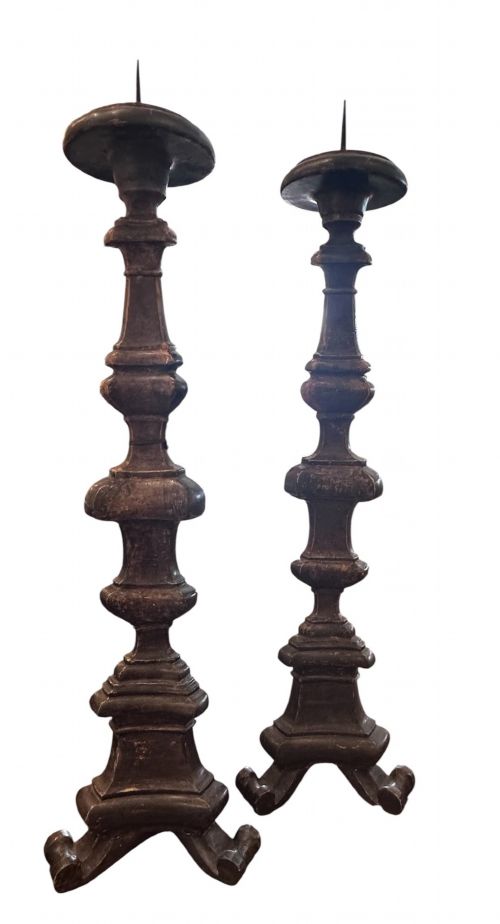
- A sharp metal spike on a candlestick designed to secure a candle with a hollow base. These are frequently found on altar-type sticks from the eighteenth century.
- Mecca
- A transparent yellow or golden varnish applied over silver leaf to imitate the warmer tone of gold. It appears on Venetian and continental pieces.
- Treen
- Small handmade wooden domestic objects. In this context, it refers to turned wooden construction elements.
Gilded Wooden Candlesticks: Frequently Asked Questions
Are these wired for electricity?
Many examples listed here started as traditional candleholders and were later converted into table lamps or standard lamps. The conversions vary in age, from older rewiring jobs to recent adaptations.
Buyers should inspect the specific listing details to see whether the wiring is modern or if the piece retains its original candle socket fittings.
How do I clean gilded wood?
Gilded surfaces require gentle maintenance to preserve the delicate gold leaf and gesso layers. Dusting with a soft, dry brush is generally sufficient for regular care.
Water, chemical cleaners, and abrasive cloths must be avoided, as moisture causes the gesso and gold leaf to lift from the wooden substrate.
What is an altar stick?
Altar sticks are tall candlesticks originally used on church altars, often featuring prominent pricket spikes and substantial wooden bases. They were built to be viewed from a distance during services.
Due to their height and decorative carving, antique altar sticks are frequently adapted into floor-standing or large table lamps.
How do I date these pieces?
Dating relies on stylistic clues, such as the exuberant curves of Baroque and Rococo designs versus the restrained symmetry of Neoclassical work. The type of wood, construction joints, and wear to the gold leaf also indicate age.
Eighteenth-century examples often display deeper hand-carving and heavier gesso layers, while nineteenth-century pieces may reflect revival styles and machine-turned elements.