


Giltwood Altar Candlesticks
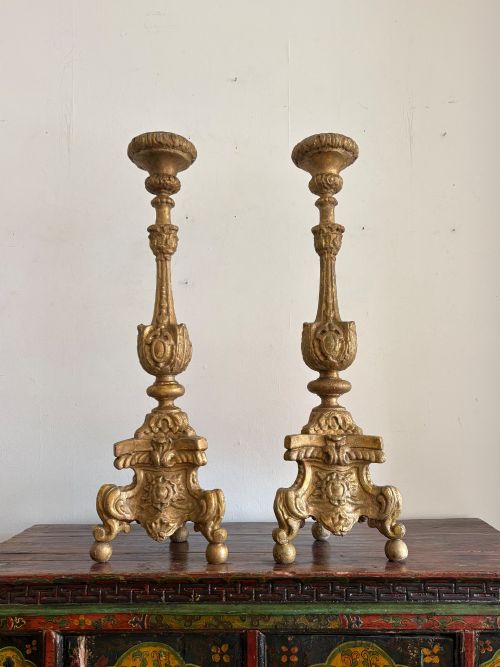
These giltwood altar candlesticks are carved wooden church lights finished in gold leaf that bring dramatic scale and aged ecclesiastical presence to an interior.
Giltwood Altar Candlesticks
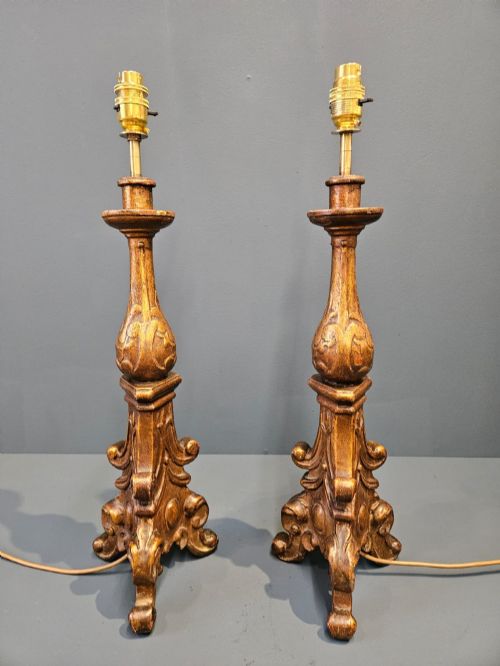
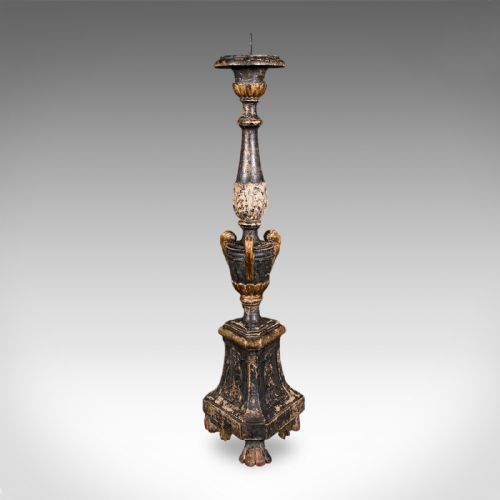
When you search for giltwood altar candlesticks, you encounter substantial church furnishings adapted over time into striking decorative objects and lamps. The examples on this page span the eighteenth and nineteenth centuries, taking forms such as paired altar sticks, prickets, and converted table lamps.
Italian and Spanish Baroque styles dominate the selection, bringing exuberant carved forms and impressive proportions to the pieces. You will also find English and continental interpretations alongside Victorian adaptations that retain the historic character of earlier centuries.
How they were made
The foundation of these pieces is carved wood, often layered with gesso to create a smooth surface for gilding. Craftsmen applied gold leaf to catch the candlelight in dimly lit churches, frequently combining this with silvered mecca finishes or polychrome details.
Many of these objects began as traditional altar candlesticks before being wired for electricity in later eras to serve as standard lamps and table lamps. Iron and brass components occasionally appear in the internal construction or fittings, supporting the carved wooden bodies.
Several of these towering church altar sticks spent decades illuminating Latin masses before finding a second career holding up standard lamp shades.
What varies in quality
The depth and vigour of the carving separate the finer pieces from simpler workshop productions. Crisp detail in the acanthus leaves, scrollwork, and turned elements indicates a more skilled hand during the initial creation.
The preservation of the original gold leaf and gesso surface influences the character of each piece. Patina accumulated over centuries on the wood and gilt provides visual depth that mechanical or modern refinishing lacks.
The Giltwood Altar Candlesticks Glossary
- Giltwood
- Wood that has been coated with gold leaf or gold paint. This finish creates a luminous metallic surface that ages with a distinctive crackle and warmth.
- Pricket
- A candlestick featuring an upright metal spike upon which a candle is impaled. These form a traditional feature of historic church altars.
- Gesso
- A plaster mixture applied to a wooden substrate as a base for gilding. It allows carvers to achieve sharp details before applying gold leaf.
- Baroque
- An artistic style characterised by exaggerated motion and ornate detail. This aesthetic manifests in the dramatic curves and scrolls of these altar pieces.
- Mecca
- A transparent golden varnish applied over silver leaf to simulate the appearance of gold. It provides a warm, historic metallic tone found on continental pieces.
Giltwood Altar Candlesticks: Frequently Asked Questions
What is a pricket candlestick?
A pricket candlestick uses a sharp metal spike to hold the candle rather than a socket. This design dates back centuries and appears frequently on historic altar pieces.
In modern settings, these items serve as decorative centrepieces or lamp bases while retaining their original ecclesiastical spike.
How do I date these candlesticks?
Dating relies on examining the carving style, the wood beneath the gilding, and the composition of the gesso layer. Eighteenth-century pieces typically display deeper hand-carving and heavier proportions.
Victorian and later interpretations often incorporate different turning techniques or modified bases adapted during nineteenth-century restorations.
Were these originally lamps?
Most of these pieces started life as purely decorative or functional church altar candlesticks holding wax candles. Many were subsequently converted into table lamps and standard lamps during the nineteenth and twentieth centuries.
This conversion involved running electrical wiring through the historic wooden core, blending antique sculpture with modern lighting.
Where were these pieces made?
The selection includes notable representations from Italian and Spanish workshops, reflecting the strong Catholic traditions of those regions. English Baroque examples also appear among the continental imports.
Italian Venetian-style pieces are particularly common, known for their elaborate carved gilt-wood and silvered finishes.