


Gilded Porcelain Serving Plates
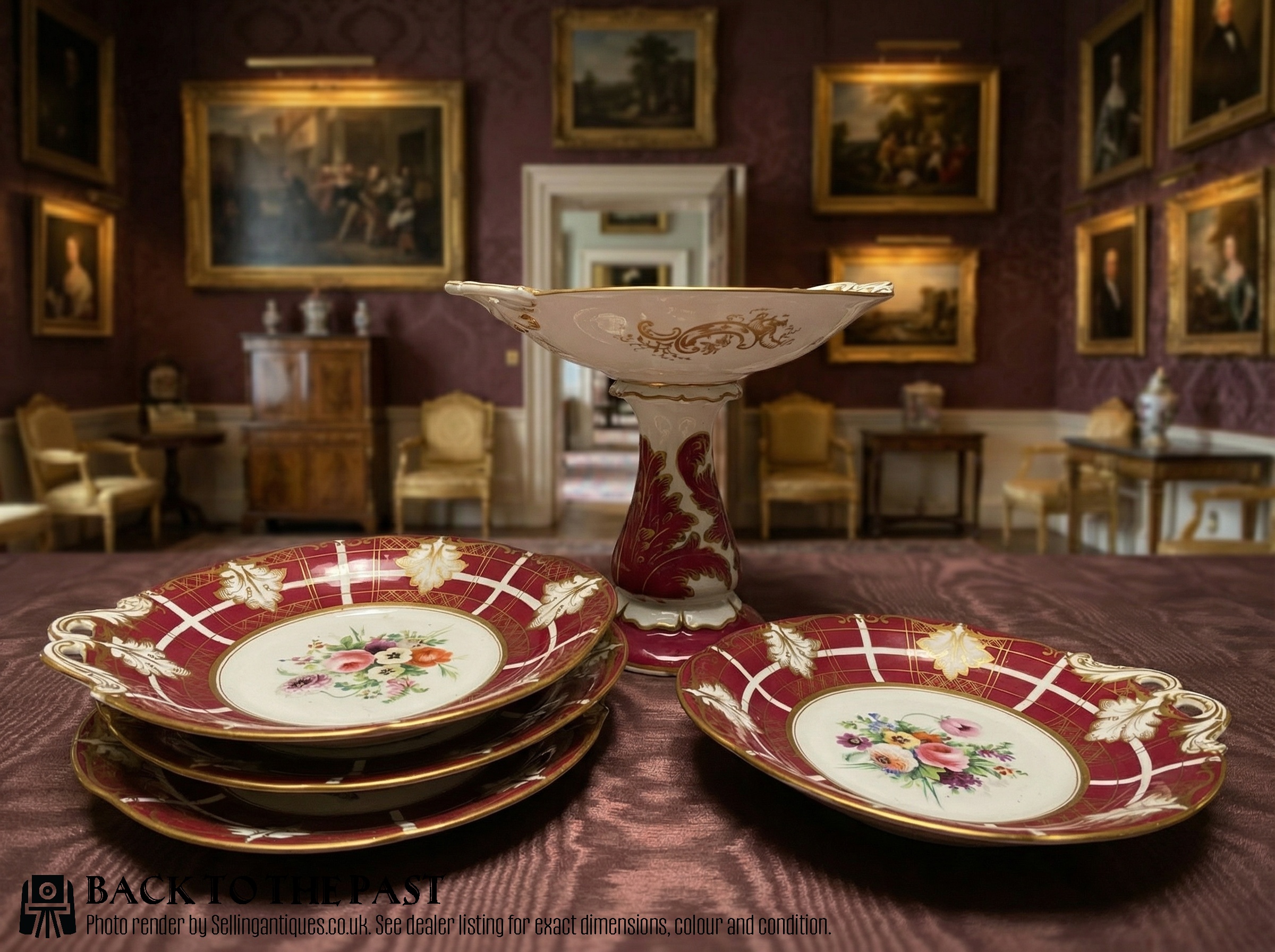
These gilded porcelain serving plates bring hand-painted birds, botanical studies and rich metallic accents straight to the dining table.
Gilded Porcelain Serving Plates
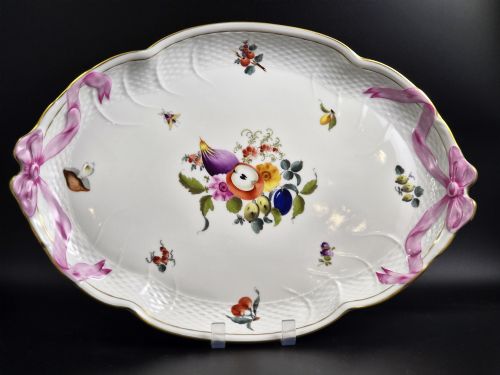
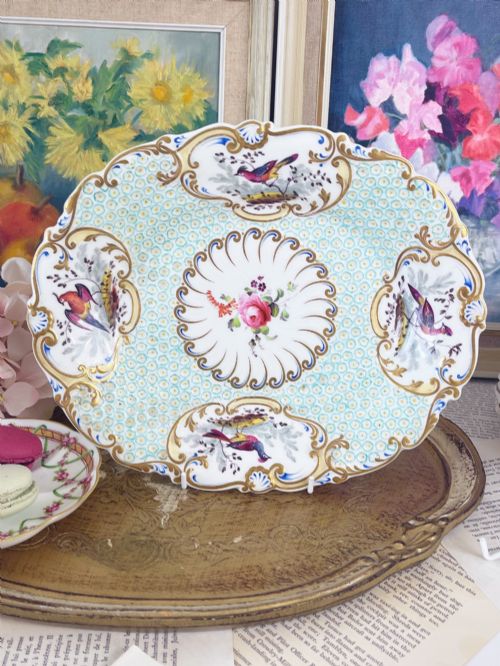
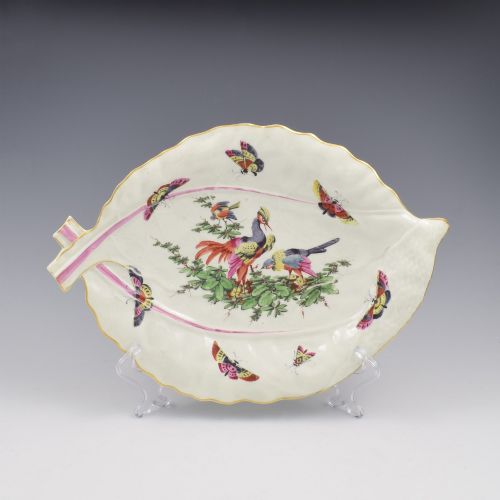
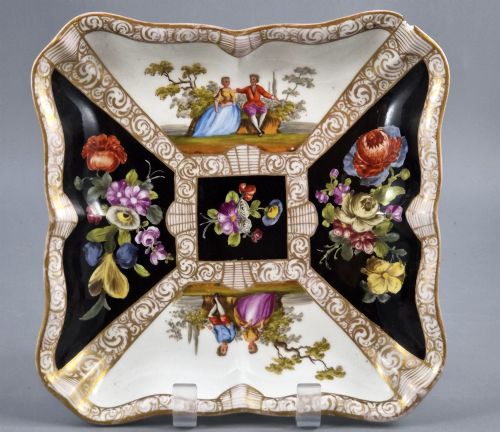
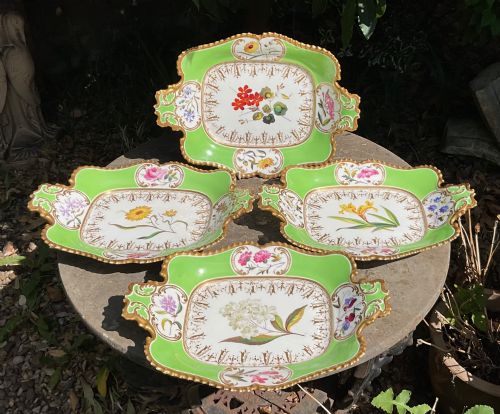
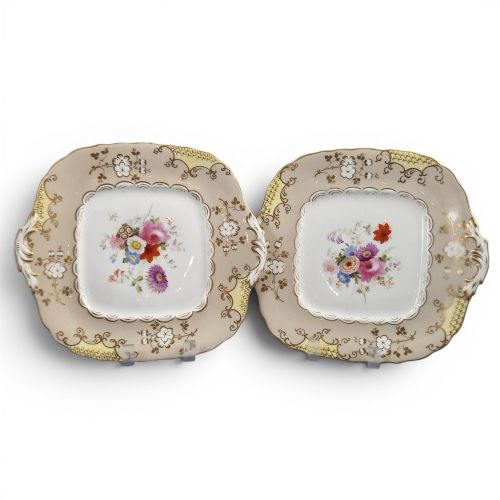
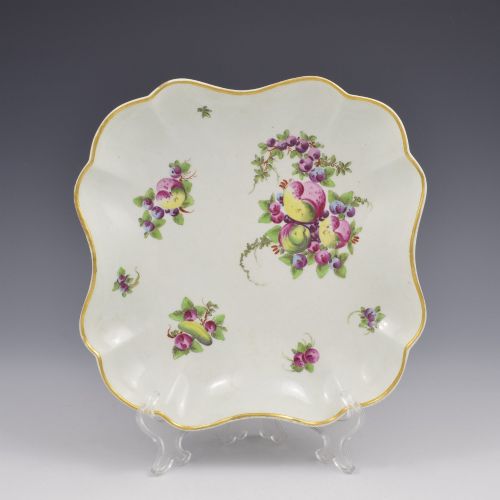
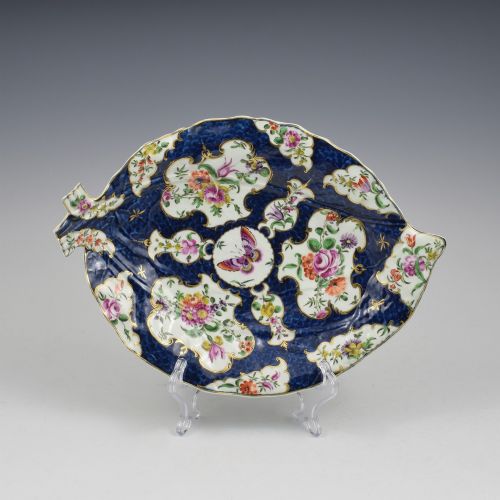
Gilded porcelain serving plates encompass a variety of decorative dishes, platters, square dishes and cabinet plates produced across the eighteenth, nineteenth and early twentieth centuries. These pieces appear in forms ranging from leaf-shaped dessert dishes to large chargers and oval serving trays.
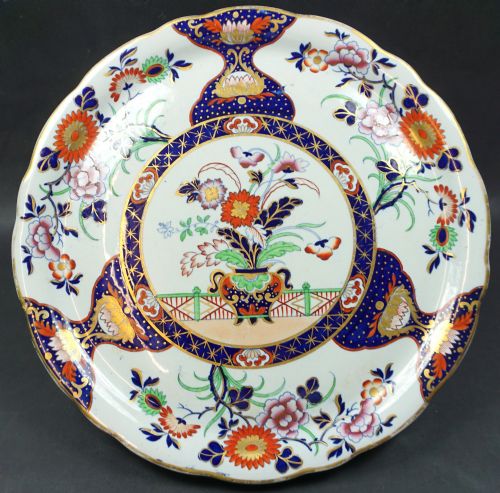
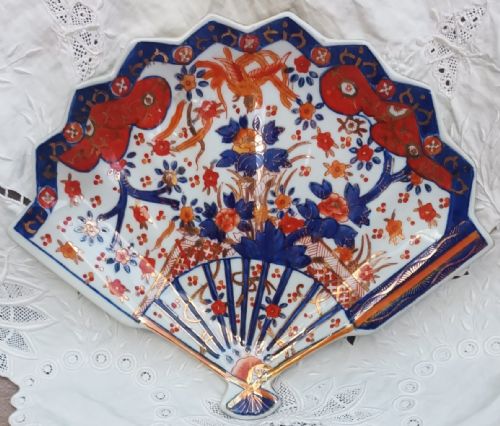
Makers utilised porcelain, bone china, ceramic and soft-paste porcelain as bases for elaborate hand-painted scenes, botanical illustrations and transfer printing. Gilt and gold leaf embellish rims, handles and central motifs across multiple styles including Regency, Georgian, Rococo and Japanese Imari.
Materials and technique
Potters shaped porcelain, bone china and soft-paste porcelain bodies either by hand throwing or by pressing clay into moulds to create shaped, lobed or square dishes. Artisans then applied enamel colours and gold leaf by hand before firing the ceramics in kilns to fix the decoration.
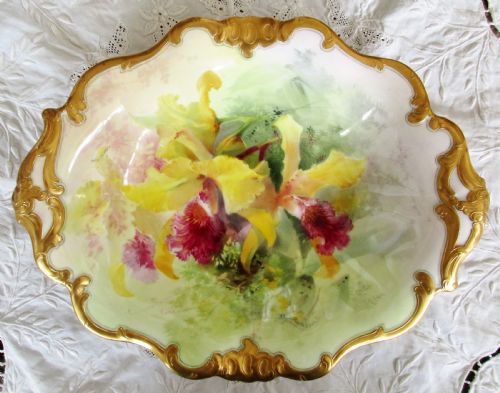
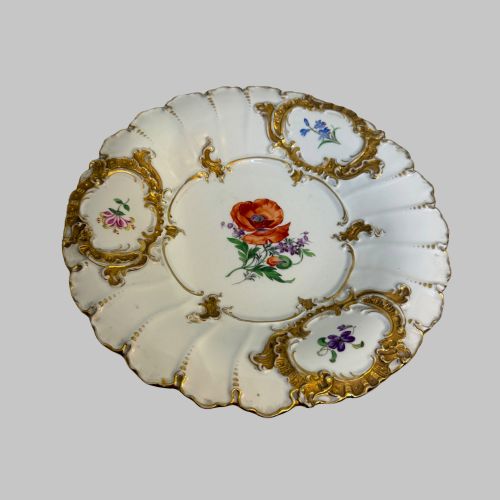
Gilding was executed using gold leaf or liquid gold paint, brushed or stamped onto the edges and borders of plates to frame central hand-painted subjects like birds, flowers and figures.
Listings feature porcelain, bone china, ceramic and soft-paste porcelain decorated with gold leaf, enamel and gilt across eighteenth and nineteenth-century periods.
Measures of quality
Quality rests upon the execution of the hand-painting, particularly in complex subjects such as botanical studies, Watteau scenes and detailed bird studies by named artists. The crispness of the porcelain moulding and the precision of the gilding also separate standard production wares from exceptional cabinet pieces.
The application and preservation of gold leaf determine visual impact, where burnished and heavy gilding retains more depth than thin, worn metallic paint. Factory provenance and attribution to specific decorators or pattern designers elevate individual examples.
Dr Wall Worcester·Coalport·Meissen·Chamberlains Worcester·Royal Doulton·Wedgwood·Hicks & Meigh·Barr Flight & Barr·John Ridgway·Rockingham Pottery·Paul Müller Selb
The Gilded Porcelain Serving Plates Glossary
- Soft-paste porcelain
- An artificial porcelain compound composed of white-firing clay and glass frit, fired at lower temperatures than hard-paste porcelain. It is common in eighteenth-century English manufactories.
- Gilding
- The application of gold leaf or powdered gold to the surface of ceramics. This technique highlights rims, handles and borders.
- Imari
- A style of Japanese porcelain decoration featuring underglaze blue, iron red and rich gilding. It influenced European ceramic production significantly.
- Cabinet dish
- A decorative plate intended for display in a cabinet or on a wall rather than for practical dining use. These pieces often feature highly detailed hand-painted scenes.
- Enamel
- Opaque glass-based pigments applied over the glaze and fired at lower heat. Enamels provide the vibrant colours seen on floral and figural plates.
Gilded Porcelain Serving Plates: Frequently Asked Questions
Were these serving plates used for dining?
Many of these items functioned as dessert dishes, supper sets, or large chargers for presenting food during formal nineteenth-century meals. Dessert services included matching sets of plates and dishes designed specifically for the final course.
Cabinet dishes and decorative chargers served primarily as ornamental display objects rather than everyday tableware.
How can I identify the period of a plate?
Examine the base of the ceramic for factory marks, pattern numbers, or painter signatures, which help pinpoint the exact decade of manufacture. Stylistic markers such as Regency shapes or Rococo Revival moulding also offer strong chronological clues.
The type of porcelain body, whether soft-paste, bone china, or heavy ironstone, often corresponds to specific manufacturing eras.
What is Japanese Imari influence on European plates?
European factories frequently copied the distinctive blue, red, and gold colour palette of Japanese export wares during the eighteenth and nineteenth centuries. These interpretations blended traditional Eastern motifs with European ceramic forms.
Plates finished in this style combine bold underglaze blue with heavy gilding and iron-red floral patterns.