


Blue Gold Porcelain Dishes
When you handle blue gold porcelain dishes, you hold pieces that combine cobalt grounds with rich gilding across centuries of kiln work.
Blue Gold Porcelain Dishes
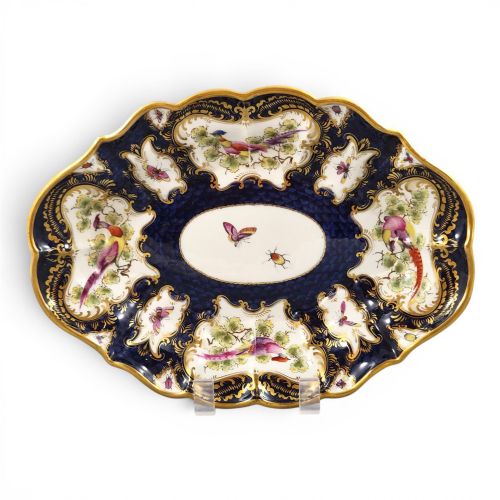
Blue gold porcelain dishes comprise cabinet plates, serving dishes, and decorative bowls produced across the eighteenth, nineteenth, and twentieth centuries. These items serve primarily for display rather than routine dining, featuring prominently in formal rooms and collections.
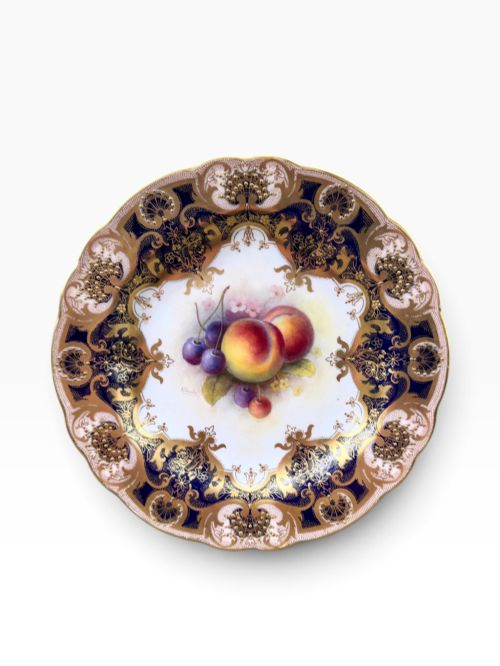
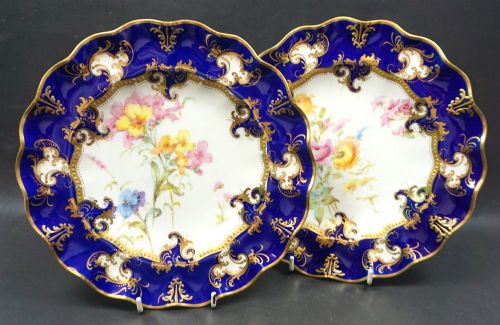
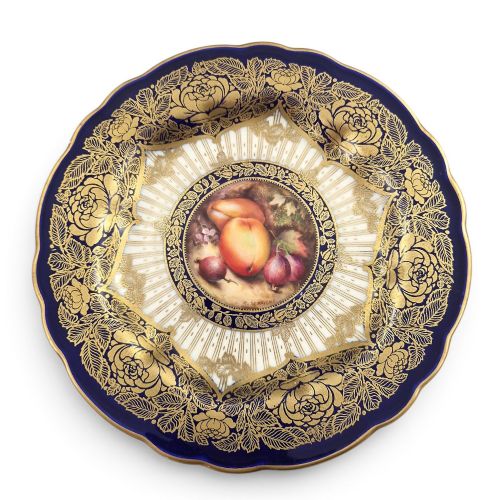
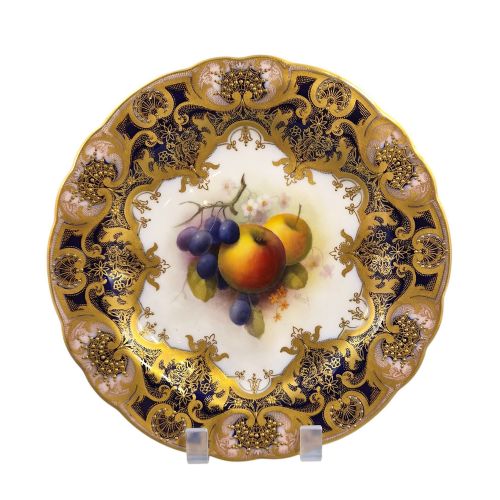
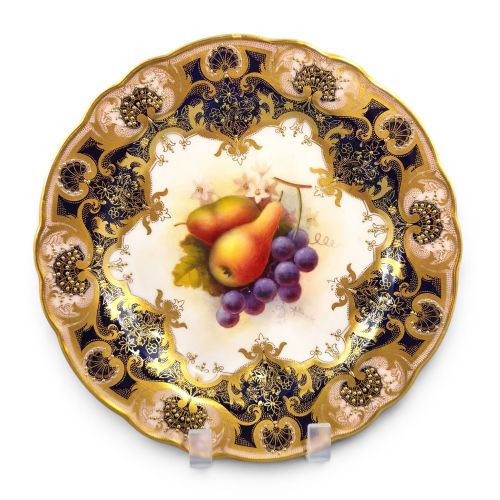
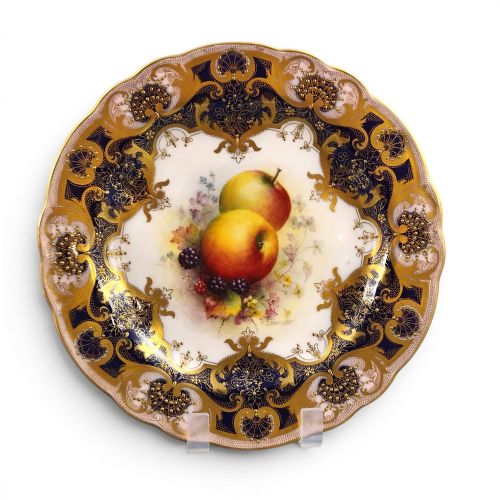
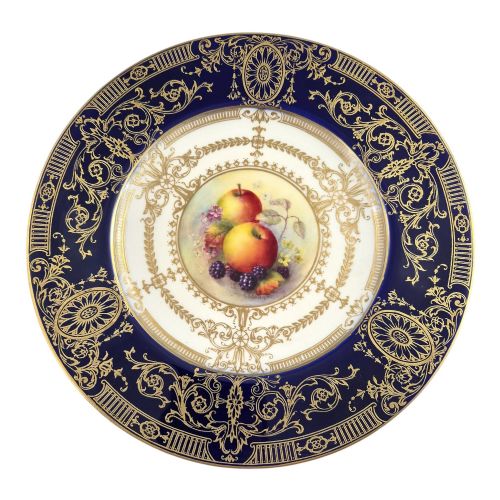
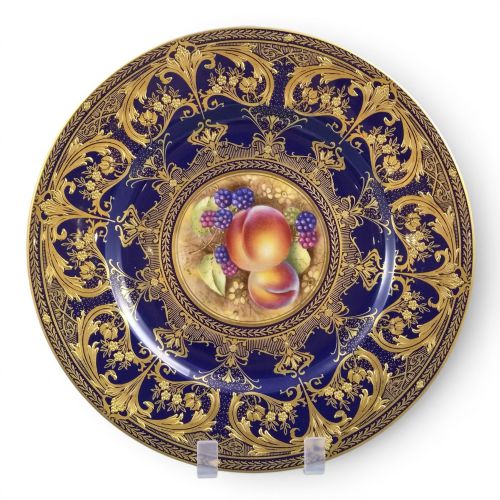
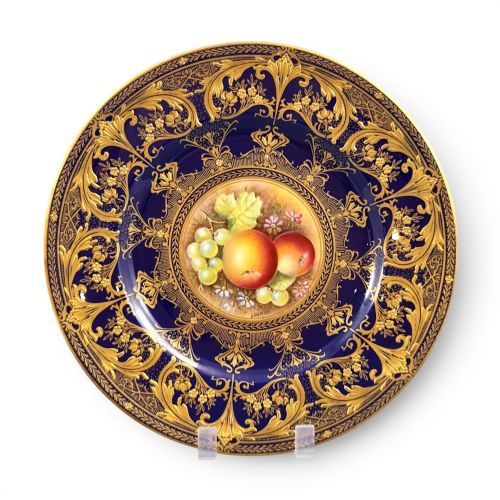
The version you are most likely to meet on this page is the English or continental cabinet plate, frequently decorated with hand-painted fruit, florals, or mythological scenes framed by deep cobalt blue and heavy gilding. Makers such as Royal Worcester and Wedgwood dominate the selection, alongside continental factories like Sevres and Royal Vienna.
How they were made
Potters shaped these vessels from refined porcelain and bone china, applying cobalt blue underglazes or enamels before firing at high temperatures. Artisans then added gold leaf, gilt, and lustre glaze by hand, often returning the piece to the kiln multiple times to set the metallic layers.
Detail work relied heavily on hand-painting and tooled gilding, executed by named artists and specialists working within major factories. The combination of intense blue grounds and raised gold tooling required steady brushwork and precise temperature control.
Listings span the eighteenth century through the 1960s, featuring bone china, porcelain, enamel, and heavy lustre glazes.
What varies in quality
Quality rests on the depth of the painting and the precision of the gilding rather than the age alone. Finely executed hand-painted fruit or figural scenes by known artists elevate a plate far above standard transfer-printed wares.
The weight, clarity, and resonance of the porcelain body, alongside the crispness of tooled or raised gold work, distinguish superior cabinet pieces from routine production items.
Royal Worcester·Royal Crown Derby·Wedgwood·Coalport·Meissen·Sevres·Royal Vienna
The Blue Gold Porcelain Dishes Glossary
- Cabinet plate
- A decorative plate intended for display in a cabinet or on a wall rather than for practical table use. These often feature elaborate hand-painted central panels.
- Gilding
- The application of gold leaf or powdered gold to the surface of porcelain. It provides the metallic borders and highlights characteristic of these wares.
- Lustre glaze
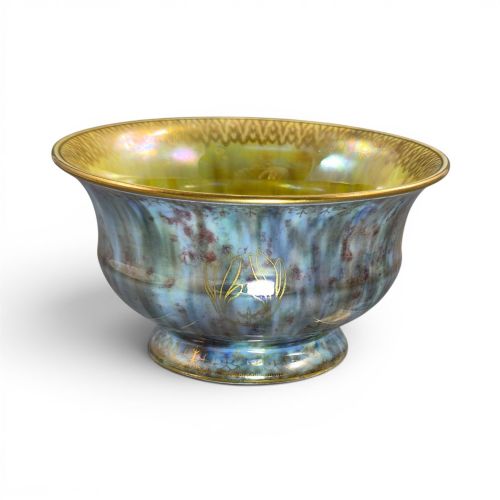
- A type of ceramic glaze containing metallic oxides that produce an iridescent, rainbow-like sheen when fired. Wedgwood utilised this technique extensively on dragon bowls.
- Cobalt blue
- A deep, stable blue pigment derived from cobalt oxide, used extensively for rich background washes and underglaze decoration. It contrasts sharply with applied gold leaf.
- Bone china
- A type of soft-paste porcelain containing bone ash, known for its high strength, chip resistance, and translucent white body. English factories adopted this material widely.
Blue Gold Porcelain Dishes: Frequently Asked Questions
What are blue gold porcelain dishes?
These items are decorative ceramic plates, bowls, and dishes distinguished by cobalt blue grounds and extensive gold leaf or gilding. They encompass English, continental, and Asian production ranging from the eighteenth to the twentieth century.
Most function as cabinet pieces intended for visual display rather than daily domestic service. Their surfaces frequently showcase hand-painted scenes, botanical studies, or intricate gilded borders.
How were these dishes used historically?
Historically, owners displayed these plates in cabinets, on sideboards, or mounted them on walls to signal wealth and refined taste. Dessert dishes and serving pieces occasionally appeared on formal dining tables during significant banquets.
Over time, many shifted from functional dining wares entirely into collector's items. Their delicate hand-painted surfaces meant they spent more time in display cabinets than handling food.
How can I tell periods apart?
Differentiating periods relies on examining factory backstamps, glaze characteristics, and painting styles. Eighteenth-century pieces often display hand-penned marks and Kakiemon influences, while nineteenth-century items frequently feature moulded borders and heavy cobalt grounds.
Twentieth-century examples, such as those from the Art Deco period or the 1970s, showcase distinct artist signatures and brighter enamel palettes. Comparing the style of the hand-painted reserves provides a reliable guide to the era of production.