

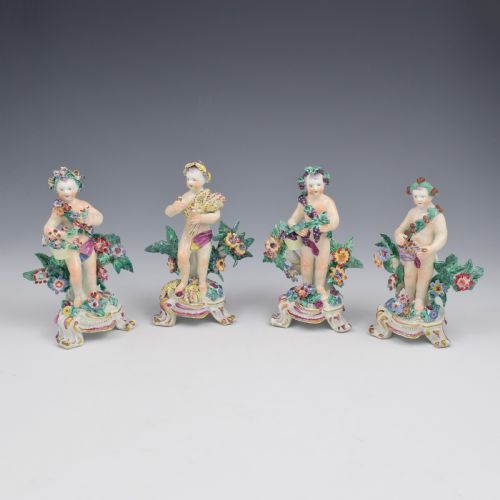


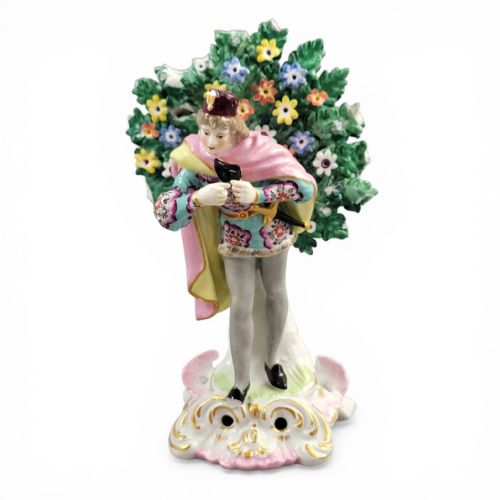

Gilded Porcelain Figurine
These gilded porcelain figurine examples bring 18th-century and 19th-century ceramic art into the room with substantial historical weight.
What they are
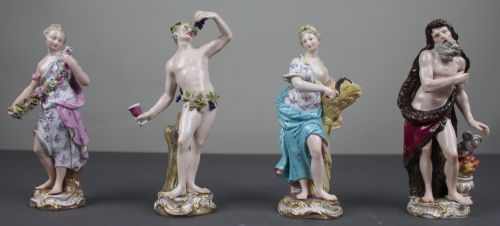
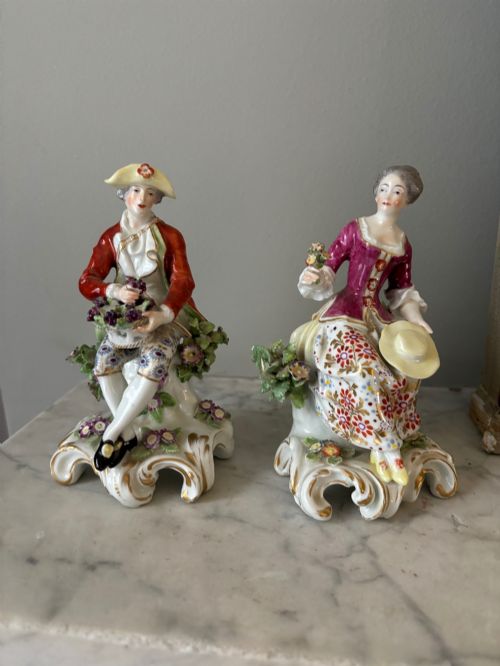
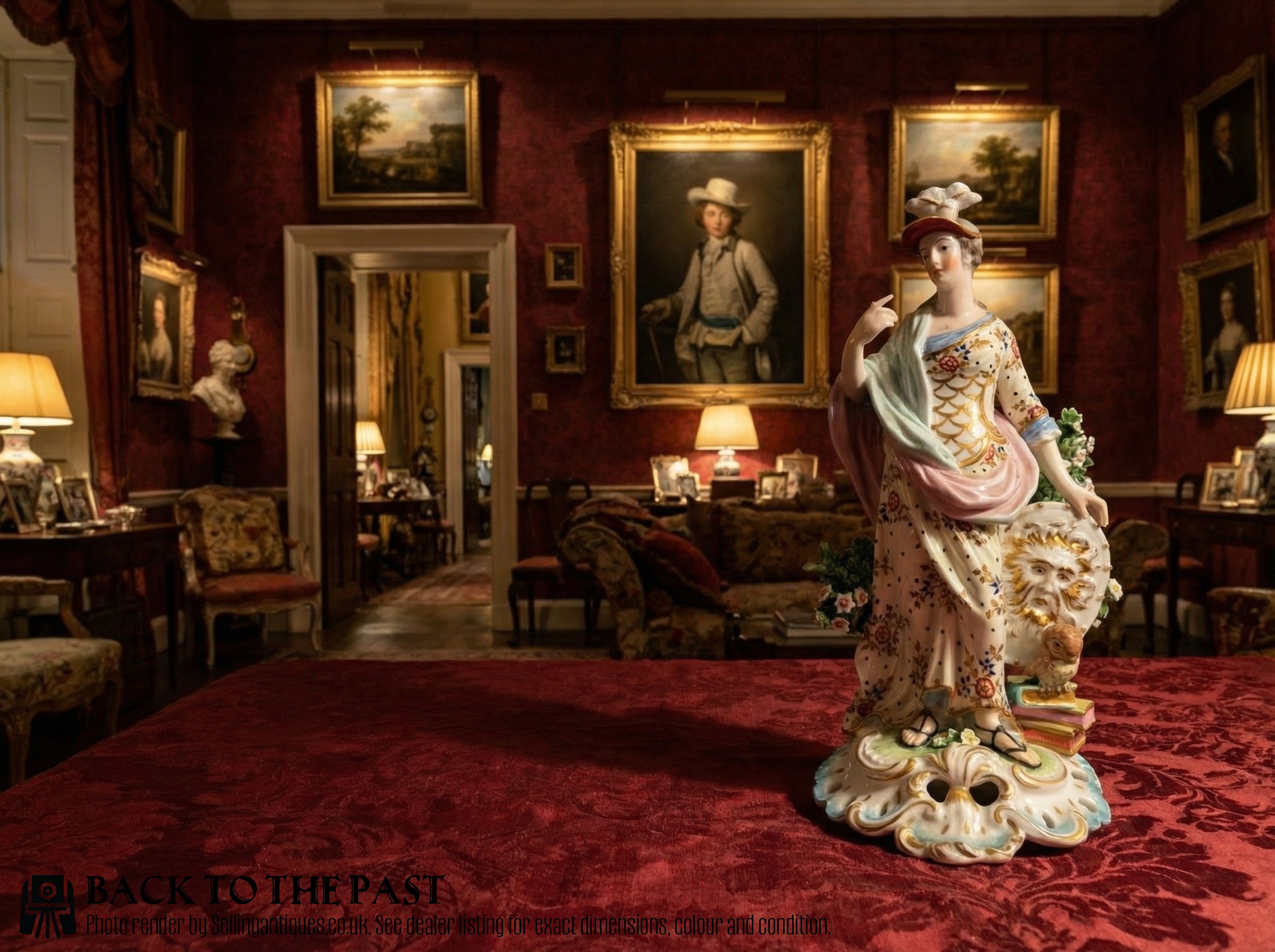
A gilded porcelain figurine represents human, theatrical, and allegorical subjects shaped from ceramic paste and enriched with gold leaf or metallic paint. When searching for a gilded porcelain figurine, buyers encounter a range of forms from Georgian and Victorian periods, including actors, seasonal figures, and mythological deities.
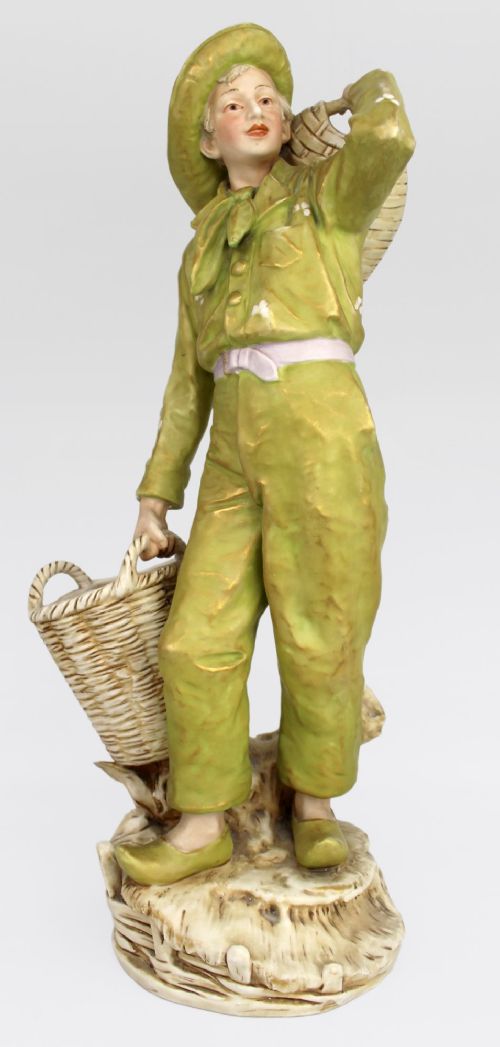
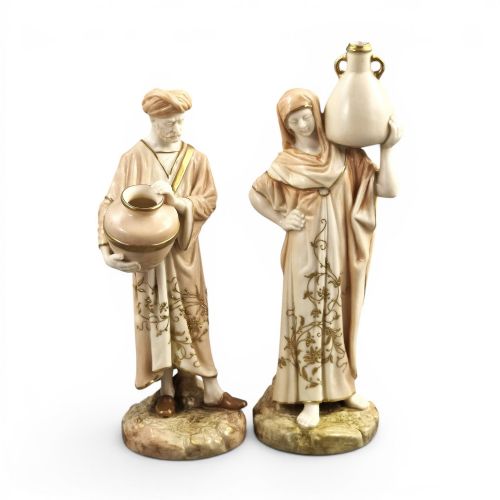
The inventory on this page spans soft-paste and hard-paste porcelain creations originating from historic factories such as Bow, Chelsea, Derby, Meissen, and Royal Worcester. Makers captured diverse cultural and theatrical subjects, from classical figures like Minerva and Mars to tradespeople and figures from the Indian Craftsmen Series.
Most pieces date to the 18th and 19th centuries, reflecting stylistic shifts from Rococo curves to Victorian Orientalism and Rococo Revival. Figures range from individual decorative statuettes to more complex groups, such as courting couples accompanied by classical busts.
How they were made
Gold leaf and surface gilding were meticulously applied to accent clothing, bases, and decorative motifs, providing the characteristic metallic shimmer seen across these historic figures. Blush ivory glaze also appears on specific Victorian works, offering a distinct matte surface texture.
Retail Price Guide 2026
Typical UK retail prices for gilded porcelain figurine, calculated from the Sellingantiques database of over a million retail prices indexed since 2003. This retail price guide relies exclusively on Sellingantiques data; no external sources or auction records are used, so the figures do not describe the wider market.
Current listings feature porcelain materials including enamel, gold leaf, and blush ivory glaze across 18th-century and 19th-century periods.
What varies in quality
Quality rests in the precision of the modelling and the finesse of the hand-painted enamel work across the porcelain body. Superior examples display crisp facial expressions, well-defined drapery, and confident application of gold leaf rather than heavy or flat gilding.
The artistic ambition of the factory shapes the tier of the piece, distinguishing standard decorative figures from complex theatrical or allegorical representations modelled by known factory artists.
Edmé Samson Paris·Bow Porcelain·Royal Worcester·Derby Porcelain·Meissen·Chelsea Porcelain
The Gilded Porcelain Figurine Glossary
- Hard-paste porcelain
- A durable ceramic material fired at high temperatures, composed of kaolin and petuntse. It produces a dense, bright white body that resists scratching.
- Soft-paste porcelain
- An earlier ceramic composition fired at lower temperatures, containing glass frit and white clay. It yields a warmer tone and a softer surface texture.
- Blush ivory glaze
- A specialised creamy matte glaze developed during the Victorian era. It provides a soft, non-reflective background for painted details and gilding.
- Gilding
- The application of gold leaf or powdered gold to ceramic surfaces. It highlights decorative elements and adds a reflective metallic finish.
Frequently Asked Questions
What periods do these pieces date from?
The pieces span the 18th and 19th centuries, encompassing both the Georgian and Victorian eras.
Factory production methods and stylistic markers evolved significantly across these periods, moving from early soft-paste compositions to later Victorian innovations.
How were gilded porcelain figures used historically?
These statuettes served as decorative ornaments and table centrepieces for wealthy households during the Georgian and Victorian periods.
They often depicted theatrical characters, allegorical themes, or cultural subjects to display the owner's sophistication and taste.
How do I distinguish 18th-century pieces from Victorian items?
Eighteenth-century examples often utilise soft-paste porcelain with Rococo modelling and hand-painted enamel details.
Victorian pieces frequently display distinct glazing styles, such as blush ivory, alongside Revival aesthetics or Orientalist subjects.
What subjects do these porcelain figures depict?
The subjects range widely from classical deities like Minerva and Mars to theatrical actors and seasonal representations.
Other pieces portray specific tradespeople or cultural figures, reflecting the diverse interests of historic European porcelain factories.