
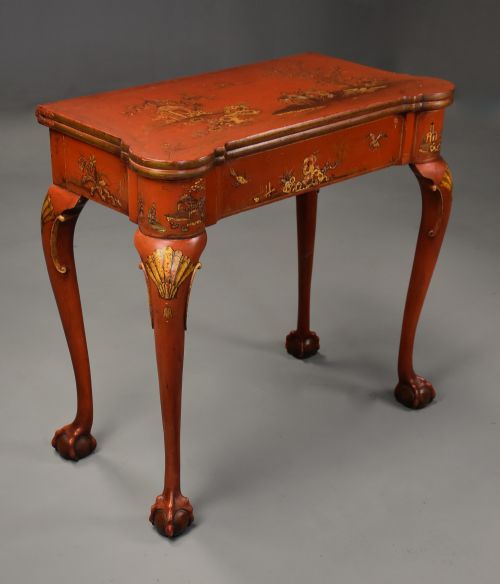
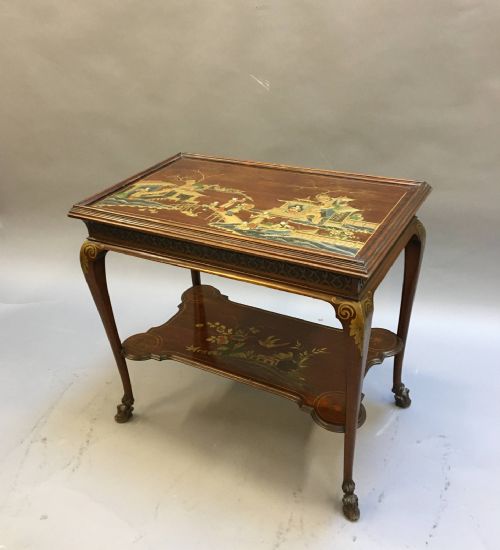


Gilded Lacquer Side Tables
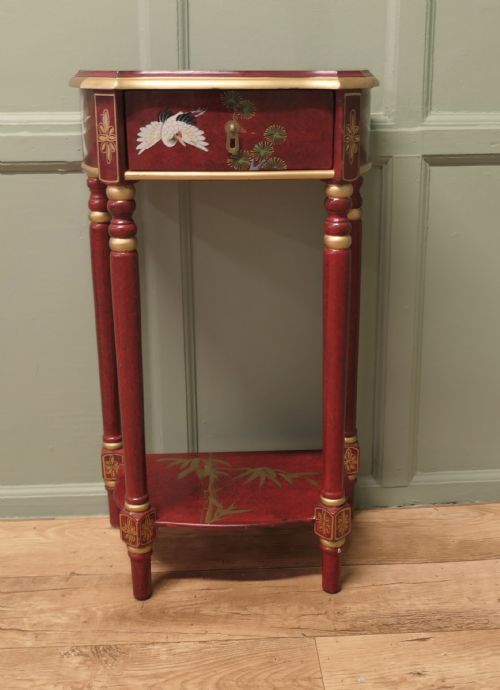
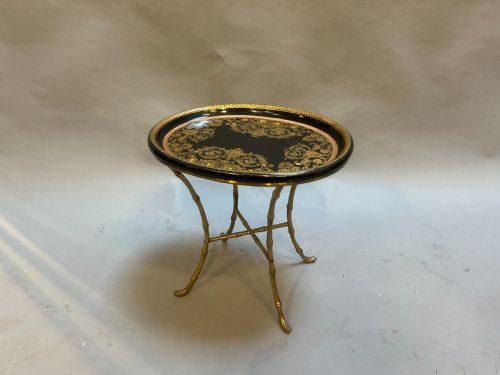
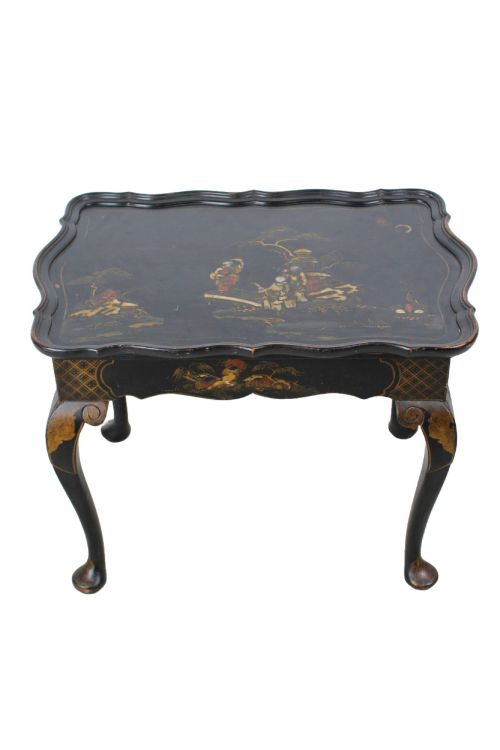
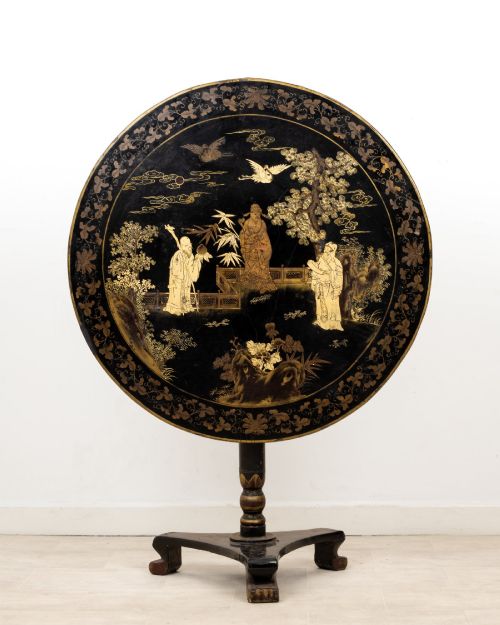
These gilded lacquer side tables bring rich painted narratives and metallic lustre into a room.
Gilded Lacquer Side Tables
Gilded lacquer side tables unite orientalist decorative motifs with practical household forms, spanning periods from the eighteenth century through to the interwar decades. Buyers searching this phrase encounter nests of tables, occasional tables, and coffee tables decorated in the Chinoiserie taste.
The versions most commonly met on this page date from the nineteenth and early twentieth centuries, including Edwardian and Victorian interpretations. These pieces often take the form of nests of four tables or single tray-top occasional tables finished in black or red lacquer.
Origins stretch from English workshops producing Japanned and Chinoiserie furniture to Chinese Export pieces made for the Western market. Alongside traditional tables, buyers find related forms such as games tables, sewing tables, and table lamps sharing the same lacquer vocabulary.
Materials and construction
Construction relies upon wood, hardwood, and papier-mâché as a base for multiple coats of lacquer. Artisans built up these smooth surfaces before applying hand-painted designs and metal leaf details.
Gold leaf and gilt provide the metallic highlights characteristic of the style, defining figures, landscapes, and floral borders against dark lacquer grounds. Boulle-work occasionally appears alongside the lacquer to introduce contrasting brass and tortoiseshell inlays.
Object types range from nests of tables and occasional tables to table lamps and sewing tables.
Assessing the pieces
Quality reveals itself in the crispness and depth of the hand-painted Chinoiserie decoration and the stability of the lacquer surface. Superior examples display intricate detailing and harmonious proportions across nests of multiple tables.
The choice of base material influences the character of the piece, with solid hardwood structures and finely moulded papier-mâché trays representing distinct manufacturing traditions. The preservation of the original gilding and the smoothness of the lacquer finish distinguish finer items.
Henry Clay
The Gilded Lacquer Side Tables Glossary
- Chinoiserie
- European decorative style reflecting Chinese artistic influences, prominent in furniture decoration through painted landscapes and figures. This aesthetic defines the majority of the lacquer surfaces seen here.
- Japanned
- European imitation of Japanese and East Asian lacquerwork, created using layers of varnish and metallic dust. English workshops utilised this technique on eighteenth and nineteenth-century furniture.
- Papier-mâché
- Composite material made from paper pulp or layers of paper bound with glue, pressed and dried into sturdy forms. It serves as a lightweight base for smooth lacquer and painted trays.
- Nest of tables
- Set of graduated tables designed to fit neatly beneath one another when not in use. They appear frequently in sets of three or four.
- Tilt-top table
- Table with a top that pivots on a catch, allowing the surface to be stored vertically against a wall. This mechanism saves space in smaller drawing rooms.
Gilded Lacquer Side Tables: Frequently Asked Questions
What is a nest of tables?
A nest of tables is a set of graduated pieces designed to stack neatly underneath the largest table. They provide flexible surface space that can be expanded or reduced as needed.
In this selection, sets of three or four tables frequently appear decorated with lacquer and gilt motifs.
How do I identify Chinoiserie furniture?
Chinoiserie furniture is identified by its European interpretation of East Asian design, typically featuring painted scenes of figures, pavilions, and pagodas. These motifs are rendered in gold leaf against dark lacquer grounds.
Such decoration was popular during the eighteenth century and saw major revivals throughout the Victorian and Edwardian periods.
What is Japanning?
Japanning is a European technique developed to replicate Asian lacquerware using resin varnishes and metallic powders. Craftsmen built up glossy surfaces before adding painted and gilded details.
English furniture makers used this method to produce decorative tables and cabinets.
Where were papier-mâché tables made?
Papier-mâché tables were largely produced in British workshops, particularly in Birmingham and London, during the nineteenth century. The material allowed for moulded forms with smooth surfaces ideal for lacquer.
These pieces often featured tray tops and hand-painted Chinoiserie ornamentation.