





Decorative Black Accent Tables
These decorative black accent tables bring striking surface work and varied forms into a room, offering both utility and distinct period character.
Decorative Black Accent Tables
Decorative black accent tables encompass a variety of small functional furniture pieces, ranging from occasional tables and wine tables to nests of tables and painted three-tier tables. Buyers searching for decorative black accent tables encounter items originating from the nineteenth century, nineteen hundred, the Victorian era, and nineteen thirty.
How they were made
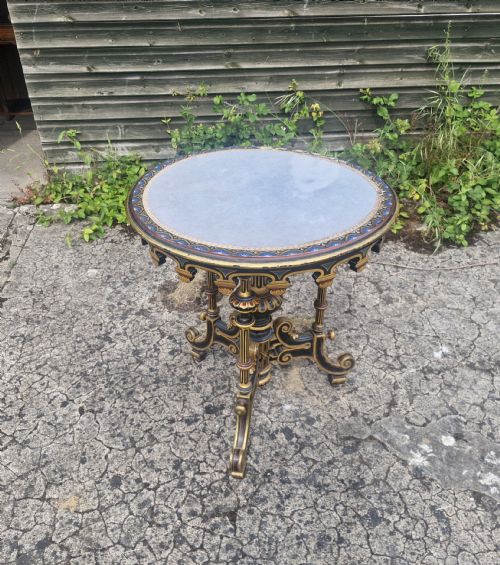
Construction relies upon traditional materials like wood, lacquered wood, and papier-mâché, shaped into structural forms such as tripartite bases and tiered surfaces. Artisans applied paint, lacquer, and gold leaf to create dark, decorated finishes.
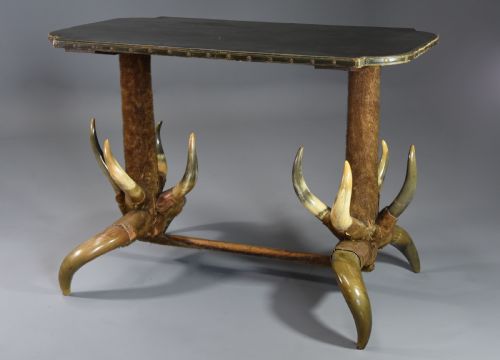
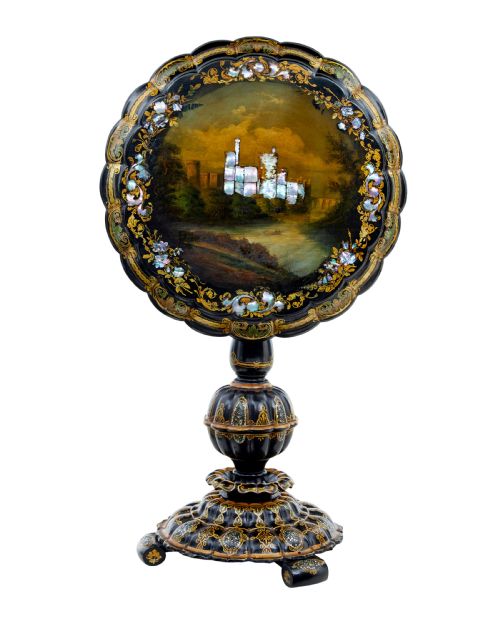
Surface ornamentation incorporates detailed inlay work using mother-of-pearl, alongside applied fabric elements and brass components. Bronze, marble, and even horn appear in specific pieces, demonstrating varied manufacturing traditions.
What varies in quality
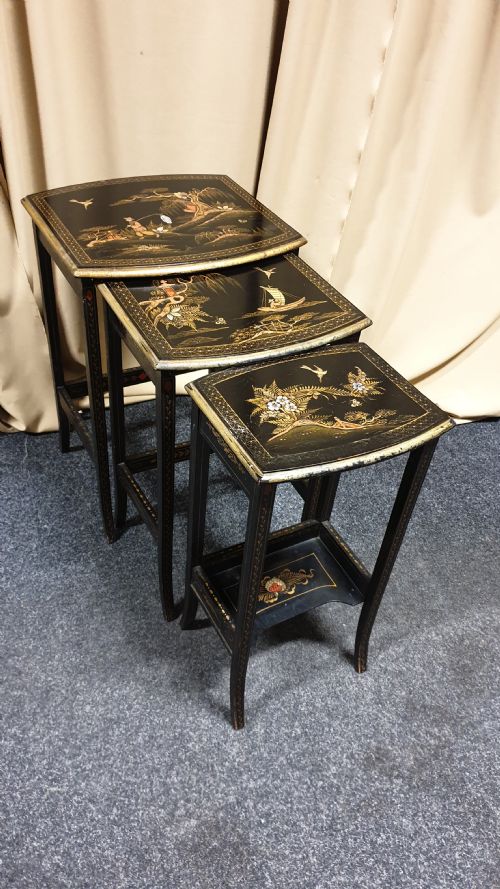
Quality differentiates through the execution of surface decoration, particularly in the precision of painted Chinoiserie motifs, gold leaf application, and mother-of-pearl inlay work. Superior examples maintain the integrity of their original painted and lacquered finishes across intricate forms.
Material selection and structural complexity also divide the range, from simple turned wine tables to multi-tiered occasional tables and papier-mâché tilt-top surfaces. The skill involved in combining distinct elements, such as ebonised bases and inlaid panels, dictates the distinction of individual pieces.
The Decorative Black Accent Tables Glossary
- Chinoiserie
- European decorative style reflecting Chinese artistic influences. This style frequently employs black lacquer, painted figures, and gold detailing on tables and lamps.
- Papier-mâché
- Composite material made from paper pulp or layers of paper mixed with adhesive. It was moulded into table tops and inlaid with mother-of-pearl.
- Tripartite base
- A three-sided or three-pronged support structure. Such bases provide stability to wine tables and occasional pieces.
- Tilt-top table
- A table with a hinged top that rotates to a vertical position when not in use. This mechanism allowed for compact storage in period interiors.
- Lacquer
- A clear or coloured varnish applied in multiple coats to wood or papier-mâché. It creates a durable, glossy surface finish.
Decorative Black Accent Tables: Frequently Asked Questions
What periods do these tables represent?
The available pieces span the nineteenth century, nineteen hundred, the Victorian era, and nineteen thirty. These periods encompass distinct regional and revivalist design movements.
Buyers encounter various stylistic influences within these dates, including Chinoiserie, Anglo-Indian, and Gothic Revival aesthetics.
How were these accent tables used?
These small tables served practical functions in period rooms for holding drinks, books, or lighting. Wine tables, side tables, and nests of tables offered flexible placement.
Many pieces were designed to be easily moved around a drawing room or parlour as needed during social gatherings.
What materials define these pieces?
Construction primarily involves wood, lacquered wood, and papier-mâché, often finished with black paint or lacquer. Surface ornamentation frequently includes gold leaf and mother-of-pearl inlay.
Additional materials such as brass, bronze, marble, fabric, and even horn appear on specific tables and associated lamps.
How do Chinoiserie and Anglo-Indian styles differ?
Chinoiserie pieces draw upon European interpretations of East Asian art, typically featuring painted motifs on black or ebonised surfaces. These often include landscapes and figures in gold.
Anglo-Indian pieces reflect colonial exchange and distinct regional craftsmanship, utilising different decorative vocabularies and local timber traditions.