

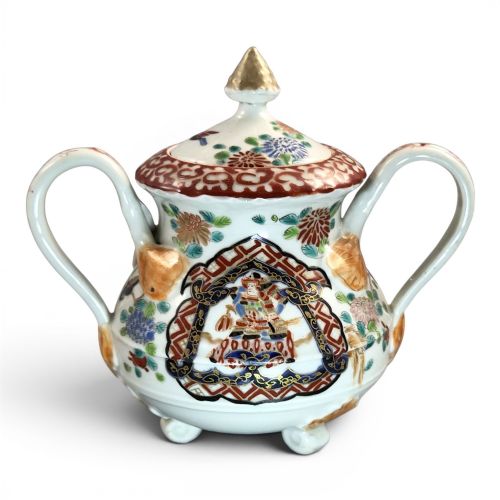


Gilded Japanese Imari Porcelain
Gilded Japanese imari porcelain combines heavy iron-red and cobalt decoration with surface gold leaf, offering collectors striking contrast and intricate hand-painted detail.
Gilded Japanese Imari Porcelain
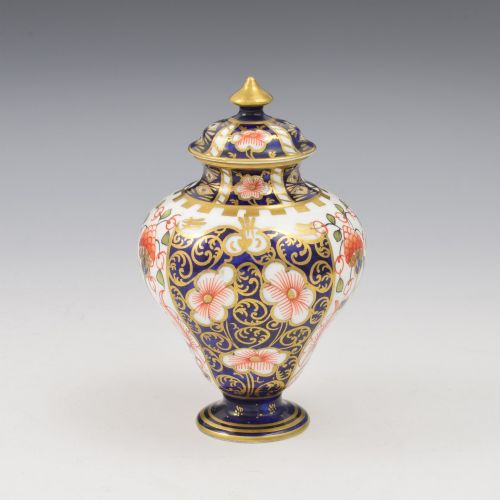
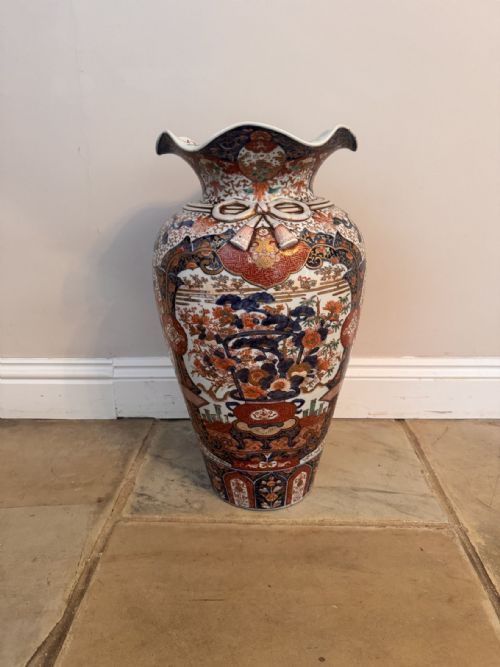
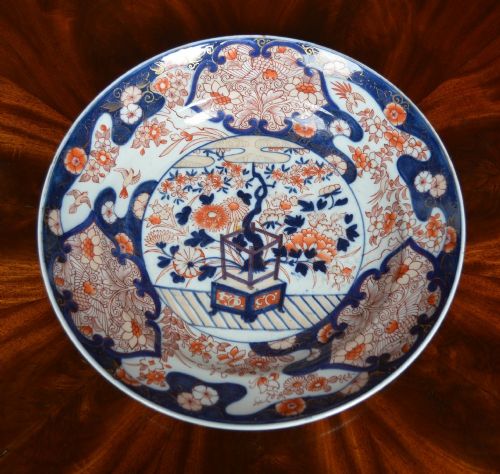
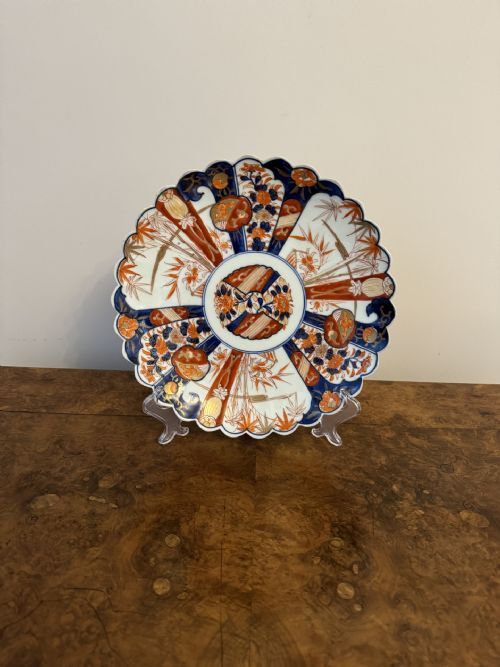
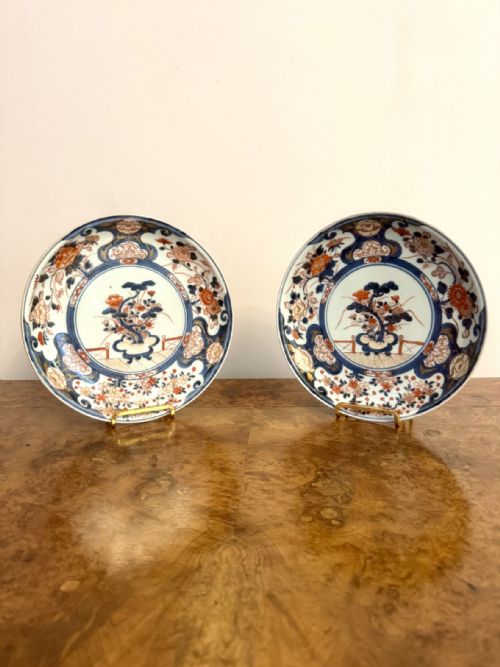
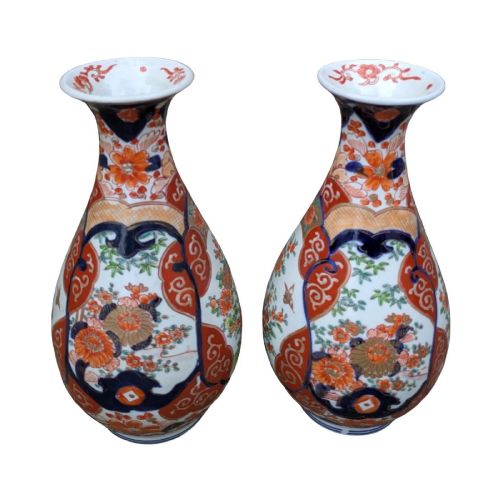
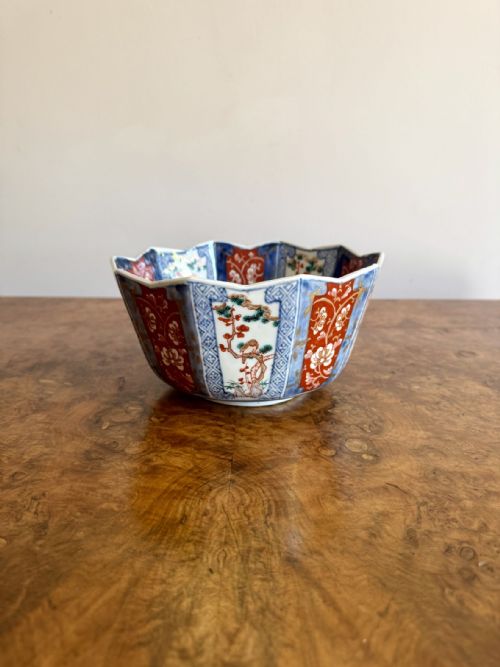
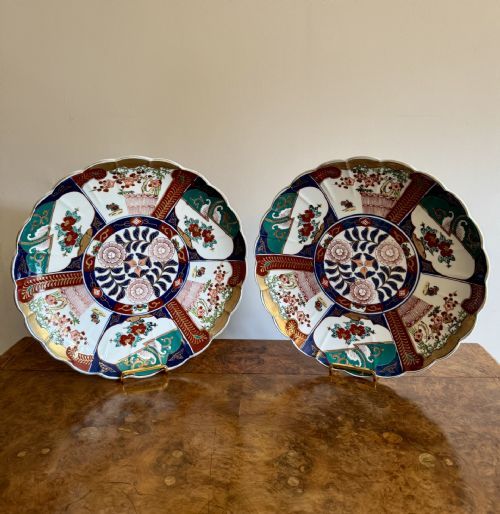
When you search for gilded japanese imari porcelain, you encounter decorative wares spanning the Meiji period, the 19th century, and the early decades of the 20th century. These pieces primarily take the form of large chargers, scalloped plates, lidded floor vases, and serving bowls decorated with traditional floral and bird motifs.
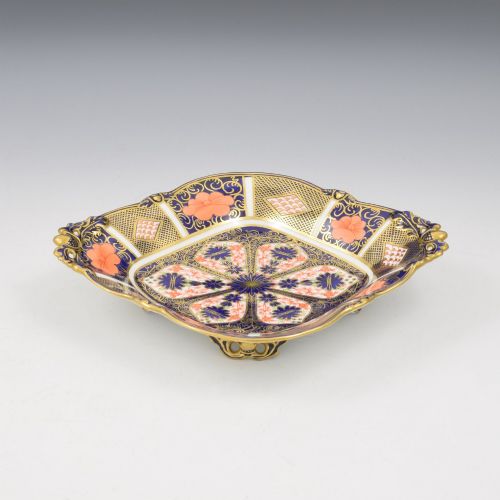
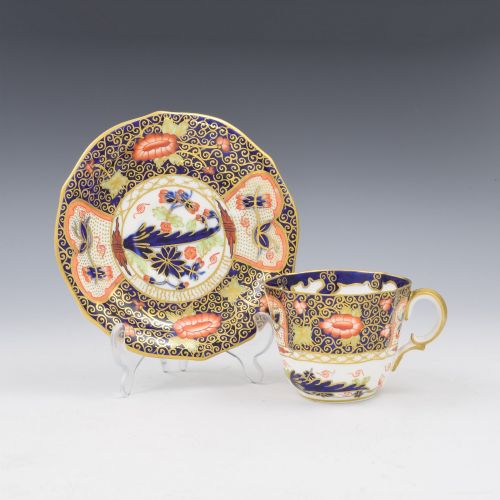
The items listed here divide broadly between authentic Japanese pieces originating from the Meiji and Edo periods and English interpretations produced by factories such as Royal Crown Derby. Both categories utilise the characteristic iron-red, underglaze blue, and gilt palette that defines the Imari style.
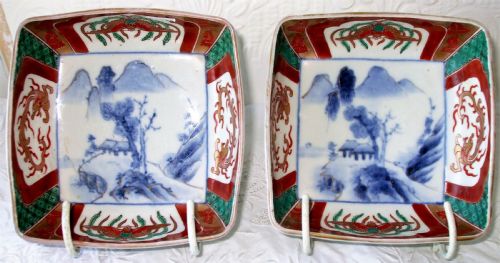
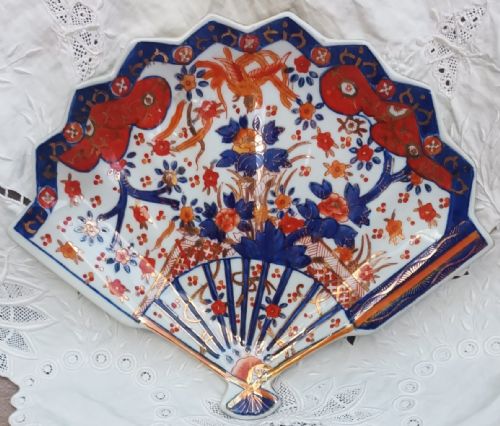
Vases and dishes with shaped edges, fan forms, and square profiles appear frequently alongside standard circular plates. Buyers looking for specific decorative schemes will find hand-painted samurai figures, floral arrangements, and intricate panels rendered in rich pigments.
Materials and production methods
The foundation of these pieces is hard-paste porcelain, shaped either by throwing on a wheel or pressing into moulds to create scalloped, octagonal, and shell-like forms. Artisans then applied underglaze cobalt blue and iron-red enamel before firing.
Gilding, gold leaf, and gold gilt were added during a subsequent firing stage to highlight specific patterns within the panel designs. This surface enrichment provides the distinctive metallic sheen that catches the light against the dark blue and rust-red background glazes.
Cats in Victorian drawing rooms frequently knocked over these delicate Imari floor vases, leading to many subtle professional restorations.
Assessing quality and craftsmanship
Quality rests primarily in the precision and density of the hand painting, where finer brushwork yields sharper botanical details and more expressive figures. Pieces with crisp outlining and deliberate placement of gold leaf distinguish themselves from simpler mass-produced output.
The preservation of the overglaze enamels and gilding dictates the visual impact of a piece. Well-preserved surfaces retain their original metallic brilliance without excessive rubbing, ensuring the intricate decorative panels remain clear and legible.
Royal Crown Derby·Stevenson and Hancock·Fukagawa
The Gilded Japanese Imari Porcelain Glossary
- Imari palette
- A traditional colour scheme dominated by underglaze cobalt blue, iron-red enamel, and supplementary gold highlights. This palette originated in Japanese export kilns before being adopted by European makers.
- Charger
- A large decorative plate intended for display on a wall or sideboard rather than for practical table use. These pieces often feature the most complex compositional layouts.
- Meiji period
- The era of Japanese history spanning from 1868 to 1912, associated with a vast increase in high-quality porcelain exported to Western markets. Many decorative vases and dishes date from this dynamic manufacturing period.
- Gilding
- The application of gold leaf or powdered gold to the porcelain surface to accentuate specific borders and motifs. It adds a reflective quality to the finished ceramic object.
- Bonnetiere
- Not applicable to porcelain, but worth noting that ceramics are frequently displayed on such period furniture. (Term listed for general antique context).
Gilded Japanese Imari Porcelain: Frequently Asked Questions
Were these pieces made for use or display?
Large chargers, wall plates, and floor vases were created primarily for decorative display within formal Victorian and Edwardian interiors. Smaller dishes and bowls also served functional roles at the dining table.
Collectors today generally exhibit these ceramics on plate stands or within cabinets to protect the fragile surface gilding from wear.
How do I distinguish Japanese from English imari?
Japanese export pieces from the Meiji period often feature distinctive iron-red and cobalt tones applied to a slightly heavier porcelain body. Look closely at the base for characteristic Japanese maker marks or studio signatures.
English interpretations, such as those by Royal Crown Derby, utilise bone china bodies and carry specific European factory stamps alongside pattern numbers.
What does imari mean in ceramics?
Imari refers to the Japanese port town from which ceramics produced in Hizen province were shipped to European markets. The term eventually described a specific decorative style rather than a single kiln.
European factories subsequently adopted the name to designate their own wares decorated in the distinctive red, blue, and gold colour combination.