

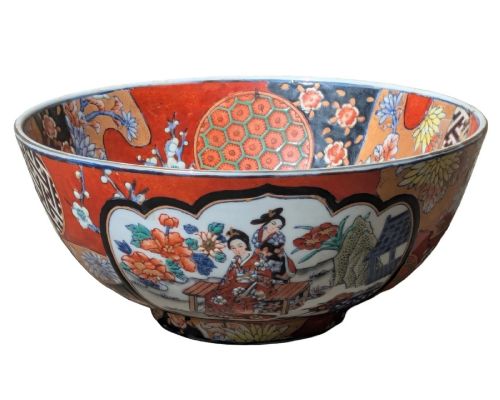

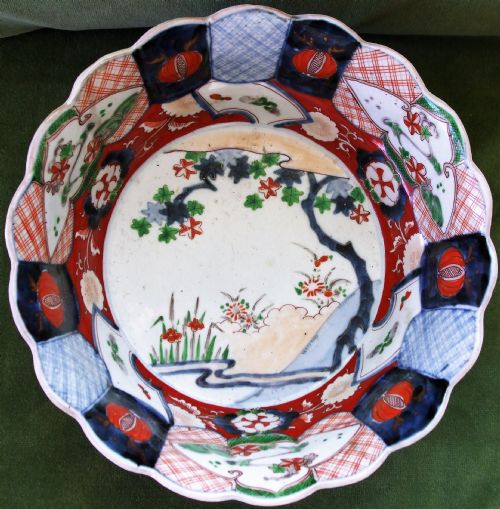
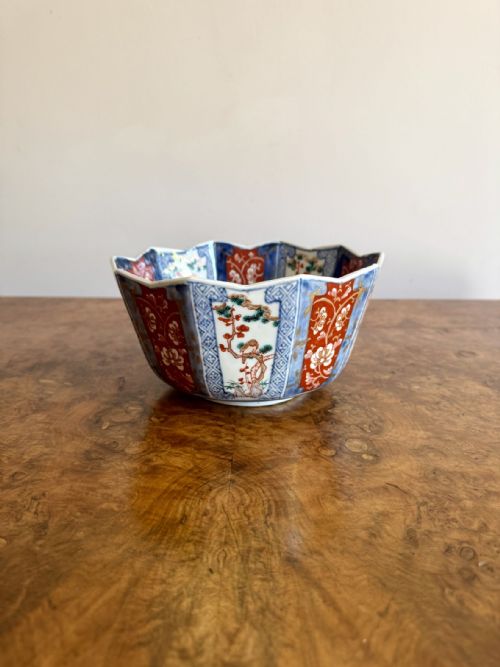


Hand Painted Imari Basin
A hand painted imari basin brings rich cobalt blue and iron red tones into a room, offering a striking display of historic ceramic artistry.
Hand Painted Imari Basin
When you search for a hand painted imari basin, you encounter deep historic porcelain traditions spanning several centuries and origins. The selections available on this page include decorative bowls, garden pots known as jardinieres, and shallow chargers originating from Japanese workshops as well as Chinese export kilns.
You are most likely to meet pieces produced during the nineteenth century or the Meiji period, alongside select eighteenth-century examples. These vessels appear in varied forms from simple round basins to scallop-edge bowls and hexagonal shapes.
How They Were Made
These vessels utilise porcelain and bone china bodies shaped by hand or thrown on a wheel before receiving intricate hand-painted decoration. Artisans applied cobalt blue underglaze pigments alongside enamel colours and gold leaf highlights to achieve the characteristic rich palette.
Glaze applications sealed the surface during high-temperature kiln firings, sometimes incorporating gilt accents or metal mounts for added definition. The combination of underglaze blue and overglaze enamel work required multiple firings to set each layer of colour permanently.
A few shaving bowls slip into the collection, proving that historic grooming required a surprising amount of cobalt blue elegance.
What Varies in Quality
Quality in these basins rests on the crispness of the hand-painted brushwork and the complexity of the decorative composition. Pieces featuring precise detailing in the cobalt blue and enamel pigments display a higher level of artisan skill.
The weight of the porcelain body and the preservation of the gold leaf or gilt highlights also distinguish finer examples. Earlier periods often exhibit distinct throwing marks and glaze depth that set them apart from later production.
Royal Crown Derby
The Hand Painted Imari Basin Glossary
- Imari
- A style of ceramic decoration originating in Japan, characterised by a palette of cobalt blue, iron red, and gold. This aesthetic heavily influenced both Japanese export wares and eighteenth-century Chinese export porcelain.
- Jardiniere
- A large decorative bowl or pot used to hold live plants or floral arrangements. These pieces often feature substantial porcelain walls designed to support soil and water.
- Meiji Period
- A Japanese historical era lasting from eighteen sixty-eight to nineteen twelve, noted for significant production of export porcelain. Pieces from this time often exhibit elaborate hand-painted surface patterns.
- Enamel
- A coloured vitreous glass compound applied over the fired glaze and fixed with a lower temperature kiln heating. This technique allowed artisans to add vibrant reds and greens to the finished vessel.
- Cobalt Blue
- A metallic oxide pigment used beneath the glaze to produce a deep, permanent blue colour during high-temperature firing. It forms the foundational tone for traditional hand-painted basin designs.
Hand Painted Imari Basin: Frequently Asked Questions
How are hand painted imari basins cleaned?
Dust the surface gently with a soft, dry cloth to remove everyday particles without disturbing the enamel or gilt details.
Avoid soaking antique porcelain in water, especially pieces with overglaze enamel or gold leaf that can weaken over time.
Can these basins hold water for plants?
Jardinieres and large bowls were traditionally made to hold potted plants or floral arrangements within interior spaces.
Check the interior glaze for stability before introducing moisture, as older porcelain can develop hairline fissures over long periods.
How do I identify an eighteenth century piece?
Eighteenth-century examples often display specific Chinese export or early Japanese characteristics, including distinct potting weights and hand-mixed cobalt tones.
Examine the foot ring and unglazed areas for signs of age, such as kiln grit and natural wear consistent with early production methods.
Where should I display an imari basin?
Place these decorative bowls on sturdy side tables or shelves where the rich cobalt and iron red colours complement the room.
Keep pieces away from direct sunlight and high-traffic areas to protect the hand-painted enamels and gilt surfaces from accidental damage.