
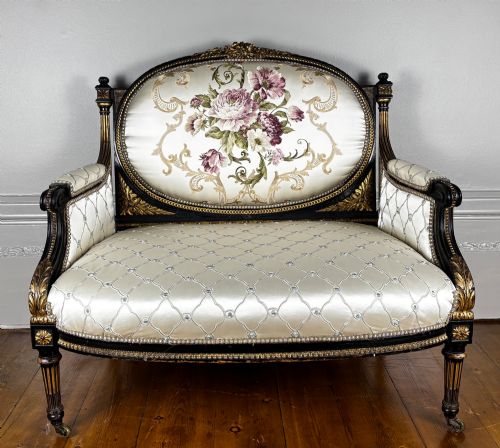


Gilded French Settee
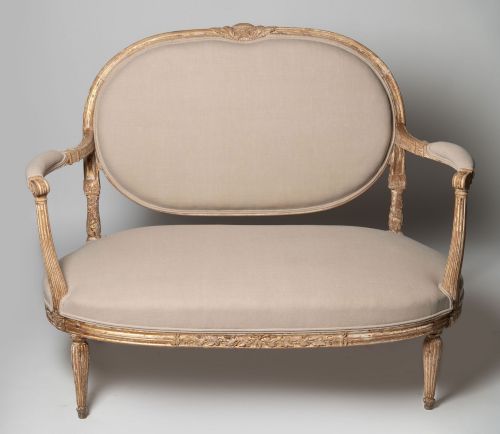
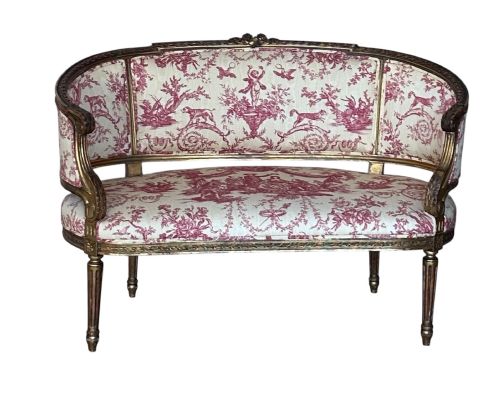
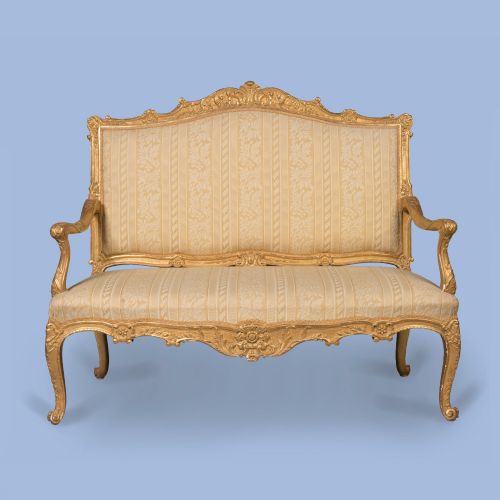
A gilded french settee brings nineteenth-century Continental elegance into a room with carved giltwood frames and upholstered seats.
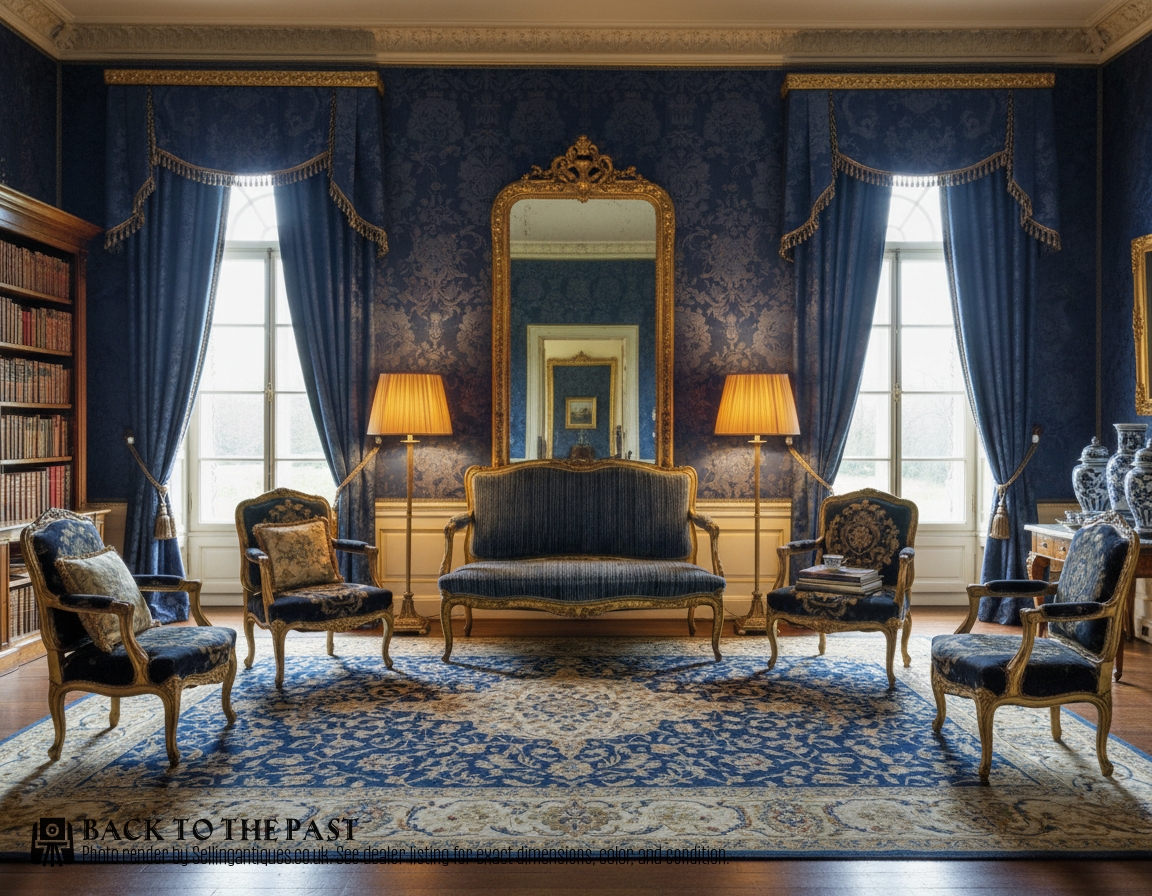
Gilded French Settee
A gilded french settee is a seating form designed for formal reception rooms, encompassing various configurations from two-seat sofas to larger canapés. These pieces emerge predominantly from nineteenth-century contexts, reflecting historical revivals that span the Victorian era and the Regency period.
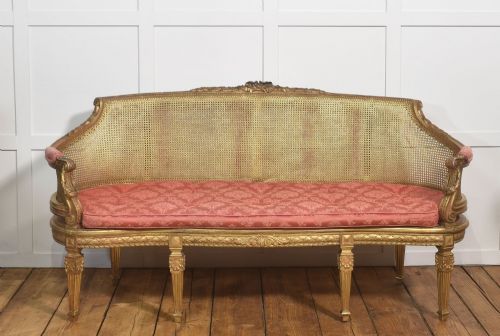
The visual vocabulary draws heavily upon Continental design idioms, most notably Louis XV and Louis XVI styles, alongside Rococo revival and French Empire aesthetics. Buyers encounter pieces finished with gold leaf, giltwood, or painted surfaces, frequently paired with cane work or textile upholstery.
Origin points extend beyond France to include English, German, Swedish, and Viennese interpretations of these classic Continental forms. Such variations demonstrate how nineteenth-century cabinetmakers adapted French court furniture styles for wider European drawing rooms.
Materials and Construction
Makers constructed the structural frames primarily from beech and other solid woods, carving the elaborate floral and scroll motifs directly into the timber before finishing. The application of gold leaf or surface gilding created the characteristic metallic sheen associated with salon seating.
Upholstery methods utilised traditional textiles and fabrics, ranging from simple linen to elaborate salon coverings, while cane work provided a lighter seating option for warmer interiors. Selected examples incorporated specific decorative elements such as ormolu mounts and enamel plaques to enhance the visual richness of the frame.
Listings feature pieces from the nineteenth century, including specific dates such as eighteen-eighty, nineteen-ten, and nineteen-twenty, alongside Victorian and Regency periods.
Judging Quality
The distinction between tiers rests upon the crispness of the wood carving and the depth of the gilding applied to the frame. Superior examples display finely hand-carved details that retain their definition beneath layers of gold leaf rather than flattened, moulded plaster replacements.
Proportion and structural integrity define the higher end of the range, where frames remain rigid and balanced without excessive reinforcement. The integration of high-grade cane work or sympathetic period textile upholstery further elevates the standing of an individual piece.
The Gilded French Settee Glossary
- Canapé
- An upholstered sofa or settee, typically featuring an exposed wooden frame and an open back designed for formal reception rooms. These pieces often reflect specific historical periods such as the Louis XV or Louis XVI styles.
- Giltwood
- Timber that has been coated with a thin layer of gold leaf or gilt finish to simulate solid gold ornamentation. This material forms the primary visual structure for nineteenth-century salon seating.
- Cane
- Plant material woven into open patterns to form resilient seat and back panels on chairs and settees. This technique provided a lighter alternative to fully upholstered cushions.
- Ormolu
- Cast bronze mounted details that have been gilded and applied to furniture frames as decorative ornaments. These mounts appear frequently on pieces influenced by the French Empire style.
- Louis XVI Style
- A neoclassical design idiom characterised by straight lines, symmetrical geometry, and classical motifs such as fluted columns and ribbons. Settees in this taste contrast with the flowing curves of earlier Rococo forms.
Gilded French Settee: Frequently Asked Questions
What is a gilded french settee?
A gilded french settee is a nineteenth-century upholstered two-seat sofa featuring a carved wood frame finished in gold leaf or giltwood. These pieces were built for formal salons and drawing rooms.
Designs draw inspiration from historical French reigns, incorporating stylistic elements from the Louis periods, the Regency era, and nineteenth-century revivals.
How were these settees used?
These settees served as principal seating furniture within formal reception spaces, drawing rooms, and large entrance halls. They provided comfortable seating for two people during social gatherings.
Their decorative gilt frames and upholstered surfaces were intended to display the social status and refined taste of the homeowner.
How do I live with a giltwood settee?
Living with a giltwood settee involves placing the piece away from direct sunlight and excessive moisture to protect the delicate gold leaf finish and wooden frame. Regular dusting with a soft, dry cloth preserves the surface without damaging the historic gilding.
Position the settee as a focal point in a drawing room or study, allowing adequate space around the carved frame to appreciate its proportions and detail.
How do I tell periods apart?
Distinguishing periods relies on examining the decorative motifs and structural lines of the wooden frame. Rococo and Louis XV pieces display asymmetrical curves, C-scrolls, and naturalistic floral carvings, whereas Louis XVI and Neoclassical examples feature straight legs, symmetry, and classical geometric patterns.
Victorian and later nineteenth-century interpretations often combine these historical vocabularies with heavier proportions or specific regional manufacturing traits.