




Gilded Frame Convex Mirror
These gilded frame convex mirror pieces bring depth and light into a room, capturing the eye with their curved glass and gilded surrounds.
Gilded Frame Convex Mirror
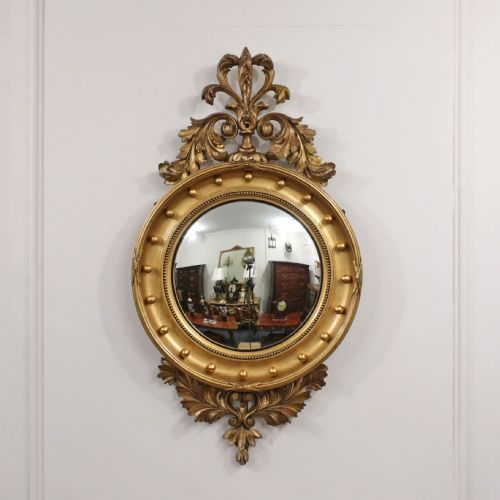
A gilded frame convex mirror draws the eye across a room through its distinctive curved glass surface, which bends reflections to capture a wide field of view. When searching for a gilded frame convex mirror, buyers encounter circular wall mirrors designed to function as striking focal points in hallways, drawing rooms and reception spaces.
The selection ranges from grand scale examples measuring up to four feet in diameter down to smaller hall mirrors suitable for compact spaces. Pieces appear from the Regency period and its later revivals, alongside Victorian and twentieth-century interpretations.
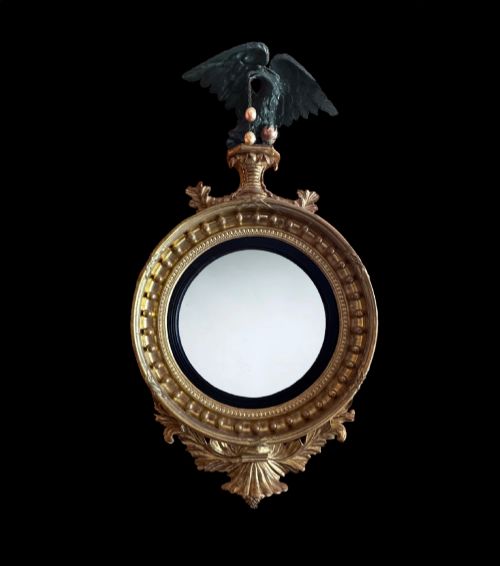
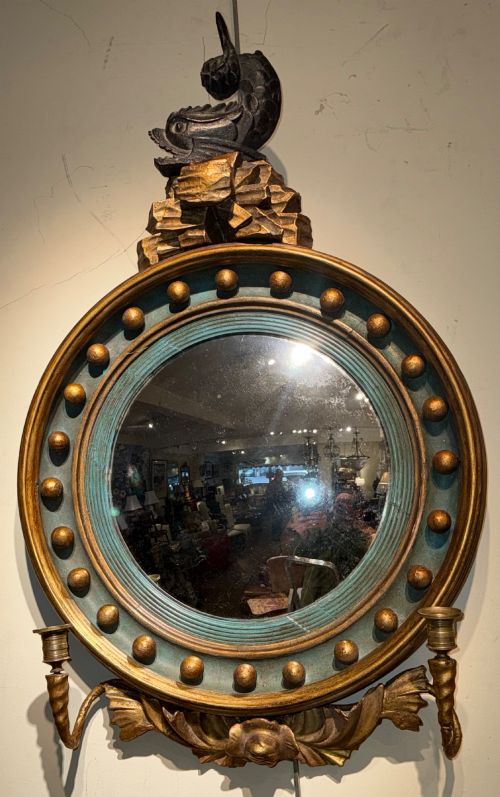
Regency pieces dominate the form, often featuring circular giltwood frames ornamented with carved details such as dragons. Alongside these, nineteenth-century and later variations maintain the classic circular format framed in giltwood, gesso and painted wood.
Materials and Construction
Makers constructed these mirrors primarily using wood, gesso and gold leaf to create ornate gilded frames that hold the curved glass. Artisans carved intricate details into wood or built up complex reliefs using gesso before applying gold leaf to achieve a brilliant metallic finish.
Gilded Frame Convex Mirror Retail Price Guide 2026
Typical asking prices for gilded frame convex mirror among the pieces listed under this phrase on Sellingantiques today, from the lower quarter to the upper quarter. They describe what is for sale here now, not the wider market.
Some Regency frames feature carved dragons peering out from the edges, watching over the room's reflection.
Distinctions in Quality
Quality in these mirrors rests upon the crispness of the carved ornamentation and the depth of the gilding applied to the wood and gesso. Superior examples display sharply defined motifs and smooth, even applications of gold leaf that catch the light cleanly.
The clarity and condition of the curved glass plate distinguish finer pieces, alongside the structural integrity of the heavy circular frame. Scale also plays a role, with grander diameters requiring exceptional joinery and support to bear the weight safely.
The Gilded Frame Convex Mirror Glossary
- Giltwood
- Wood covered with a thin layer of gold leaf or gold powder. This finish gives the frame its characteristic luminous appearance.
- Gesso
- A plaster mix applied to wood frames as a base for gilding. It allows artisans to carve or mould intricate decorative details before applying gold leaf.
- Regency
- An English design period spanning the early nineteenth century. Pieces from this era often feature classical motifs and bold circular forms.
- Convex glass
- Curved glass that bulges outward, producing a wide-angle, distorted reflection. It forms the central optical feature of these mirrors.
- Ebonised wood
- Timber treated to resemble ebony through staining or painting. This dark finish frequently provides contrast against gilded details.
Gilded Frame Convex Mirror: Frequently Asked Questions
Where should I hang a convex mirror?
These mirrors suit rooms where you want to bounce light around and create a sense of expanded space. Hallways, living rooms and dining areas work particularly well as central focal points.
Because the curved glass captures a wide field of view, hanging the piece opposite a window or an open doorway maximises the reflected light and visual impact.
How do I date an antique convex mirror?
Dating relies on examining the construction methods of the frame, the materials used and the characteristics of the glass plate. Regency pieces often show specific carved motifs like dragons and distinct giltwood finishes.
Later nineteenth-century revivals and twentieth-century examples use similar circular formats but can be identified through subtle differences in gesso work and timber preparation.
Why are convex mirrors round?
The circular format matches the optical requirements of blowing and shaping curved glass plates historically. A round frame distributes the tension evenly around the bulging glass.
This symmetrical shape also complements the decorative motifs traditionally applied to the surrounding giltwood frames, creating a balanced aesthetic.
How do I clean a gilded frame?
Dust the gilded frame gently with a soft, dry brush to remove surface particles without disturbing the delicate gold leaf. Avoid using water or chemical cleaners.
For the glass plate, apply a small amount of glass cleaner to a cloth rather than spraying directly onto the surface, preventing liquid from seeping behind the frame.