

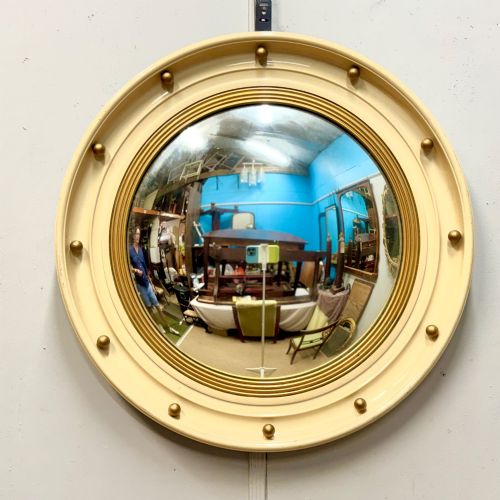
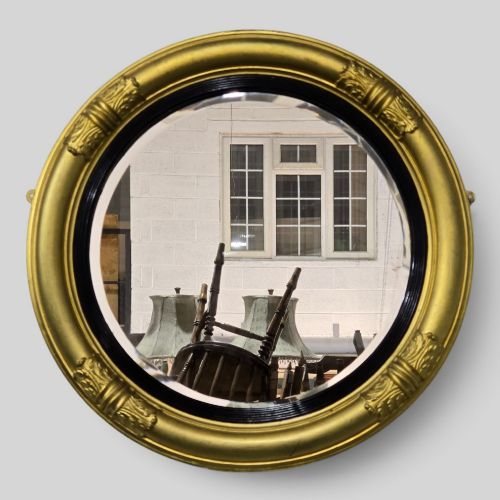
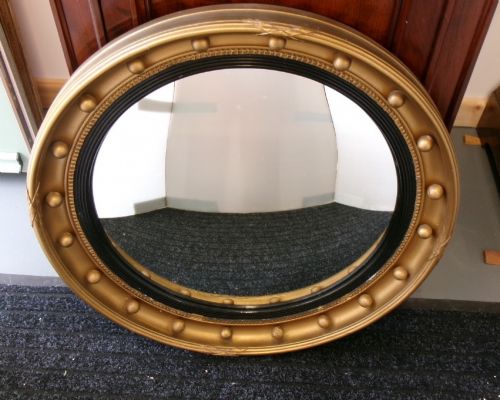
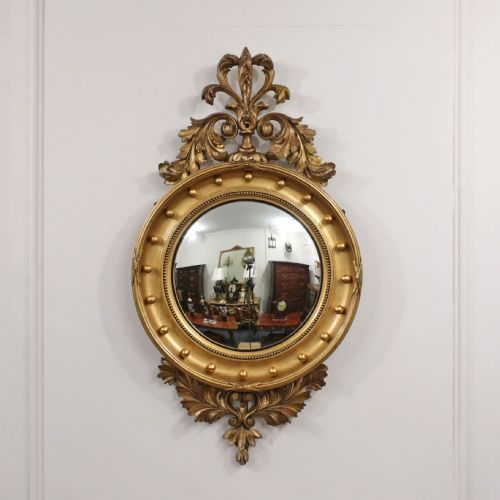



Round Fisheye Mirror
A round fisheye mirror bends the room into a single curved globe, capturing light and space with dramatic effect.
Round Fisheye Mirror
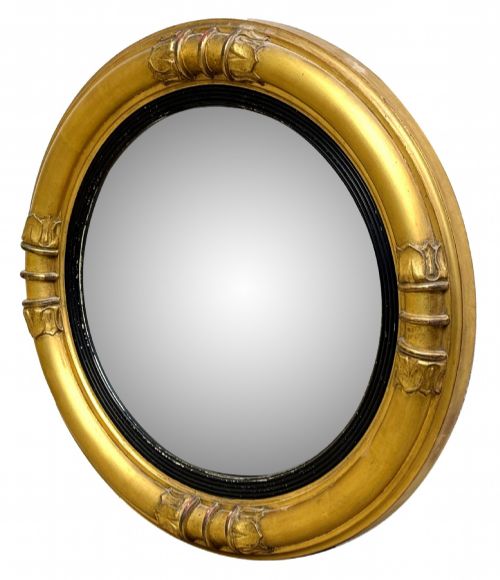
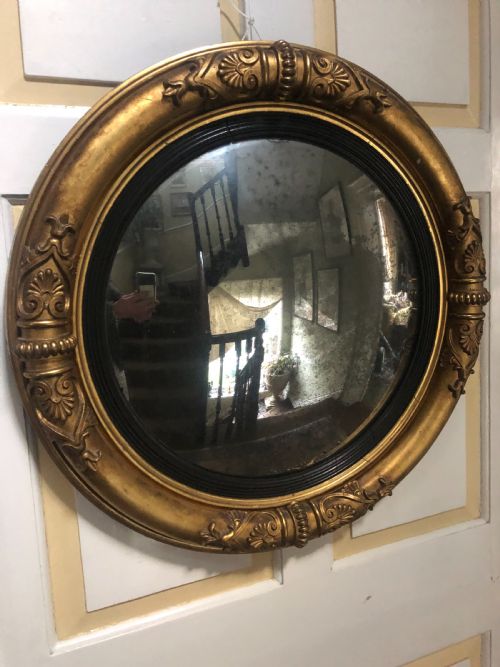
When you search for a round fisheye mirror, you look at circular convex wall mirrors designed to reflect a wide, distorted field of an interior. The version you meet most often on this page is the Regency giltwood convex mirror, frequently topped with a carved eagle or framed by classic motifs.
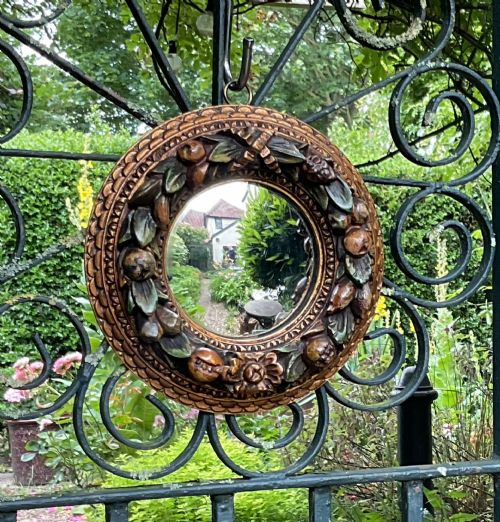
The selection spans pieces from the Regency period and the nineteenth century through to later revivals, including nineteenth-century butler mirrors and twentieth-century examples in brass, mahogany, and painted wood. These wall mirrors function as optical curiosities as much as decorative objects, drawing the eye across hallways and reception rooms.
How they were made
Makers formed the frames of these circular wall mirrors primarily from giltwood, gesso, and ebonised wood, sometimes incorporating mahogany or brass. Carved wooden elements, such as spread eagles or dragon mounts, sit atop the circular frames.
The convex glass plate sits within a moulded rebate, often accompanied by a reeded ebonised slip that creates a dark border around the reflective surface. Gilding was applied over gesso grounds on carved wood to produce the bright metallic finishes seen on Regency and nineteenth-century examples.
Round Fisheye Mirror Retail Price Guide 2026
Typical asking prices for round fisheye mirror among the pieces listed under this phrase on Sellingantiques today, from the lower quarter to the upper quarter. They describe what is for sale here now, not the wider market.
Spread eagles peer down from the tops of many Regency frames, keeping a watchful glass eye over the room below.
What varies in quality
The crispness of the wood carving determines much of the distinction between pieces, particularly in intricate details like eagle crests, dragons, and foliate scrolls. Finer examples display deeply undercut carving and carefully burnished gold leaf over gesso.
The preservation of the original convex glass plate and the depth of the frame moulding also define the character of an individual piece. Earlier Regency examples demonstrate proportions and decorative restraint that later revivals occasionally interpret with less precision.
The Round Fisheye Mirror Glossary
- Convex glass
- Curved outward like the outside of a sphere, this glass gathers a panoramic view of the room into a circular frame. It forms the defining optical element of every mirror listed here.
- Giltwood
- Timber covered with a thin layer of gold leaf applied over a prepared gesso ground. This finish catches candlelight and daylight in traditional interiors.
- Gesso
- A mixture of gypsum and size applied to wood frames to create a smooth surface for gilding and carving. It allows crisp ornamental details to be modelled before gold leaf is laid down.
- Ebonised wood
- Timber stained or treated to imitate ebony, providing a dark contrast against bright gilt mouldings. It appears frequently on the interior slips of nineteenth-century convex frames.
- Butler mirror
- A term used for round convex mirrors traditionally hung in service areas or dining spaces to oversee a room. They often feature simple circular frames with minimal cresting.
Round Fisheye Mirror: Frequently Asked Questions
Where should I hang a convex mirror?
These mirrors work best opposite a window or in narrow spaces like hallways, where their wide-angle reflection opens up the room. Hang them at eye level to make the most of the optical effect.
Because they concentrate light from across the space, placing them in darker corners brings brightness and movement into an interior.
How do I clean the curved glass?
Use a soft microfibre cloth and a gentle glass cleaner sprayed onto the cloth rather than directly onto the glass. This prevents moisture from seeping behind the plate.
Take care around the edges where the glass meets the frame and gesso, as older mirrors can be sensitive to liquid accumulation.
What is the difference between Regency and later revival mirrors?
Original Regency pieces date from the early nineteenth century and typically exhibit hand-carved giltwood frames with specific proportions and classical detailing. Later nineteenth-century and twentieth-century examples often emulate these designs.
Revival pieces use similar materials like gilt and gesso, but the handling of the carving and the composition of the frame differ upon closer inspection.
Why are some called sorcerer mirrors?
Historical superstition and the unusual optical distortion of convex glass led to the association with scrying and divination. The curved reflection made the mirror appear magical to contemporary viewers.
Today, the term is used interchangeably with convex wall mirrors that share this distinctive curved form.