

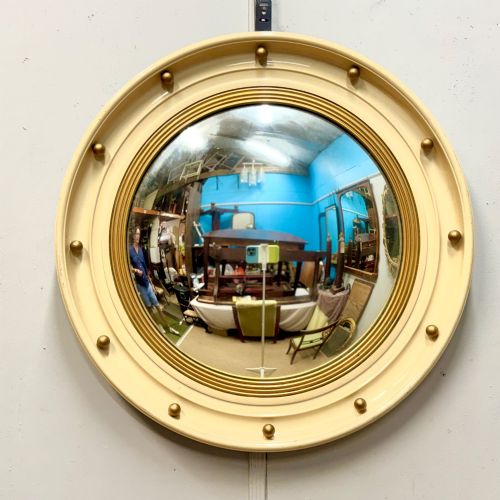
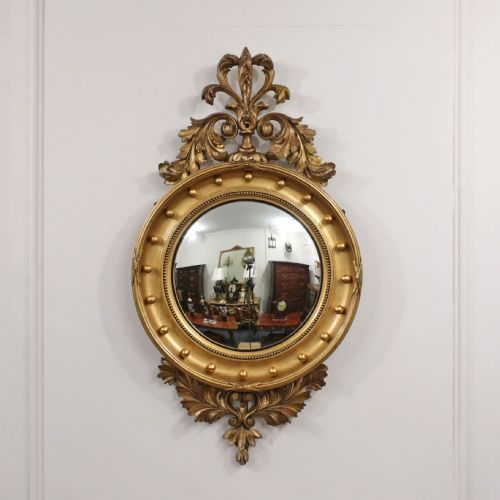


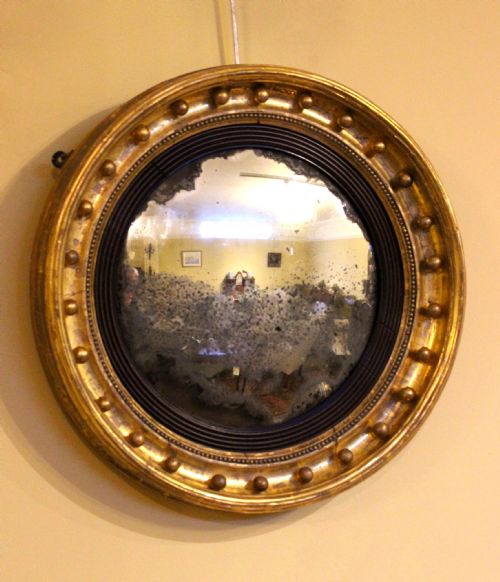

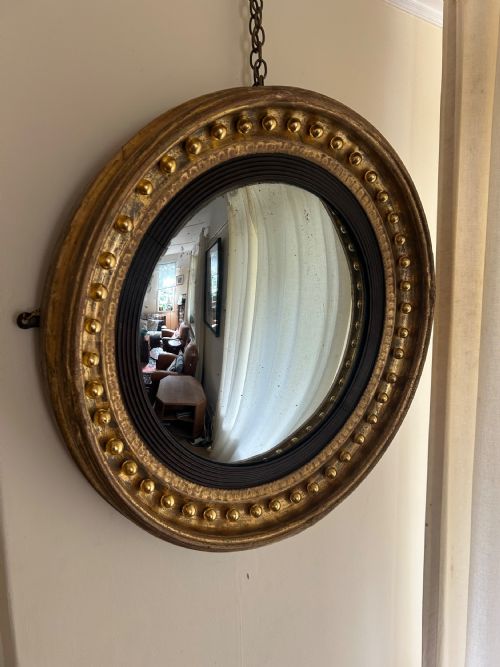
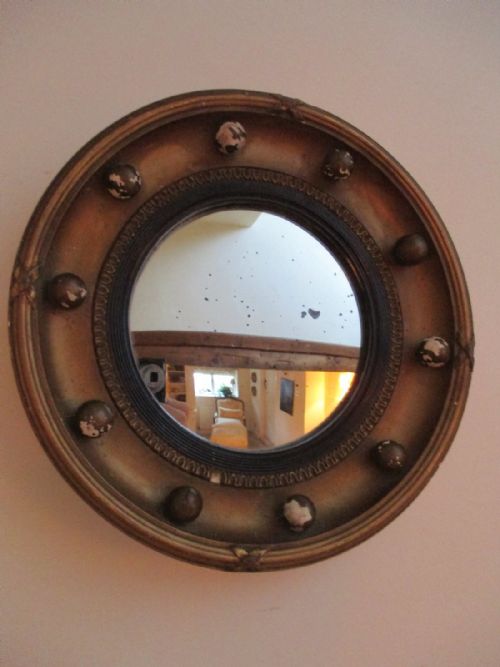
Gilt Spherical Ball Mirror
These gilt spherical ball mirrors, often known as butler's mirrors, bring Regency elegance and concentrated light into a room.
Gilt Spherical Ball Mirror
When you search for a gilt spherical ball mirror, you are looking at convex circular wall mirrors designed to reflect a wide angle of a room. The examples you are most likely to meet on this page date from the nineteenth century, including the Regency period, alongside pieces from around nineteen hundred.
These wall mirrors take the form of round plates set within circular frames, frequently featuring giltwood, gesso, painted wood, and ebonised details. Their distinctive bulging glass creates a miniature, fish-eye panorama of the interior spaces they inhabit.
Originating as practical items for butlers to oversee rooms or as decorative accents, these pieces span Regency, Regency revival, and Regency style aesthetics. They range from standard wall-hung versions to more compact examples accented with ebony or dragon motifs.
How they were made
Makers formed the frames of these convex mirrors using wood, gesso, and giltwood, applying layers of gold leaf or paint to achieve a brilliant metallic sheen. Ebonised wood often provides a dark contrast against the bright gilding.
The defining feature is the spherical glass itself, blown or shaped to curve outward and capture light from every corner. Craftsmen secured these curved plates firmly within circular wooden rims, sometimes incorporating decorative carved elements like dragons.
Gilt Spherical Ball Mirror Retail Price Guide 2026
Typical asking prices for gilt spherical ball mirror among the pieces listed under this phrase on Sellingantiques today, from the lower quarter to the upper quarter. They describe what is for sale here now, not the wider market.
What varies in quality
The standard of carving and the application of giltwood separate the finer examples from simpler nineteenth-century production. Crisp detailing on frames, particularly on Regency pieces with complex wooden ornamentation, indicates superior craftsmanship.
The clarity and depth of the convex glass plate also determine the overall merit of the piece. Well-preserved surfaces on both the gilt frame and the spherical mirror glass maintain the visual impact intended by the maker.
The Gilt Spherical Ball Mirror Glossary
- Convex glass
- Curved mirror glass that bulges outward to provide a wide, distortion-heavy reflection of the surrounding space. This spherical form is the defining characteristic of a butler's mirror.
- Giltwood
- Timber coated with gold leaf or gold dust over a prepared gesso ground. It provides the bright metallic finish seen on Regency frames.
- Gesso
- A plaster-like mixture applied to wood frames to create a smooth surface for gilding or painting. It allows craftsmen to model crisp decorative details.
- Ebonised wood
- Timber treated to resemble ebony, offering a deep black contrast. It appears alongside gilt surfaces in specific nineteenth-century pieces.
- Regency
- A British design period spanning the early nineteenth century. Mirrors from this era typically feature classical motifs and refined gilt frames.
Gilt Spherical Ball Mirror: Frequently Asked Questions
What is a gilt spherical ball mirror?
A gilt spherical ball mirror is a round wall mirror featuring convex glass that bulges outward. These pieces provide a wide panoramic reflection of a room.
They combine circular wooden frames with gold leaf, paint, or ebonised details to create a striking decorative focal point.
How were butler's mirrors used?
Historically, butlers utilised these convex mirrors to keep an eye on staff and rooms from a single vantage point. The wide-angle reflection allowed for discreet observation in large houses.
Over time, they transitioned from functional supervisory tools into purely decorative wall ornaments valued for their light-reflecting qualities.
How do I date a convex mirror?
Dating relies on examining the materials, construction methods, and stylistic cues of the frame. Nineteenth-century examples often display specific Regency characteristics and traditional gesso work.
Pieces from around nineteen hundred may show variations in paint, wood preparation, and the assembly of the circular frame.
How do I live with a convex mirror?
Hang these mirrors at eye level in rooms where you want to amplify light and create a sense of expanded space. Their curved glass captures illumination from multiple angles.
Keep them away from direct moisture and handle the gilt frames with care during cleaning to preserve the historic finish.