









Gilded Frame Canvas
A gilded frame canvas brings the warmth of oil paint and carved gold leaf into a room.
Gilded Frame Canvas
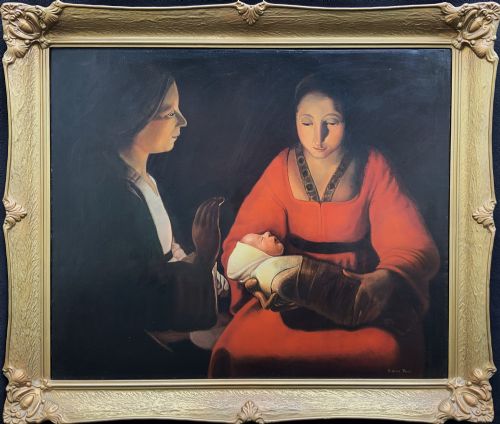
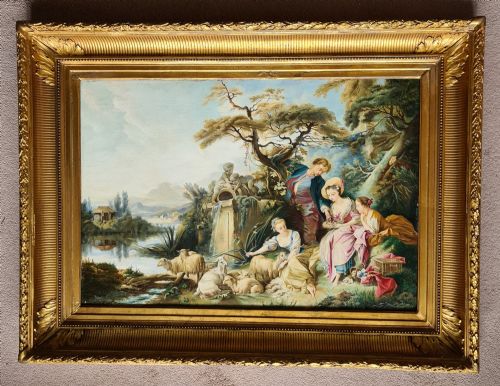
A gilded frame canvas combines historic oil paintings on stretched fabric with ornate wooden surrounds finished in gold leaf or gesso. These pieces range from seventeenth-century portraits and Dutch landscapes to nineteenth-century romantic scenes and still lifes.
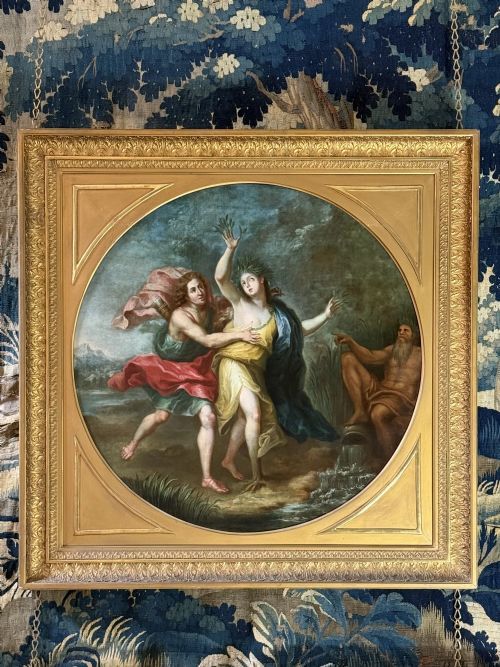
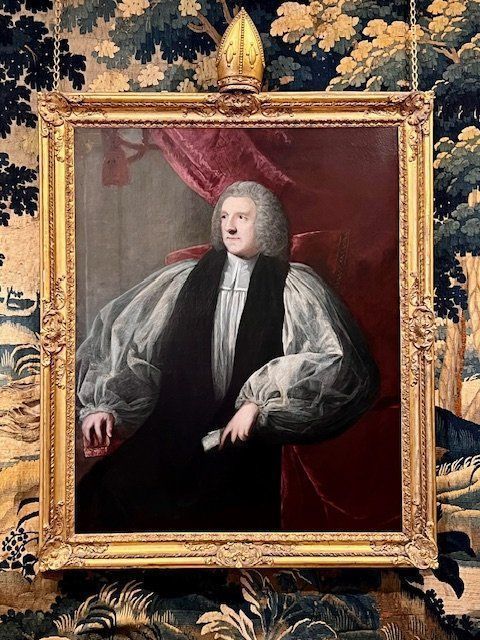
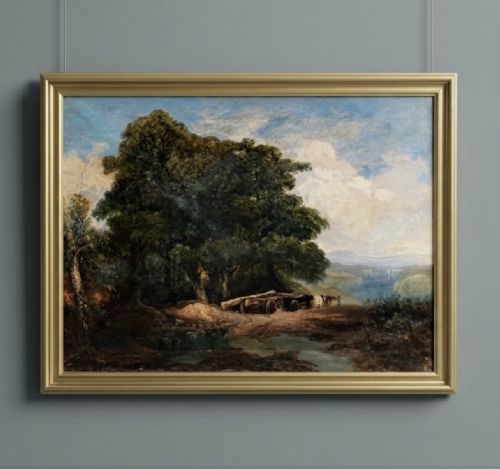
The selection on this page leans heavily toward historic portraiture, classical mythology, and pastoral landscapes framed in period mouldings. Buyers encounter works spanning the seventeenth century through to mid-century interpretations, anchored by traditional oil painting techniques.
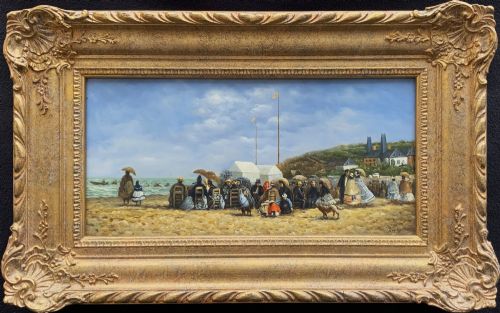
Subjects include aristocratic sitters, maritime views, country gatherings, and botanical studies executed by various European schools. Each work relies on the interplay between the painted canvas and the reflective perimeter of its mount.
How They Were Made
Makers prepared woven canvas with multiple coats of gesso and size before applying oil paint in layered glazes and opaque strokes. This ground provided a stable, luminous surface that held fine detail across centuries.
Frames were constructed from seasoned wood, frequently carved by hand or moulded with intricate plaster ornaments before receiving layers of gold leaf or metallic gilt. The resulting borders complemented the depth and palette of the central canvas.
Listings feature works spanning from the seventeenth century to the mid-twentieth century, utilising oil paint, canvas, giltwood, and gesso.
What Varies in Quality
Quality rests in the fidelity of the brushwork, the anatomical conviction of figures, and the crispness of the carved detail on the enclosing mount. Superior examples show confident handling of light and shadow, whereas lesser pieces reveal hesitant lines and flat application of paint.
The integrity of the original pairing between picture and frame dictates much of the standing within this field. Frames carved directly from wood with deep relief hold greater presence than later moulded plaster replacements.
Sir Joshua Reynolds·Sir Godfrey Kneller·Charles Antoine Coypel·Pieter Borsseler·John Heins
The Gilded Frame Canvas Glossary
- Gesso
- A plaster mixture applied to wood frames or canvas grounds to create a smooth surface for gilding or painting. It provides the crisp base needed for intricate moulding work.
- Giltwood
- Timber that has been coated with gold leaf or metallic powder. This material catches ambient light and defines the edge of the artwork.
- Oil on Canvas
- Pigment suspended in drying oil applied to a stretched woven fabric support. This medium allows for rich blending and deep glazes.
- Baroque Style
- An artistic approach characterised by dramatic movement, deep shadow, and rich ornamentation. Works from this period display theatrical compositions.
- Provenance
- The documented history of ownership of an artwork. It establishes authenticity and traces the journey of the piece through time.
Gilded Frame Canvas: Frequently Asked Questions
How do I clean a gilded frame?
Dust the carved surfaces gently with a soft, dry brush to prevent accumulation. Avoid commercial liquids or abrasive cloths that might disturb the delicate gold leaf.
Moisture can weaken the underlying gesso and cause the metallic layer to flake off. Professional conservation is advised for deep cleaning or repairs.
Are these paintings original?
The inventory contains period originals alongside historic studio works and later interpretations. Each listing specifies the execution period and attribution.
Checking the canvas texture, stretcher bars, and framing materials helps determine the age of the piece. Documentation and stylistic analysis confirm the historical context.
Where should I hang my painting?
Select an interior wall away from direct sunlight and strong heat sources to protect the canvas and pigments. Stable humidity levels prevent the wood and gesso from cracking.
Position the work at eye level where ambient light can catch the metallic highlights of the frame. Adequate clearance allows the piece to anchor the room.
How do I date the frame?
Examine the construction joints, the composition of the gesso, and the tooling of the carved ornament. Period frames often show hand-tool marks and natural timber shrinkage beneath the gilding.
Stiles and moulding profiles changed across centuries, reflecting prevailing stylistic shifts. Comparing the rebate and corner construction aids in identifying the period.