


Vintage Garden Landscape
These vintage garden landscape pieces capture quiet grounds and rural planting through the eyes of early twentieth-century painters.
Vintage Garden Landscape
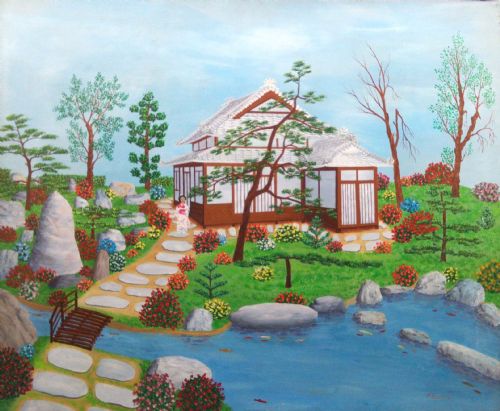
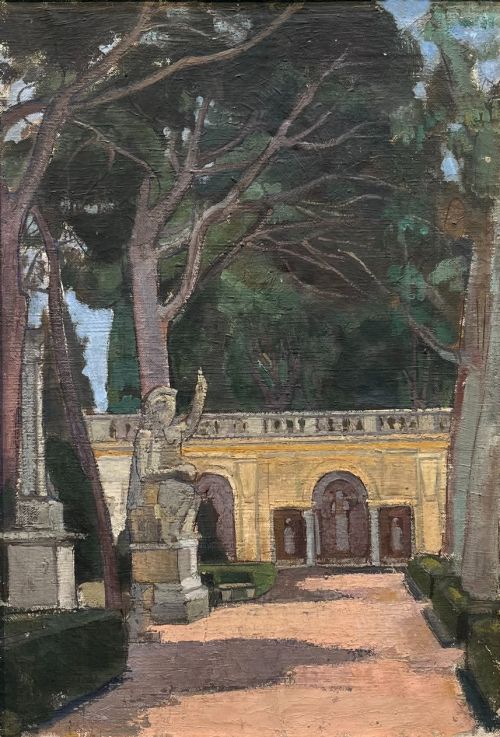
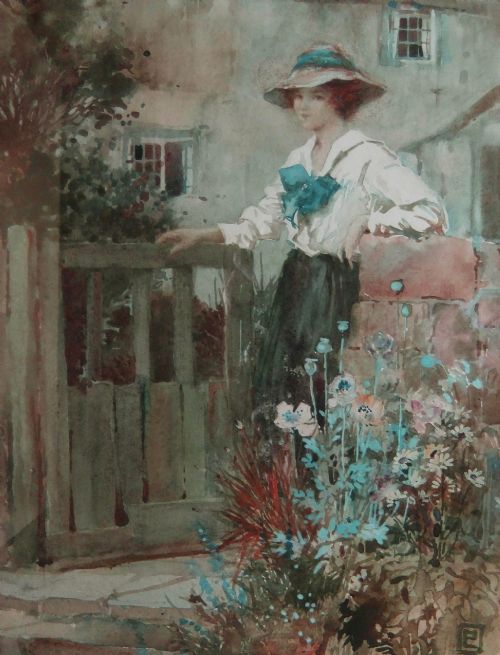
When you search for vintage garden landscape, you encounter framed paintings and watercolours depicting country cottages, walled plots, and formal grounds. These works record outdoor spaces from the nineteenth century through to the mid-twentieth century, with a strong representation of Edwardian and interwar British scenes. The subjects range from sunlit flower borders and water lilies to architectural parkland views.
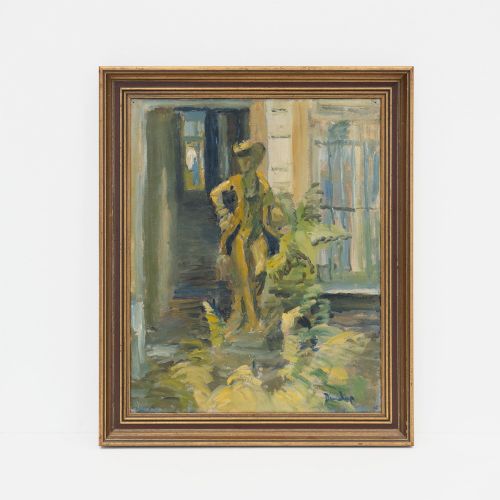
The majority of examples on this page date from the early nineteen-hundreds to the nineteen-fifties, capturing a period when plein-air painting focused heavily on domestic horticulture and rural sanctuaries. Works vary from detailed watercolours by regional specialists to bolder oil paintings on canvas and board. Buyers primarily select these pieces to bring traditional botanical colour and nostalgic pastoral atmosphere into domestic interiors.
Materials and methods
Artists relied on traditional supports such as primed canvas, wood panel, and heavyweight paper. Watercolours were applied with fine washes to create luminous effects in cottage gardens, while oils provided thicker texture for foliage and flower beds.
Pigments were worked either on site or developed in the studio from preparatory sketches. Many surviving works retain their original framing materials, showing period mounts and protective glass or varnished surfaces.
Several artists preferred painting hens and garden bonfires over grand vistas.
Determining quality
The distinction between standard works and exceptional pieces lies in the handling of light and the surety of the brushwork. Superior examples capture atmospheric depth and seasonal specifics, such as blossoming fruit trees or autumn borders, rather than merely recording botanical shapes.
Provenance and attribution also influence standing. Signed works by established regional painters command greater attention than anonymous student pieces, reflecting the artist's command of colour harmony and compositional balance.
Percy Lancaster·Ronald Ossory Dunlop·Harry Wanless·Owen Bowen·Ernest Higgins Rigg·Kershaw Schofield·Lilian Stannard·Charles E Cundall·John Henry Inskip·William Hatherell·Herbert Royle·Arthur Claude Strachan·John Abernethy Lynas-Gray·Thomas Nicholson Tyndale·Jane Utley·Lester Sutcliffe·Beatrice Parsons·Edgar Bundy·Hermoine Hammond·Theresa Sylvester Stannard·George Frederick Nicholls·William Greaves·Ralph Hedley·Fred Merriman·Homer Wayland Colby
The Vintage Garden Landscape Glossary
- Watercolour
- A painting method where fine pigment is suspended in a water-based, translucent solution. It is typically applied to paper to achieve delicate tones.
- Oil on Canvas
- Pigment mixed with drying oil applied to a stretched woven fabric support. This technique allows for rich texture and blending.
- British Impressionism
- A style adopted by British artists in the late nineteenth and early twentieth centuries focusing on loose brushwork and natural light. It often depicts domestic gardens and coastal scenes.
- Naïve Art
- Work created by artists without formal academic training, characterised by flat perspective and direct expression. These pieces often show charming simplicity in their rendering of rural life.
Vintage Garden Landscape: Frequently Asked Questions
What periods do these garden paintings date from?
The selection spans from the nineteenth century through the Victorian and Edwardian eras up to the nineteen-fifties. Most examples cluster around the early decades of the twentieth century.
During this time, pastoral subjects and domestic horticulture became popular among regional British painters working in watercolour and oil.
How were these vintage watercolours usually framed?
Many period watercolours were mounted behind glass within simple wooden or gilt moulding frames to protect the paper surface from moisture and dust.
Original framing often includes card mounts that bear the artist's signature or titled inscriptions in pencil along the lower margin.
Are these paintings original works or prints?
The vast majority of listings are original hand-painted watercolours and oil paintings executed directly onto canvas, board, or paper.
Each piece represents a unique artistic study rather than a mass-produced mechanical reproduction, though occasional architectural prints appear in the archive.
How do I choose the right painting for a room?
Consider the palette and scale of the artwork in relation to your wall space and interior lighting. Softer watercolours suit quiet corners, while larger oils provide a stronger focal point.
Matching the seasonal mood of the garden scene to your space can also enhance the room's atmosphere.