

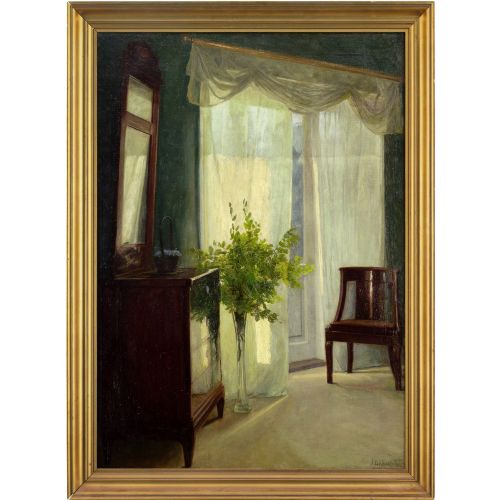


Impressionist Garden Scene
Impressionist garden scene paintings capture fleeting light and loose flora, offering a bright window into historic domestic sanctuaries.
Impressionist Garden Scene
An impressionist garden scene brings together captured sunlight and outdoor foliage, frequently rendered on canvas or paper. These works capture specific domestic or public retreats through loose brushwork and vibrant palettes.
The pieces appearing on this page span from the nineteen hundreds through the mid-century. Visitors will encounter works rooted in British impressionism, Scandinavian realism, and Edwardian styles.
Forms range from oil paintings on board and canvas to delicate watercolours. Many examples record named locations such as Yorkshire or the Tuileries alongside intimate private plots.
How they were made
Artists deployed oil paint and watercolour across canvas, paper, wood, and board. These mediums allowed painters to layer pigments quickly to catch transient outdoor light.
Certain works incorporate gold leaf alongside oil paint to enhance luminous focal points. The physical supports range from stretched canvas to robust wooden boards.
Impressionist Garden Scene Retail Price Guide 2026
Typical asking prices for impressionist garden scene among the pieces listed under this phrase on Sellingantiques today, from the lower quarter to the upper quarter. They describe what is for sale here now, not the wider market.
Periods represented across the gathered works span from nineteen hundred through the nineteen fifties.
What varies in quality
Quality rests in the sureness of the handling and the precision with which atmosphere is set down. Stronger examples use confident brushwork to define floral masses and architectural elements.
The relationship between light and shadow dictates the visual success of the piece. Superior works balance the density of the garden growth with clear tonal separation.
John Lübschitz·Lilian Stannard·Owen Bowen·William Hatherell·Herbert Royle·Edgar Bundy·Hermoine Hammond·William Greaves
The Impressionist Garden Scene Glossary
- Impressionism
- A style of painting focusing on light and its changing qualities rather than rigid detail. Artists utilised visible brushstrokes to portray immediate visual impressions.
- Oil paint
- A slow-drying paint made with pigments suspended in oil. This medium allows for rich blending and textured application on canvas or board.
- Watercolour
- A paint consisting of water-soluble pigments applied to paper. It yields translucent washes that capture delicate atmospheric effects.
- Board
- A rigid wooden or fibrous panel used as a painting support instead of fabric canvas. It provides a firm foundation for oils.
- Pointillism
- A technique involving small, distinct dots of colour applied in patterns to form an image. The dots blend optically in the viewer's eye.
Impressionist Garden Scene: Frequently Asked Questions
What is an impressionist garden scene?
These works are paintings that depict outdoor floral spaces using loose brushwork and atmospheric light. They record domestic gardens and public parks from the early to mid twentieth century.
Created in various mediums including oil and watercolour, the works reflect movements such as British impressionism and Edwardian realism. Each piece captures a distinct outdoor retreat through the artist's personal perspective.
How should I display these watercolours?
Watercolours require careful framing behind glass to protect the paper surface from environmental damage. Direct sunlight will fade the pigments over time.
Position these pieces on interior walls away from direct heat sources and bright windows. Proper mounting preserves the delicate washes and paper supports.
How do I identify Edwardian pieces?
Edwardian works often display a specific lightness of palette and a focus on domestic leisure gardens. The dating usually aligns with the early decades of the twentieth century.
Look for framing or inscriptions that name specific English locations or private estates. Stylistic cues often include traditional garden layouts rendered with softening impressionistic brushwork.
What is the difference between canvas and board?
Canvas is a woven fabric stretched across a wooden frame, offering slight give under the brush. Board is a rigid flat panel that provides a firm, unyielding surface.
Both materials were commonly utilised by painters capturing outdoor scenes. The choice of support often relates to the scale of the work and the artist's preferred technique.