
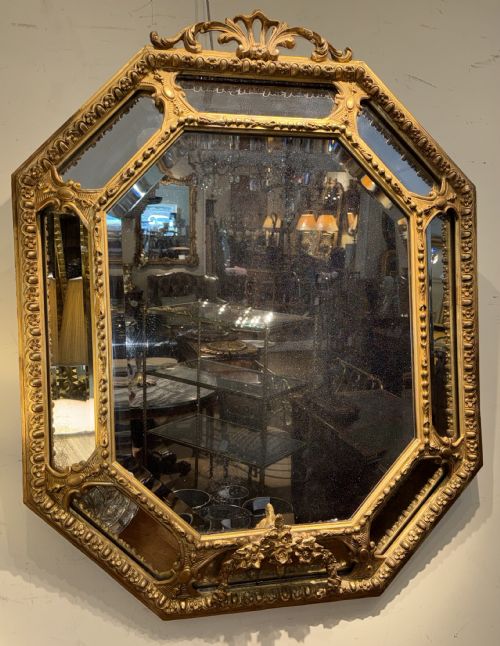
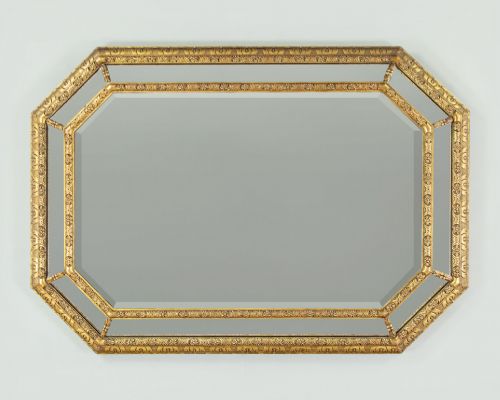


Gilded Cushion Mirror
A gilded cushion mirror brings depth and warmth to a room through its distinctive convex profile.
Gilded Cushion Mirror
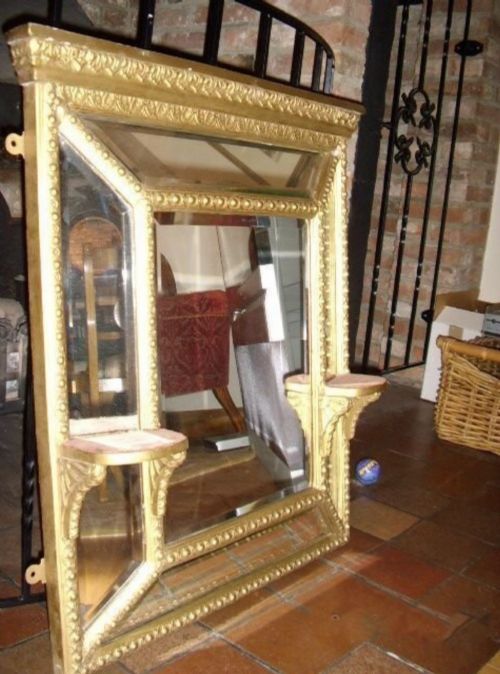
A gilded cushion mirror is a wall hanging defined by its outward-sloping frame, which creates the physical appearance of a plush cushion surrounding the glass. When you search for a gilded cushion mirror, you encounter pieces primarily from the nineteenth century alongside select Georgian and later examples. French and Italian workshops produced many of the surviving wall and overmantel mirrors seen here.
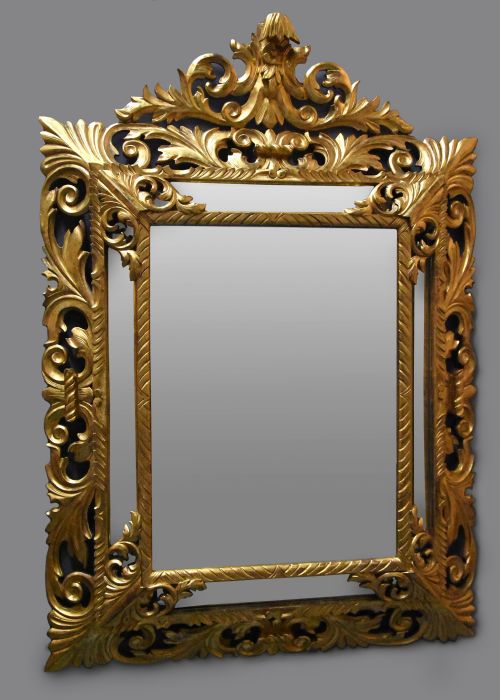
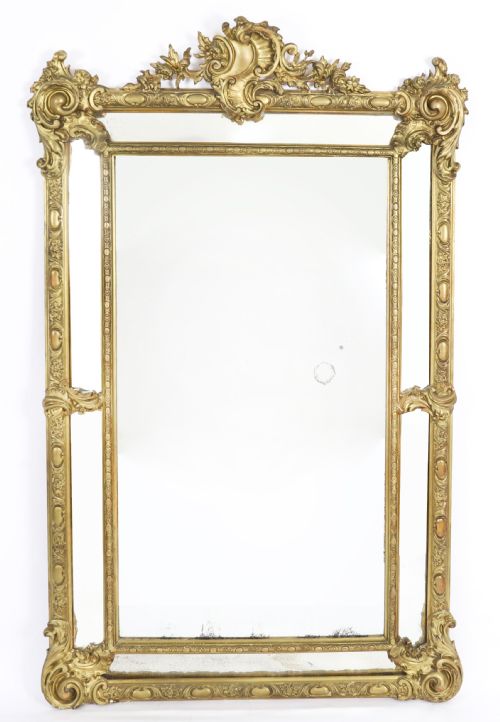
The profile draws the eye inward toward the reflection, often enhanced by giltwood, gesso, or applied ornamentation such as metal mounts and crests. You will frequently meet French Louis Philippe styles and Italian baroque revivals among the available inventory. These pieces function historically as both functional looking glasses and architectural focal points within domestic interiors.
How they were made
Craftsmen built the underlying frames from wood, applying layers of gesso to create smooth surfaces suitable for carving and gilding. Gold leaf or water gilding was then applied over the prepared ground to achieve a brilliant metallic sheen. Joinery techniques ensured the broad cushion mouldings could support the weight of the glass plates securely.
Mirrors relied on traditional silvering methods, with mercury glass appearing in older pieces and bevel-cut glass utilised in later nineteenth-century iterations. Metal mounts, brass elements, and carved details were integrated directly into the wooden frames to complete the decorative scheme.
Several mirrors include carved wooden dragons, crests, and cherubs peering out from the corners of their gilded cushion frames.
What varies in quality
Quality rests upon the depth and crispness of the carving within the giltwood frame, distinguishing master carvers from standard production workshops. The integrity of the original gilding and the preservation of the underlying gesso layers dictate the visual impact of the surface over time.
The authenticity and condition of the mirror plate itself also define the tier of the piece, with original mercury glass or heavy bevel-cut plates commanding greater interest. Structural soundness in the mitred corners of the convex moulding ensures the frame withstands the tension of centuries.
The Gilded Cushion Mirror Glossary
- Giltwood
- Wood that has been covered with a thin layer of gold leaf or gold powder. This finish provides the characteristic metallic glow seen on antique frames.
- Gesso
- A plaster-like mixture applied to wood frames to create a smooth surface for gilding and fine carving. It allows intricate decorative details to be moulded onto the structure.
- Mercury glass
- A double-walled glass blown with a silver-mercury amalgam between the layers, creating a mottled reflective quality. It is frequently found in older French mirrors.
- Overmantel mirror
- A large horizontal looking glass designed specifically to hang above a fireplace mantel. These pieces often feature wide cushion frames to anchor large wall spaces.
- Parcel-gilt
- A decorative finish where only specific portions of an object are highlighted with gold leaf while other areas show underlying wood or paint.
Gilded Cushion Mirror: Frequently Asked Questions
Where should I hang a cushion mirror?
These mirrors suit spaces above mantelpieces, console tables, or prominent living room walls where their convex frames can catch and reflect ambient light effectively.
Because of their substantial weight and decorative presence, they require secure wall fixings anchored directly into structural masonry or studs.
How do I clean a gilded frame?
Dust the gilded wooden surface gently with a soft, dry brush to remove particles without disturbing delicate gesso or gold leaf layers. Avoid liquid cleaners and modern chemical sprays entirely, as moisture strips historic finishes rapidly.
For the glass plate, apply a modest amount of glass cleaner to a cloth rather than spraying the mirror directly, preventing liquid seepage behind the frame.
What is the difference between French and Italian styles?
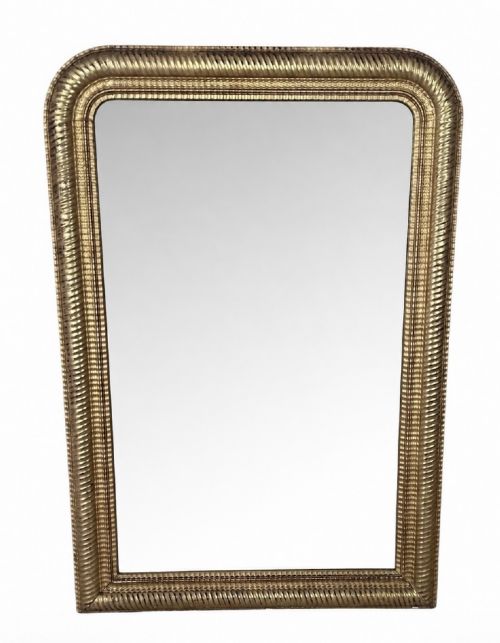
French cushion mirrors, particularly from the Louis Philippe period, tend to feature cleaner architectural lines with subtle ripple mouldings and restrained crests.
Italian examples often display deeper carving, more exuberant baroque revival ornamentation, and elaborate motifs such as cherubs or scrolling foliage.
Are original mirror plates common?
Many surviving pieces retain their original glass plates, which frequently exhibit minor foxing, dark spots, and age-related oxidation. These natural signs of ageing confirm the period authenticity of the object and add character to the reflection.
Replaced plates appear in some listings where eighteenth or nineteenth-century frames received updated glass during subsequent restorations.