




Gilded Chinese Wood Carving
These gilded chinese wood carving examples bring complex relief work and bright leaf finish into any interior.
Gilded Chinese Wood Carving
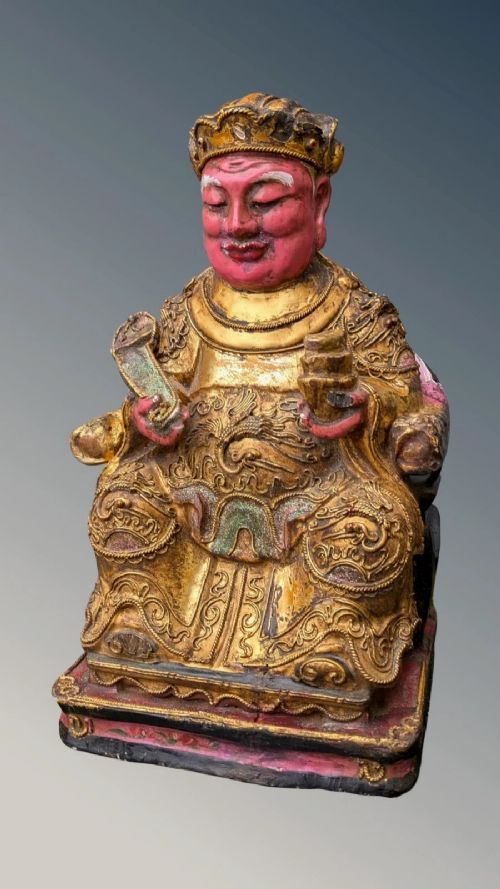
A gilded chinese wood carving typically takes the form of temple panels, figurative sculptures, or decorative plaques produced across the nineteenth century and earlier eras. Buyers seeking this phrase encounter elaborate architectural fragments, religious figures like Guanyin or deities, and decorative wall pieces adorned with gold leaf.
The selection ranges from small miniature figure groups and pairs of carved temple panels to larger guardian statues and domestic wall plaques. These items reflect traditional Chinese craftsmanship adapted for both local temples and later export markets.
Nineteenth-century examples dominate the current selection, though earlier pieces originating from the seventeenth and eighteenth centuries occasionally appear. Forms vary from flat relief wall panels to fully rounded sculptural depictions of deities and officials.
How they were made
Makers shaped structural elements from native timbers such as elm or general carved wood before applying intricate relief decoration. Artisans then treated these wooden surfaces with layers of lacquer or prepared grounds to receive gold leaf and polychrome paint.
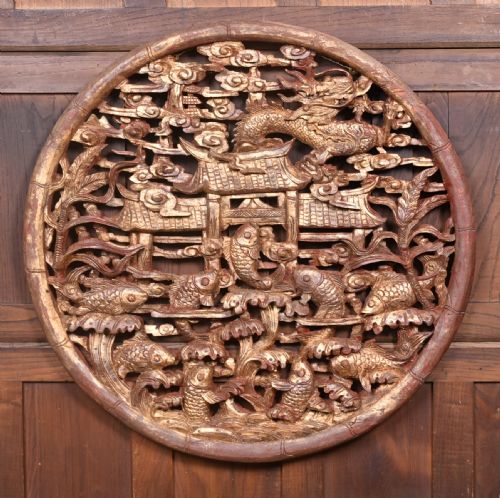
The combination of carved wood, applied gold leaf, and painted pigments creates the characteristic layered texture seen on temple figures and decorative panels. Detail work relies on precise hand chiselling to define drapery, facial expressions, and background motifs.
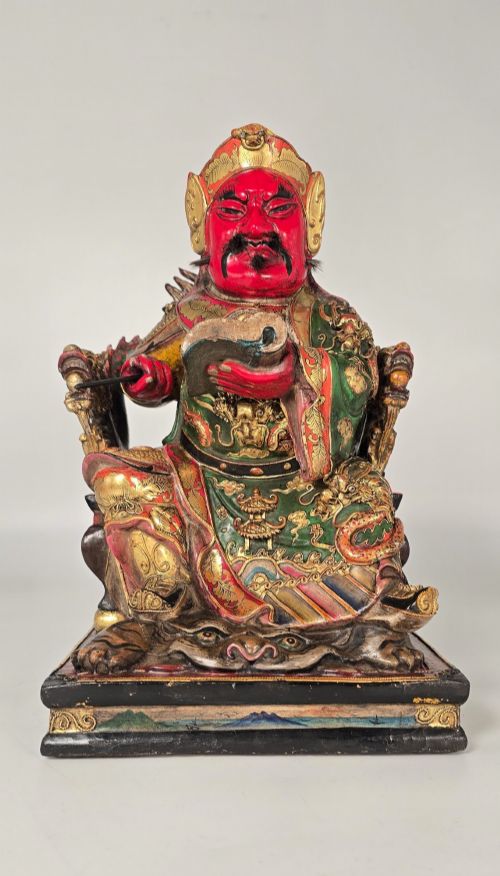
Several temple guardians maintain fierce expressions while covered in centuries of gold leaf and bright paint.
What varies in quality
Quality rests upon the depth and intricacy of the hand carving, where deeply undercut relief work demonstrates superior artisan skill compared to shallow surface incisions. Figures with expressive facial detailing and well-preserved polychrome pigments command greater attention from collectors.
The survival rate of the original gold leaf and lacquer finish significantly influences the character of each piece. Intact gilding that retains its warm metallic lustre without excessive modern restoration elevates the overall visual standard.
The Gilded Chinese Wood Carving Glossary
- Giltwood
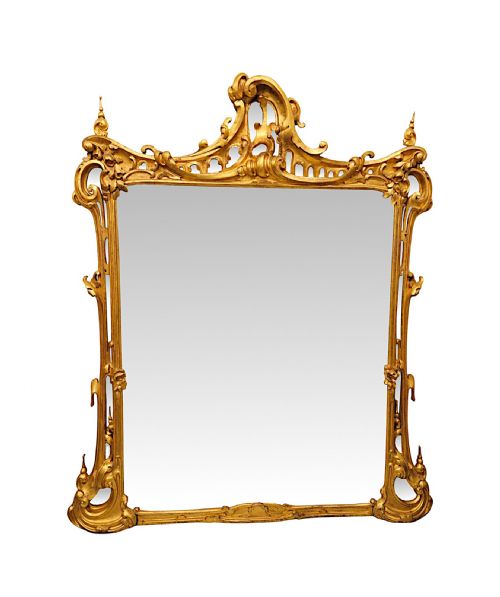
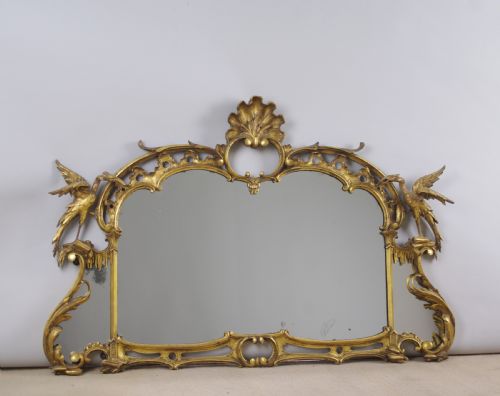
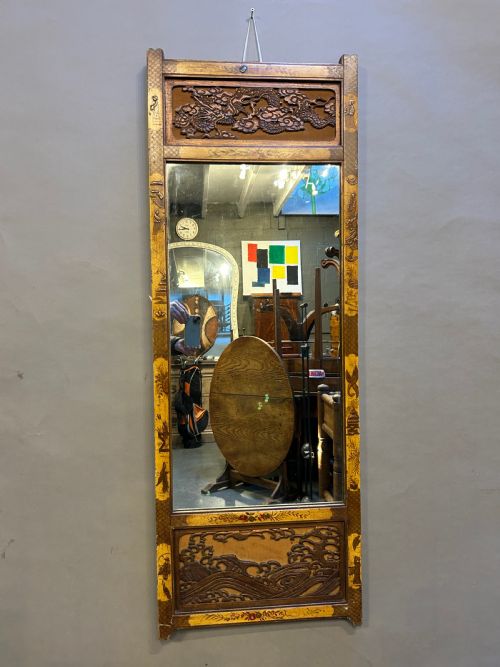
- Wood that has been treated with a thin layer of gold leaf or gold paint. This technique provides a durable metallic sheen across carved panels and mirror frames.
- Polychrome
- Decoration executed in multiple colours, often found painted over wood or lacquer surfaces. It brings realistic tones to carved figures of deities and officials.
- Qing Dynasty
- The imperial dynasty ruling China from sixteen forty-four to nineteen twelve. Many decorative arts and temple carvings originate from the later years of this period.
- Lacquer
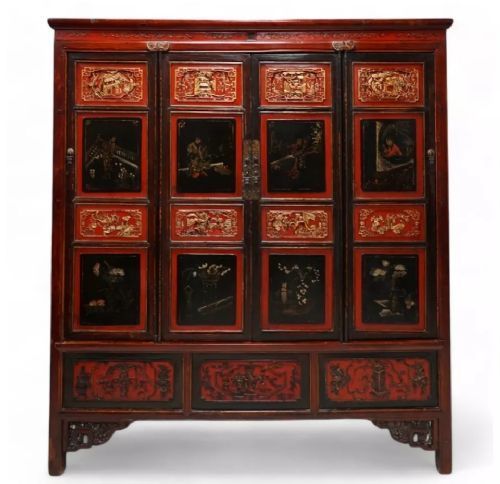
- A protective and decorative finish derived from tree sap, applied in numerous coats. It forms a hard, glossy surface often seen on cabinets and panels.
- Chinoiserie
- European decorative style reflecting Chinese artistic influences, popular during the eighteenth and nineteenth centuries. It often incorporates gilt wood and ornate framing.
Gilded Chinese Wood Carving: Frequently Asked Questions
Where were these carvings originally displayed?
Many of these wooden carvings originated inside temples, ancestral halls, or elite domestic residences across China. They served as structural architectural elements, devotional shrine figures, or decorative wall displays.
Export-oriented items were also created for international markets during the nineteenth century, blending traditional motifs with Western interior tastes such as the Chinese Chippendale style.
How do I care for antique gilded wood?
Keep gilded wooden objects away from direct sunlight and fluctuating heat sources to prevent the wood from splitting and the gold leaf from flaking. Dust gently with a soft, dry brush without using commercial cleaning liquids.
Stable indoor humidity preserves both the timber substrate and the delicate layers of historical lacquer and metallic leaf.
How can I tell the age of a carved panel?
Examine the wood grain, tool marks left by the carver, and the natural wear patterns within the lacquer and gold leaf. Older pieces from the seventeenth and eighteenth centuries display distinct hand-chiselling techniques and deep patina accumulated over generations.
Later nineteenth-century examples often exhibit different mounting methods and varying degrees of surface oxidation compared to early temple fragments.
What is the difference between a temple panel and a wall plaque?
Temple panels usually formed parts of larger religious structures, shrines, or architectural screens, featuring deep narrative carvings of deities, figures, or auspicious symbols. Wall plaques were generally created as standalone decorative items for interior display.
Both utilise intricate hand carving and gilt finishes, but their original architectural contexts determine their structural thickness and framing.