


19th Century Chinoiserie Panel
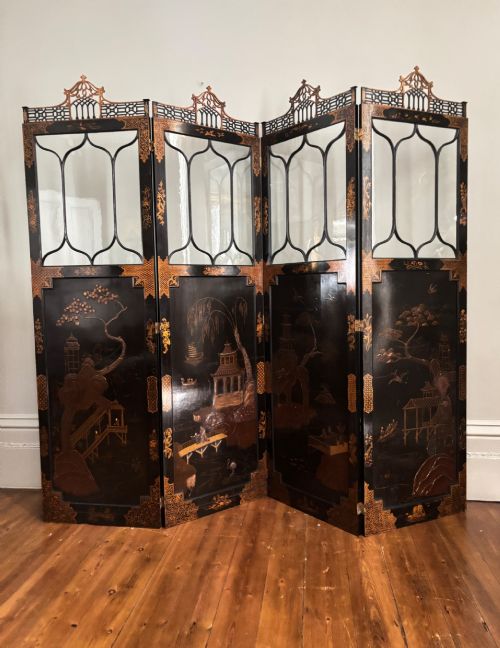
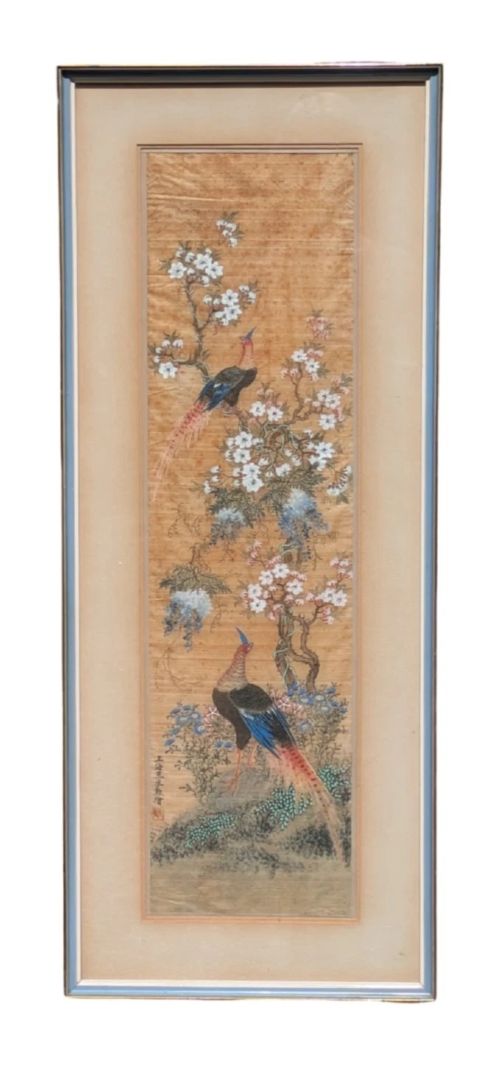
A 19th century chinoiserie panel brings painted lacquer, silk and gilt decoration into a room, offering striking focal points for a wall or corner.
19th Century Chinoiserie Panel
A 19th century chinoiserie panel encompasses a variety of decorative forms, from folding screens and wall art to framed paintings and firescreens. These pieces emerge in styles ranging from Chinese Chippendale and Regency to Victorian interpretations and Qing Dynasty influences.
Buyers frequently encounter large folding screens featuring multiple folds of lacquered wood alongside framed silk watercolours and painted wall plaques. The selection spans distinct periods across the nineteenth century, including specific dates from the eighteen-eighties and eighteen-nineties up to nineteen-twenty.
Origins vary across English, French and Chinese aesthetics, demonstrating how European makers reinterpreted Asian motifs alongside pieces produced in the East. Wall plaques, fire screens and panelled clocks complete the range of objects carrying this decorative language.
Materials and construction
Wood serves as the primary substrate for screens and wall plaques, frequently finished with layers of lacquer or enriched with gold leaf. Artisans applied pigments to create detailed pictorial scenes upon these wooden and lacquered surfaces.
Silk provides a refined ground for delicate watercolours and firescreen inserts, mounted within hardwood or brass frames. Glass also appears to protect sensitive painted elements, as seen in crystal regulator clocks and framed works.
Multi-fold folding screens utilise hinged wooden panels to support heavy coromandel lacquer work, whilst wall hangings rely on textiles and wooden battens for suspension.
Object types range from folding screens and wall plaques to mantel clocks, sofas, and firescreens.
Quality and craftsmanship
The sophistication of the painted detail and the depth of the lacquer layers determine the visual richness of a panel. Pieces decorated with genuine gold leaf and refined pigments display greater luminosity than simpler painted versions.
The integrity of the structural support, whether a multi-fold wooden screen or a hardwood firescreen frame, dictates durability and presence. Finer examples maintain crisp joinery and well-preserved surface finishes across silk, glass and lacquered wood.
The 19th Century Chinoiserie Panel Glossary
- Chinoiserie
- European artistic style reflecting Chinese and East Asian motifs, prominent in furniture and decorative panels during the eighteenth and nineteenth centuries.
- Coromandel lacquer
- Chinese incised lacquer technique where designs are carved into a dark ground and filled with colours or gold leaf, often utilised on folding screens.
- Firescreen
- Ornamental screen placed before a fireplace when not in use, frequently constructed from wood, silk or glass panels.
- Regency
- British design period spanning the early nineteenth century, known for incorporating exotic and classical influences into decorative arts.
- Pole screen
- Adjustable screen mounted on a vertical wooden pole with a tripod base, designed to shield a person's face from hearth heat.
19th Century Chinoiserie Panel: Frequently Asked Questions
How do I hang a large panel?
Large wall hangings and framed paintings require secure fixings into solid masonry or studwork to support their weight safely.
Position the piece at eye level to ensure the painted details and lacquer work can be appreciated fully within the room.
Where should I place a folding screen?
Folding screens work well positioned against a plain wall to create a dramatic backdrop or used to divide a larger space.
Keep multi-fold screens away from direct sunlight and heat sources to protect the lacquered wood and pigmented surfaces.
What is a pole screen used for?
Historically, a pole screen protected the face from the intense heat of an open fireplace by being adjusted up or down.
Today, these pieces function as decorative decorative objects in sitting rooms and studies.