




Chinese Lacquered Screen Panel
A chinese lacquered screen panel brings tactile depth and rich surface ornament to an interior, functioning as both a structural divider and a striking wall hanging.
Chinese Lacquered Screen Panel
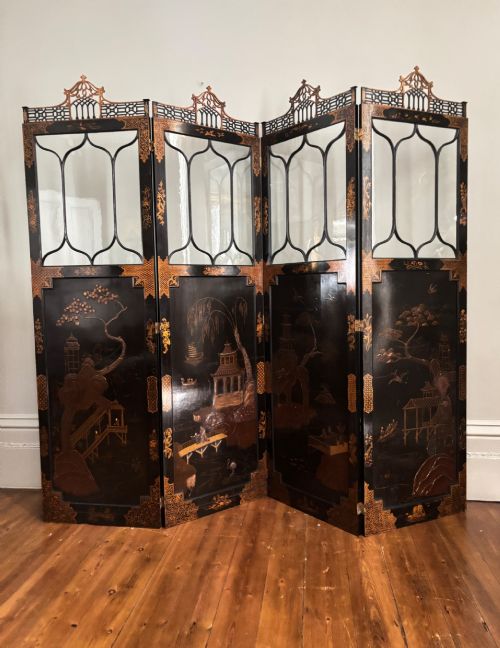
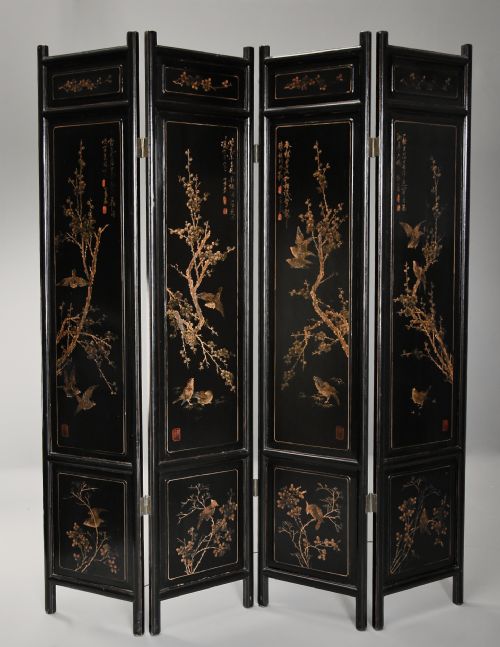
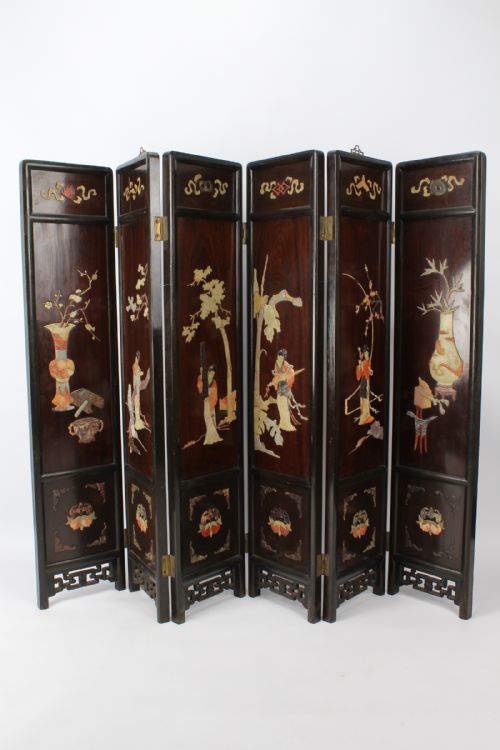
A chinese lacquered screen panel encompasses freestanding folding dividers, fire screens, and framed wall plaques dating from the eighteenth century through to the mid-twentieth century. The selection ranges from substantial multi-fold coromandel and black lacquer room dividers to smaller pairs of panels designed specifically for wall display.
The aesthetic vocabulary bridges traditional oriental workmanship with later European interpretations, drawing on Qing dynasty traditions alongside Victorian chinoiserie and Chinese export art deco styles. These pieces function variously as dressing screens, architectural dividers, and decorative focal points within a room.
Materials and construction methods
Makers built these pieces using solid wood foundations coated in layers of lacquer, often finished with deep black grounds or the characteristic incised coromandel technique. Surface ornamentation relied heavily on applied details, employing mother-of-pearl, abalone, and various hardstones to create raised pictorial motifs.
Gilding with gold leaf and foil added luminous highlights to scenes depicting birds, foliage, and figurative subjects. Structural elements frequently incorporated brass hardware to join the folding leaves or support freestanding configurations.
Current listings feature pieces spanning the eighteenth, nineteenth, and twentieth centuries, incorporating materials such as brass, gold leaf, hardstone, and mother-of-pearl.
Assessing quality and execution
Quality rests in the depth of the lacquer layers and the precision of the carving, particularly in the crispness of incised coromandel work and the meticulous placement of mother-of-pearl and hardstone inlays. Superior examples display harmonious composition across multiple folds, with finely detailed rendering of natural subjects like birds and foliage.
The integrity of the wooden substrate and the preservation of the original surface finish dictate the enduring presence of a panel. Pieces that retain their original brass fittings and rich tonal variations in the gold leaf and lacquer demonstrate superior workshop execution.
The Chinese Lacquered Screen Panel Glossary
- Coromandel
- A type of Chinese incised lacquer where the design is carved into a ground of multiple lacquer layers and filled with pigments or gold.
- Chinoiserie
- The European interpretation and imitation of Chinese and East Asian artistic traditions, prominent in decorative arts during various periods.
- Hardstone
- Dense minerals such as jade or agate cut and polished for use in decorative inlays on lacquer furniture and panels.
- Bantam work
- A term historically used for a specific variety of low-relief polychrome and gilt incised lacquer originating from Asian export trade.
- Papier mâché
- A composite material made from paper pulp or layers of paper bound with adhesive, utilised in the construction of certain Victorian screen frames.
Chinese Lacquered Screen Panel: Frequently Asked Questions
How do I clean a lacquered panel?
Dust the surface gently with a soft, dry microfibre cloth to prevent accumulation without abrasive friction.
Avoid using water, chemical polishes, or modern cleaning sprays, as moisture can penetrate hairline fractures and damage the delicate lacquer finish.
Are these panels freestanding or wall-mounted?
Many examples are designed as multi-fold folding screens that stand independently to divide interior spaces or serve as dressing screens.
Other pieces take the form of individual framed wall plaques or panels equipped specifically for hanging as decorative art.
What is the difference between coromandel and standard lacquer?
Coromandel work involves carving directly through numerous layers of dark lacquer to expose a contrasting ground beneath, which is then painted or gilt.
Standard lacquer finishes often rely on smooth surfaces enhanced with raised inlays of mother-of-pearl, hardstone, or gold foil rather than incised carving.
How do I identify the period of a screen?
Dating relies on examining the construction of the wooden frame, the style of the brass hardware, and the characteristic artistic motifs of the era.
Eighteenth-century and nineteenth-century pieces display traditional hand-carved techniques, whereas twentieth-century items often incorporate distinct art deco or transitional export styling.