








Gilded Ceramic Floor Vase
These large gilded ceramic floor vase pieces bring grand scale and intricate hand-painted detail to any room.
Gilded Ceramic Floor Vase
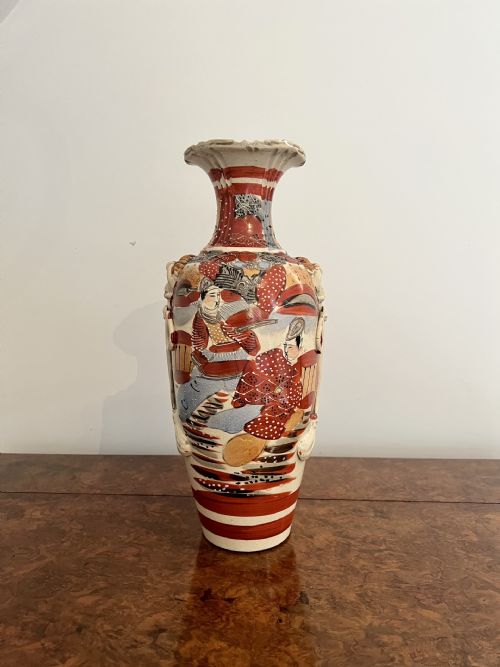
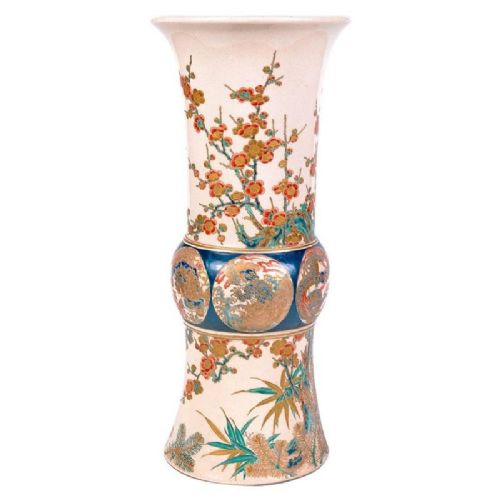
A gilded ceramic floor vase is a substantial decorative vessel designed to stand directly on the floor rather than on furniture, often serving as a central focal point in a room. When you search for a gilded ceramic floor vase, you encounter large-scale nineteenth-century works originating from Japan and China, including pieces from the Meiji period, Qing dynasty, and Victorian eras.
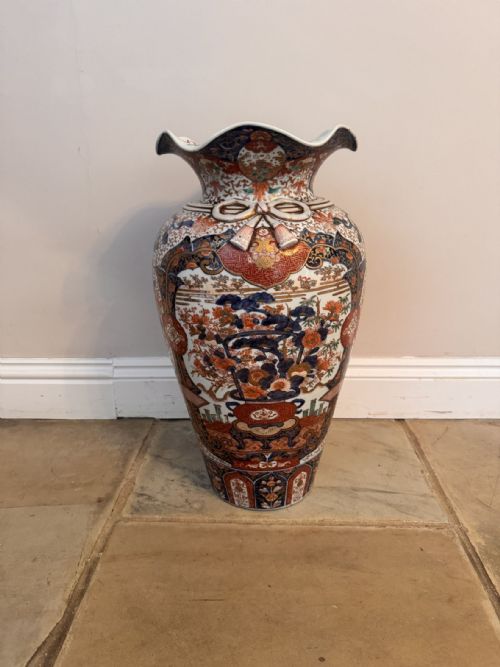
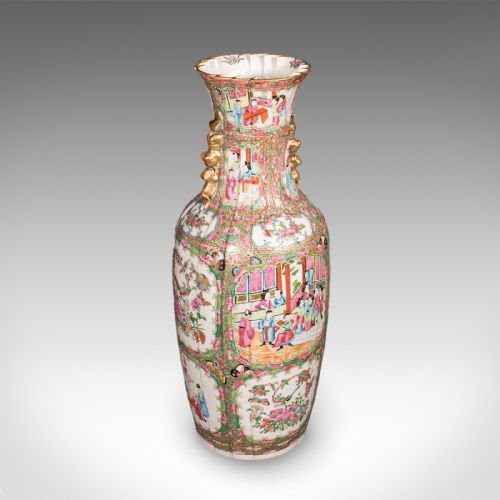
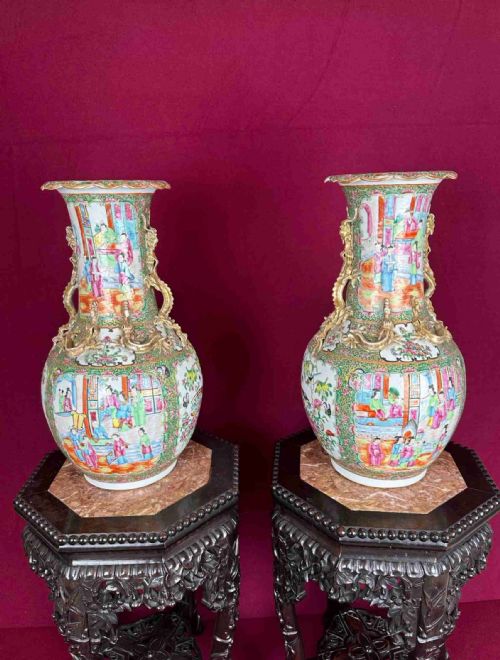
The most common forms on this page are large Japanese Imari and Satsuma vases, alongside Chinese export pieces such as Famille Rose and Rose Medallion vessels. Many of these large pieces are paired items or incorporate matching stands, lidded designs, and handles.
These vessels demonstrate the ambitious scale of nineteenth-century ceramic production for export and domestic display. They reflect diverse stylistic traditions, from the rich blue and iron-red palette of Imari to the densely patterned figural scenes of Satsuma and Canton.
How they were made
The foundation of these pieces lies in ceramic production using porcelain and earthenware, shaped into large vessels before undergoing high-temperature firing. Artisans applied detailed polychrome enamels by hand, creating complex pictorial and geometric surfaces across the ceramic body.
Gilding was introduced through the application of gold leaf, gilt, or gold paint to highlight specific decorative motifs, borders, and panels. This metallic embellishment was carefully integrated with the underlying enamel work to catch the light.
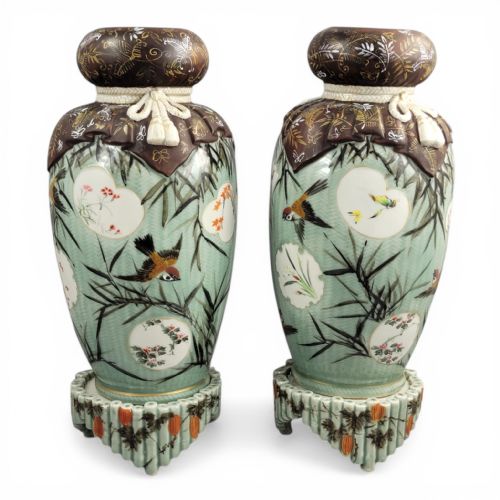
Many of the largest examples required specialised techniques to support their weight during firing, sometimes utilising sectional construction or fitted wooden and porcelain stands.
Gilded Ceramic Floor Vase Retail Price Guide 2026
Typical asking prices for gilded ceramic floor vase among the pieces listed under this phrase on Sellingantiques today, from the lower quarter to the upper quarter. They describe what is for sale here now, not the wider market.
Materials across the selection combine traditional porcelain and earthenware bodies with detailed enamel painting and gold leaf application.
What varies in quality
The standard of painting on these large vases separates routine production from superior examples, particularly in the precision of brushwork across complex Satsuma or Imari compositions. Finer pieces display exceptional control in miniature figural scenes and dense botanical borders.
The application and preservation of the gold leaf or gilt also define the upper tier of the range, where crisp metallic highlights remain intact and bright. The density of the enamel work and the structural ambition of lidded forms, handles, and original stands further distinguish finer works.
Kato Sanhei
The Gilded Ceramic Floor Vase Glossary
- Imari
- A traditional style of Japanese export porcelain decorated in underglaze blue, iron red, and gold. It originated in Arita and became immensely popular in Europe during the nineteenth century.
- Satsuma
- A type of Japanese earthenware featuring an ivory-coloured, crackled glaze that is richly decorated with polychrome enamels and gold. These pieces often depict elaborate figural and nature scenes.
- Famille Rose
- A major palette of Chinese ceramic glazes introduced in the Qing dynasty, characterised by opaque pink or rose enamels. The style allowed for subtle shading and complex pictorial designs.
- Meiji Period
- The era in Japanese history spanning from 1868 to 1912, marked by the opening of trade with the West and the production of highly detailed decorative arts for international export.
- Rose Medallion
- A distinct style of nineteenth-century Chinese export porcelain featuring partitioned panels filled with figures, birds, and flowers, heavily accented with gilt and pink enamel.
Gilded Ceramic Floor Vase: Frequently Asked Questions
Where should a floor vase be placed?
These large vases suit prominent positions in entrance halls, living rooms, or wide corridors where their scale can be appreciated without obstruction.
Because of their height and weight, they sit best directly on sturdy flooring rather than elevated surfaces.
How do you distinguish Imari from Satsuma?
Imari pieces are typically porcelain with a resonant ring, utilising a palette dominated by deep underglaze blue, iron red, and gold.
Satsuma pieces are earthenware with an ivory-toned, crackled glaze designed specifically to carry dense, colourful enamel and gilt illustrations.
Are these vases meant for holding flowers?
Most nineteenth-century floor vases of this scale function primarily as decorative architectural or sculptural objects rather than practical vessels for water and stems.
Their historical value and delicate enamel surfaces make them better suited for dry display.
What is the Qing dynasty connection?
Several pieces on this page date to the Qing dynasty in China, representing the height of export porcelain manufacturing during the nineteenth century.
These items share the period's characteristic interest in rich enamels and gilded decorative schemes.