







Cream Glaze Japanese Vase
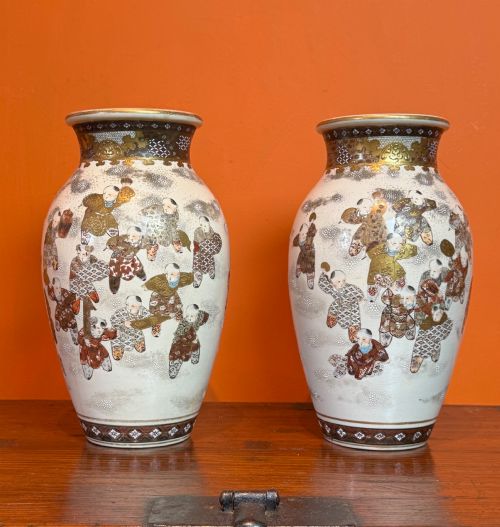
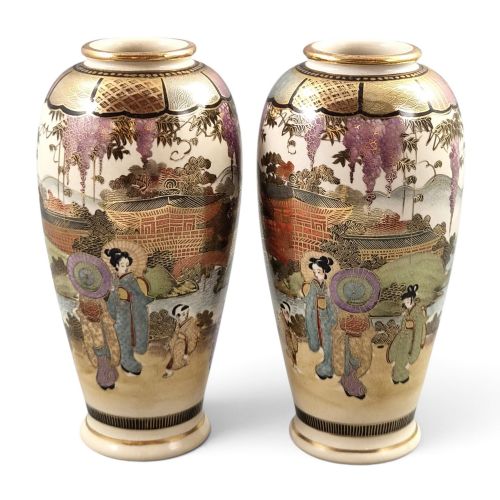
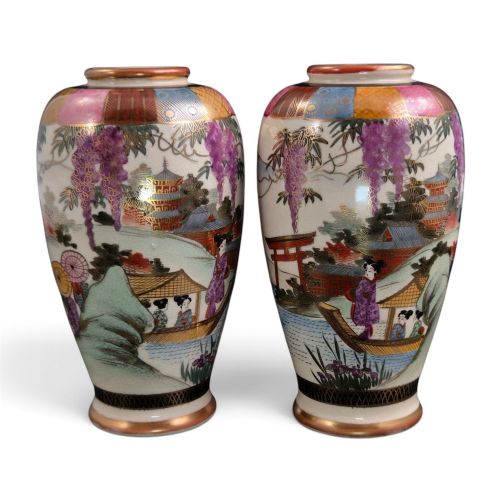
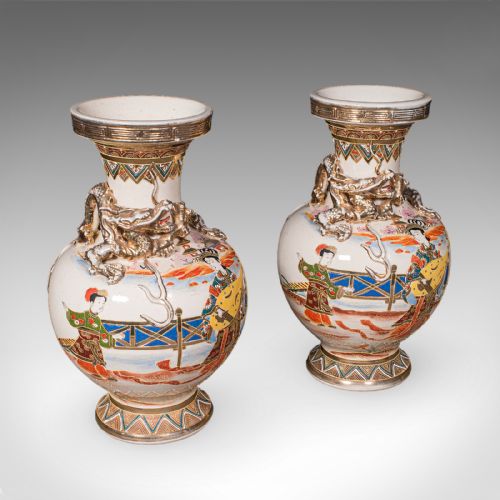
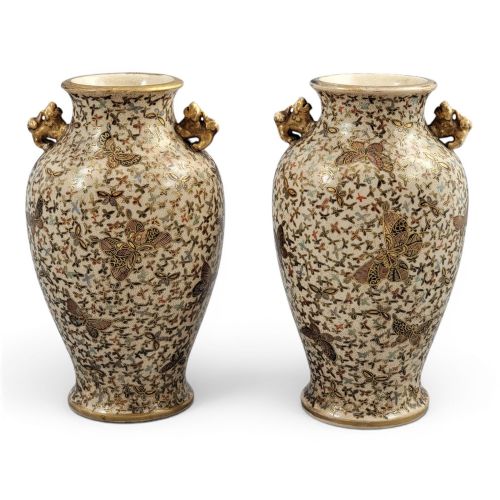
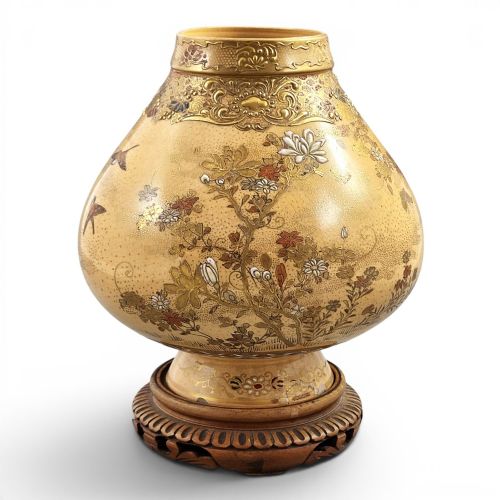
A cream glaze japanese vase brings the subtle, crackled warmth of Satsuma earthenware and Meiji period craftsmanship directly into a room.
Cream Glaze Japanese Vase
A cream glaze japanese vase centres on the rich tradition of Satsuma earthenware, spanning the Meiji, Taisho, and early Showa periods alongside Victorian and Edwardian imports.
Buyers meet everything from monumental hexagonal vessels and garlic head forms to delicate miniature vases, pairs of table lamps, and intricately decorated baluster shapes.
Many examples feature pale, finely crazed ivory bodies embellished with pictorial scenes of samurai, landscapes, wisteria, and figural processions.
How they were made
Potters shaped ceramic and earthenware bodies before applying characteristic soft glazes that cooling often caused to crackle in distinctive patterns.
Artisans layered polychrome enamel paints and meticulous gold leaf highlights across the surfaces to depict elaborate narrative scenes and botanical motifs.
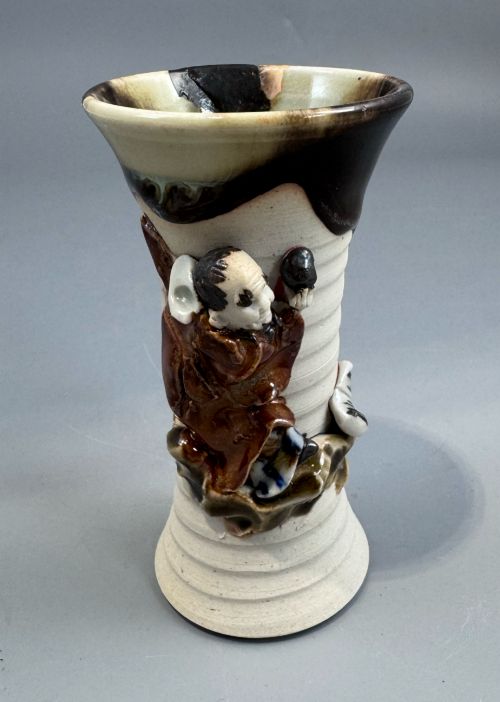
Certain pieces integrated sculptural elements like applied figures or formed wood components, while workshops utilised brass fittings when converting vessels into lamps.
Cream Glaze Japanese Vase Retail Price Guide 2026
Typical asking prices for cream glaze japanese vase among the pieces listed under this phrase on Sellingantiques today, from the lower quarter to the upper quarter. They describe what is for sale here now, not the wider market.
Listings feature earthenware and ceramic vessels spanning the nineteenth century through the Taisho period, incorporating brass lamp fittings and wooden elements.
What varies in quality
The standard of painting determines the tier of a piece, separating hurried commercial output from the precise brushwork produced by notable Kyoto workshops.
Execution of the gilding and the fineness of the crackle glaze dictate overall refinement, with superior examples displaying controlled enamel thickness and sharp detailing.
Kinkōzan Workshop·Manpei·Kinzan·Ryōsai·Chosei
The Cream Glaze Japanese Vase Glossary
- Satsuma ware
- Earthenware originating from Satsuma Province, traditionally characterised by an ivory-coloured, finely crackled glaze decorated with enamels and gilding. This style became immensely popular for export during the late nineteenth century.
- Meiji period
- The era of Japanese history lasting from eighteen sixty-eight to nineteen twelve, marked by extensive international trade and exceptional decorative arts production. Pieces from this time often exhibit highly detailed hand-painted scenes.
- Baluster
- A vertical architectural form resembling a pillar, featuring a rounded lower body that tapers towards a narrow neck. Many ceramic vases adopt this traditional silhouette for stability and visual balance.
- Enamel
- Vitreous coloured glass fused to ceramic surfaces through firing to create vibrant decorative motifs. Artists applied these compounds carefully to build up complex figurative compositions.
- Gilt
- A thin application of gold leaf or powdered gold paint used to accentuate outlines and details. High quality gilding retains its brilliance and precise application without rubbing away.
Cream Glaze Japanese Vase: Frequently Asked Questions
What is Satsuma ware?
Satsuma ware is a distinct type of Japanese earthenware featuring a cream-coloured, crackled glaze that provides a pale canvas for intricate enamel and gold decorations.
Potters across various workshops produced these vessels primarily for export, resulting in a wide range of decorative objects from miniature vases to large display pieces.
How do I date a piece?
Dating relies on stylistic shifts, historical periods recorded in signatures, and the specific characteristics of the ceramic body and glaze.
Meiji period pieces often display denser, more elaborate figural work, while later Taisho and Showa examples introduce alternative decorative emphases.
Were these vases used?
Most pieces served as decorative display items within Western drawing rooms following the opening of Japanese trade routes in the nineteenth century.
Later conversions turned some vases into functional table lamps by adding electrical fittings while preserving the original ceramic body.
How should I clean them?
Maintenance requires only gentle dusting with a soft, dry cloth to protect the delicate enamel and gold leaf decorations from abrasion.
Water and cleaning chemicals must be avoided entirely, as moisture can penetrate the porous earthenware and old crackle glaze.