



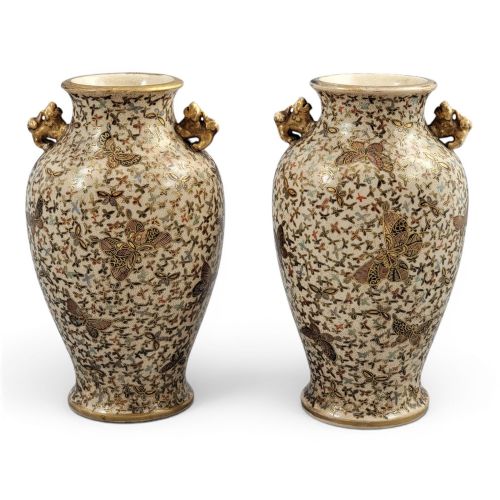
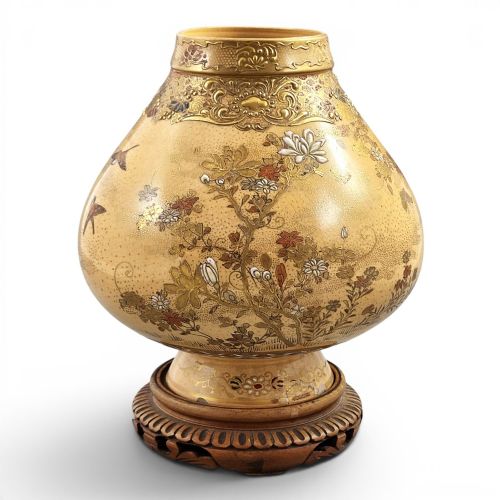

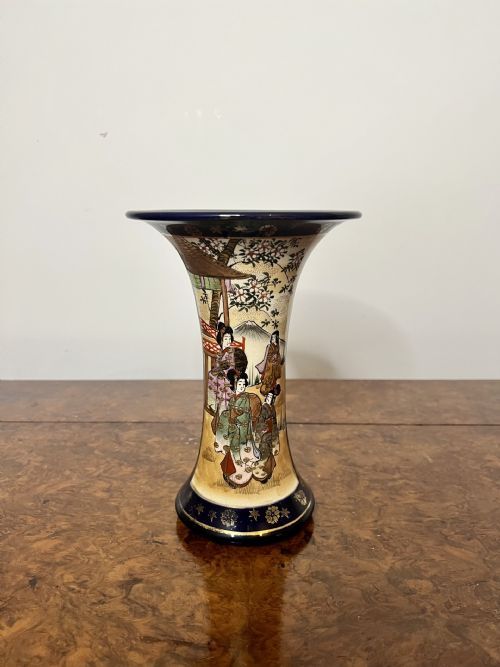

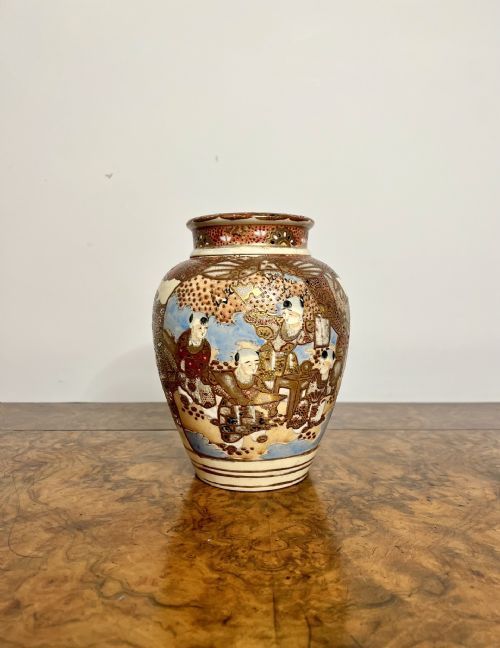
Japanese Satsuma Earthenware Vase
A japanese satsuma earthenware vase brings together intricate hand-painted figural scenes and dense gilding, offering collectors a tangible piece of Meiji craftsmanship.
Japanese Satsuma Earthenware Vase
A japanese satsuma earthenware vase is defined by its characteristic cream-coloured, finely cracked crackle glaze and dense polychrome enamel decoration. Buyers seeking these ceramics will find vessels ranging from small miniature forms to monumental exhibition pieces originating largely from the late nineteenth and early twentieth centuries.
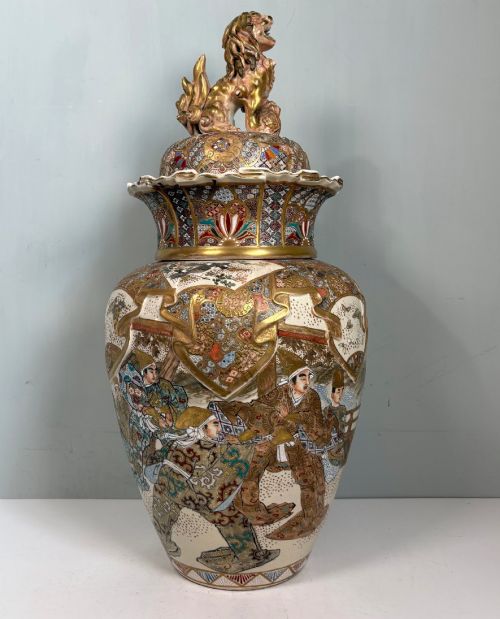
The inventory on this page spans the Meiji, Taisho, and Showa periods, capturing the transition from highly intricate nineteenth-century imperial work to later twentieth-century decorative pieces. Forms vary from traditional baluster shapes and ginger jars to hexagonal bodies, tripod incense burners, and adapted table lamps.
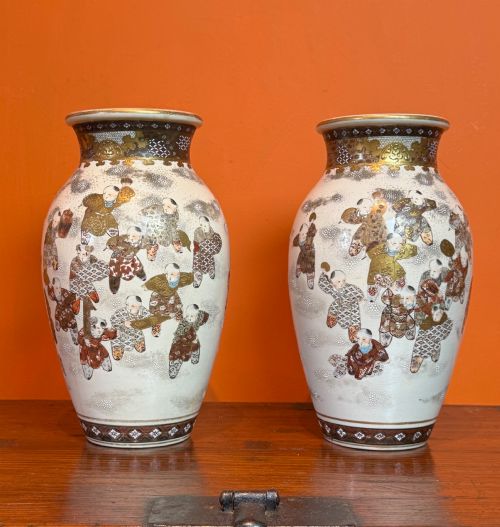
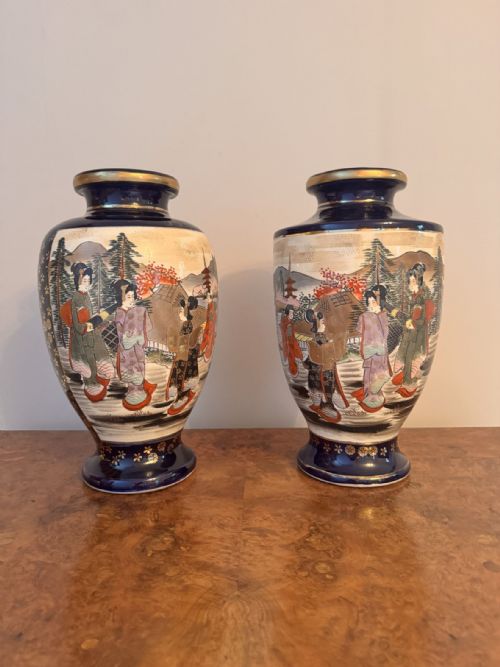
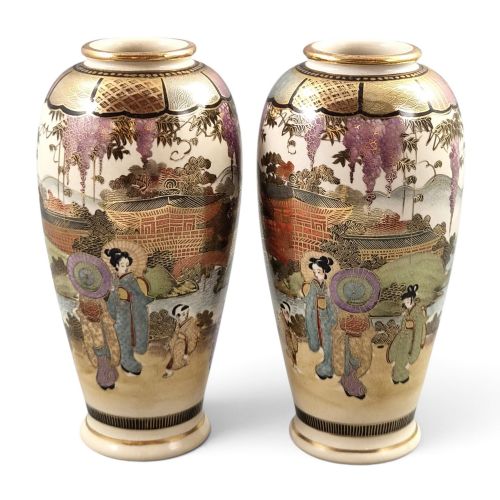
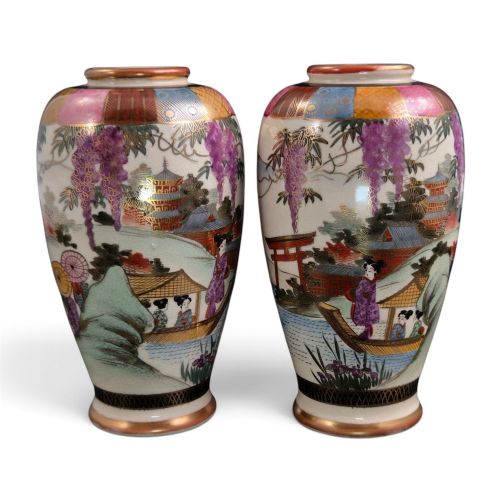
Most examples originate from major ceramic centres like Kyoto and incorporate motifs such as court figures, arhats, wisteria gardens, and landscapes. The selection includes both signed studio pieces from renowned makers and unmarked pairs intended for export.
How they were made
Makers shaped the porous earthenware body before applying a distinctive transparent glaze that crackled during cooling, creating the characteristic network of fine lines across the surface. Artisans then built up the design using detailed mineral enamels and extensive gold leaf or gilt highlights.
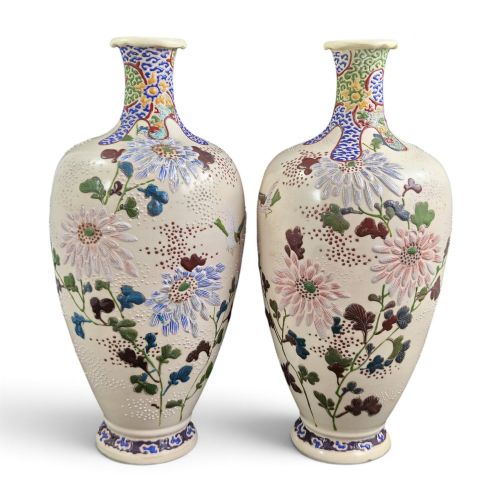
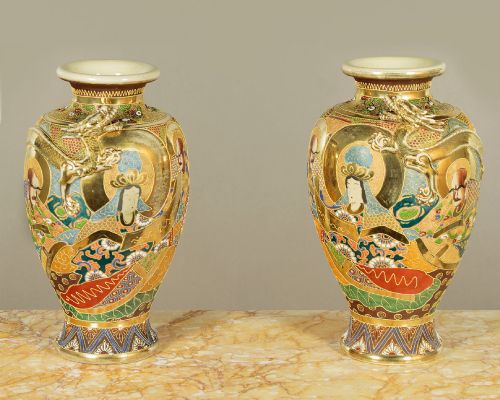
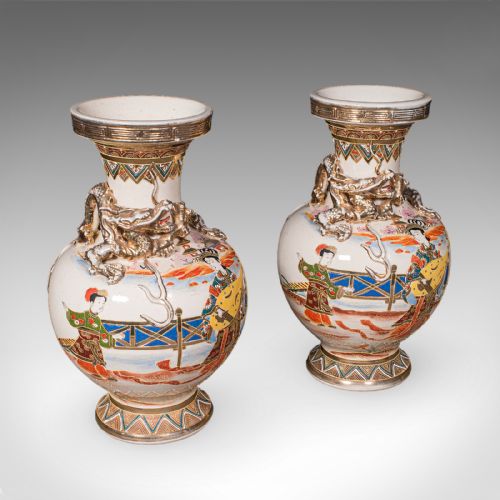
Many sophisticated examples utilised raised enamel work known as moriage, which adds a tactile, beaded dimension to robes, borders, and floral elements. Selected vessels were further enhanced with cobalt blue grounds beneath the painted figural panels and gilt ornamentation.
Japanese Satsuma Earthenware Vase Retail Price Guide 2026
Typical asking prices for japanese satsuma earthenware vase among the pieces listed under this phrase on Sellingantiques today, from the lower quarter to the upper quarter. They describe what is for sale here now, not the wider market.
Several arhats painted on these vases appear deep in thought while a dragon coils overhead, seemingly indifferent to the cosmic drama.
What varies in quality
The distinction between standard export wares and top-tier pieces rests on the precision of the brushwork and the density of the gilding. Master workshops employed skilled painters whose depiction of facial expressions, garments, and architectural details in scenes of arhats or court figures exhibits exceptional control.
Subtlety in the crackle glaze and the integration of the cobalt ground with raised moriage also separate ordinary examples from museum-grade creations. Signed pieces from celebrated potteries generally reflect a higher standard of artistic execution.
Kinkōzan·Shozan·Hotoda·Kinzan·Chosei·Nanzan·Seiko-en Chokei·Yamashu·Choshuzan·Hakusan·Tagawa·Maruni Kobe
The Japanese Satsuma Earthenware Vase Glossary
- Moriage
- A decorative technique using raised slip or enamel to create textured, three-dimensional patterns on ceramics. This method is frequently found highlighting robes and floral borders on finer vessels.
- Arhat
- The perfected followers of Buddha, often depicted in groups on Satsuma wares with expressive faces and distinct garments. They appear regularly in detailed Meiji period narrative scenes.
- Mon
- A traditional Japanese heraldic emblem or badge used to identify families or clans. The Shimazu clan crest frequently marks pieces associated with Satsuma production.
- Koro
- A traditional Japanese incense burner, usually featuring a tripod base and a pierced cover. These items often incorporate mythical beast handles such as Shi-Shi lions.
- Baluster
- A vase shape characterised by a rounded body that tapers toward the base and swells near the lower centre. It provides a stable, traditional canvas for wrap-around landscape paintings.
Japanese Satsuma Earthenware Vase: Frequently Asked Questions
What is Satsuma ware?
Satsuma ware is a type of Japanese earthenware traditionally recognised by its ivory-coloured body and fine crackled glaze. It serves as a base for elaborate polychrome enamel and gilt painting.
Originally produced in Satsuma Province, the style evolved significantly during the Meiji period to cater to Western export markets with highly detailed narrative scenes.
How do I identify Meiji period pieces?
Meiji period ceramics are typically identified by their intricate detail, rich gold application, and specific artist or workshop signatures on the base. The style reflects the artistic openness of the late nineteenth century.
Earlier nineteenth-century examples tend to display more restrained, disciplined painting compared to the densely packed compositions of the late Meiji era.
Are these vases waterproof?
Most antique earthenware vessels are porous due to the nature of the unvitrified clay body and the intentional crackle in the glaze. They are intended for decorative display rather than holding water.
Using them for fresh flowers can introduce moisture into the historic ceramic body and potentially stain the interior or damage the exterior pigments.
What do the signatures mean?
Signatures on the base often name the artist, the decorator, the workshop, or the studio that produced the finished vessel. Prominent names include Kyoto families such as Kinkōzan.
Some marks also indicate export compliance or specific exhibition pieces, though signature research requires careful comparison with documented examples.