

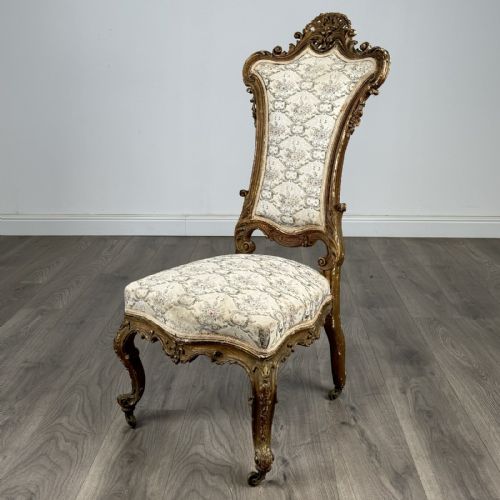
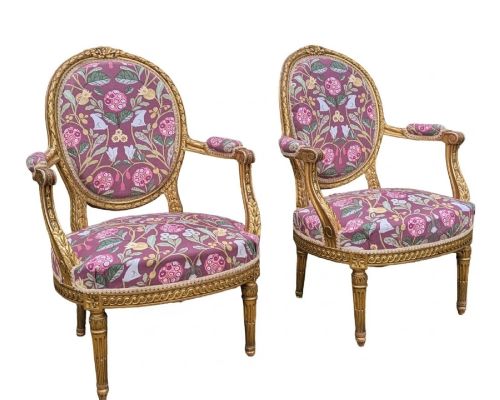
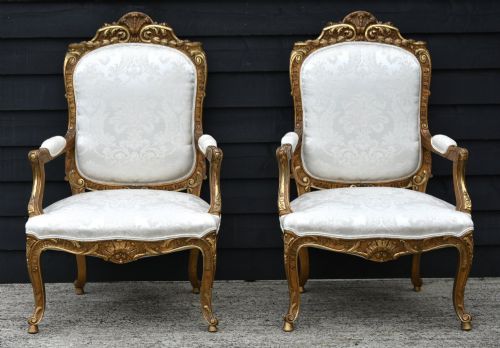
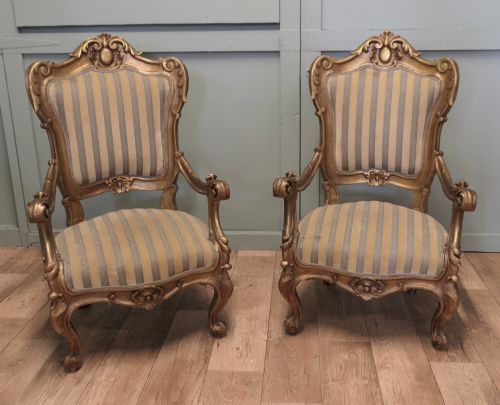

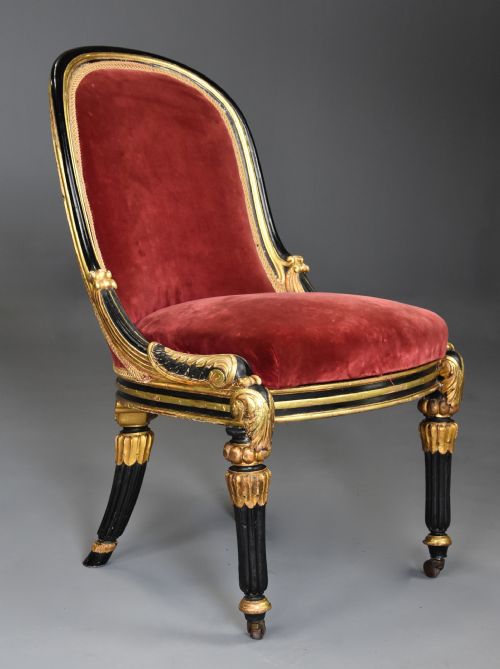
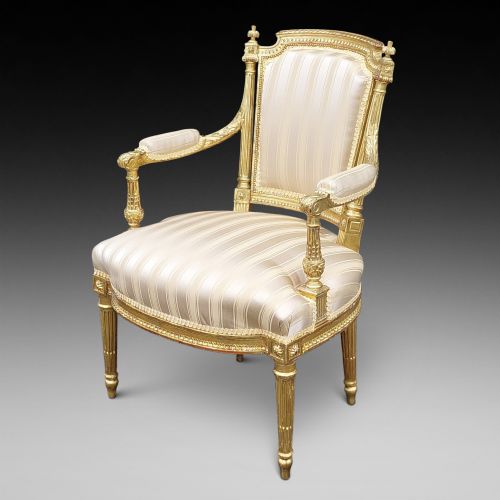
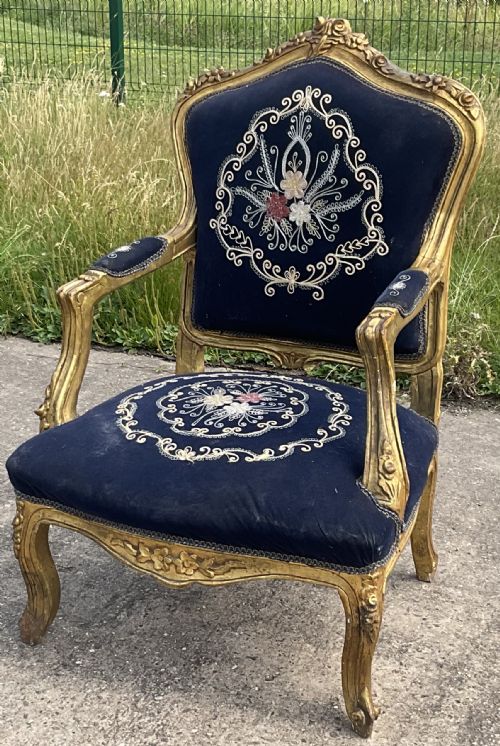
Gilded Carved Accent Chair
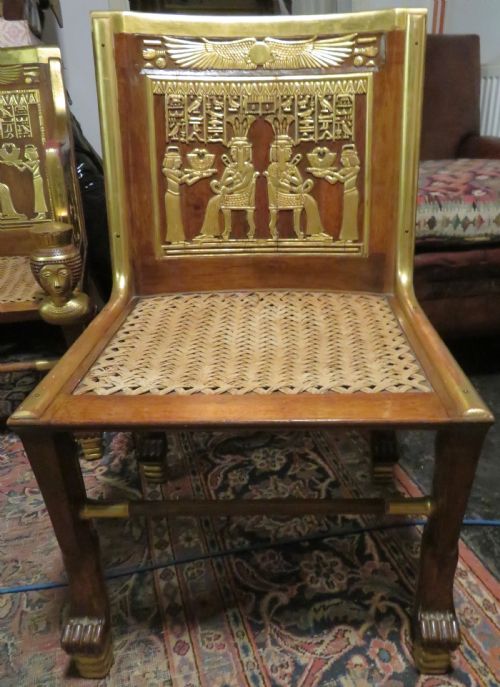
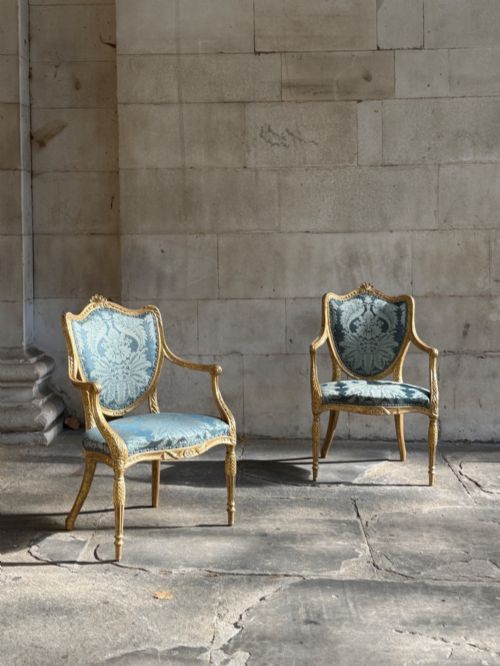
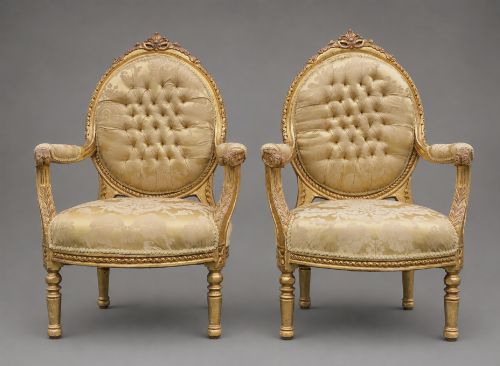
A gilded carved accent chair brings immediate architectural presence into a room through metallic leaf and robust wooden framing.
Gilded Carved Accent Chair
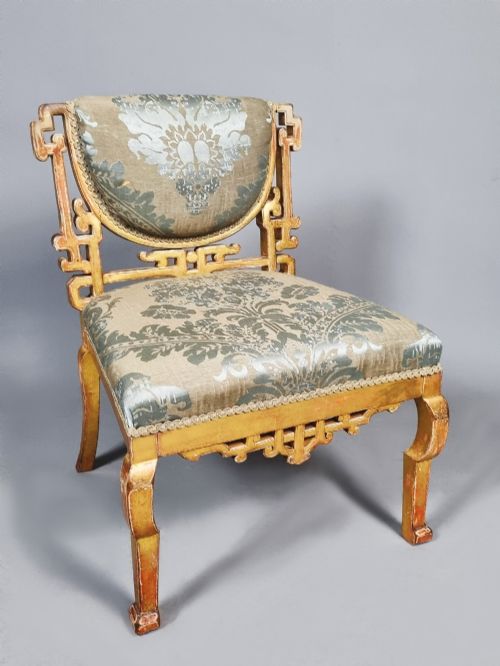
A gilded carved accent chair is a decorative seat designed to catch the eye in a parlour, salon or bedroom. These pieces range from compact side chairs and hall chairs to grand open armchairs and bergères.
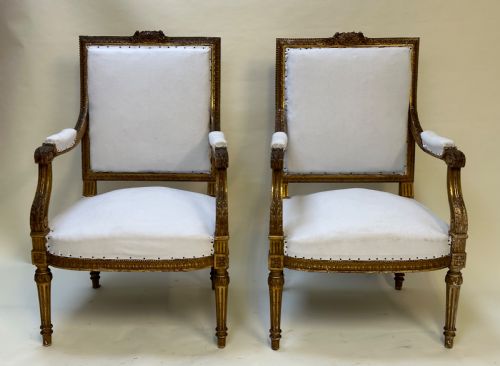
The versions most commonly met on this page originate from the nineteenth century, drawing heavily on French Rococo Revival and Louis XVI styles. Makers during this period turned to carved wood frames finished in giltwood or gilt to achieve a theatrical interior aesthetic.
Materials and construction
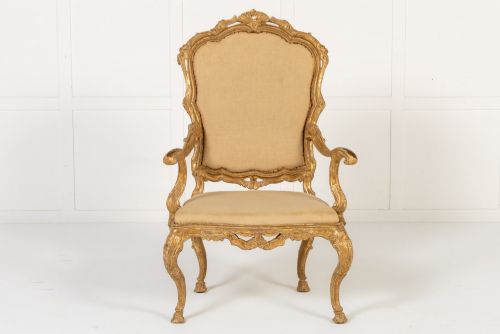
Frames are constructed from sturdy timbers such as beech, which accepts intricate hand-carving along cabriole legs, scroll arms and shaped crest rails before gilding. Artisans apply gold leaf over a prepared base to yield a luminous metallic surface.
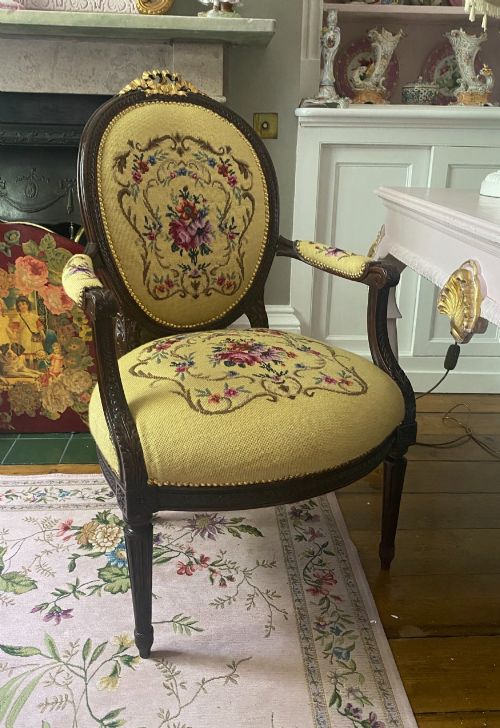
Upholstery relies on traditional textiles including silk, velvet, damask fabric and needlepoint tapestry panels secured to the seat and back, sometimes complemented by brass details.
Gilded Carved Accent Chair Retail Price Guide 2026
Typical asking prices for gilded carved accent chair among the pieces listed under this phrase on Sellingantiques today, from the lower quarter to the upper quarter. They describe what is for sale here now, not the wider market.
Materials recorded across the inventory include beech frames, silk fabric, blue velvet, needlepoint tapestry panels, and brass.
Distinctions in craftsmanship
The depth and crispness of the hand-carving dictate the artistic standard of the frame, where sharp floral motifs and scrollwork separate ambitious workshop output from simpler commercial production. Superior gilding displays subtle tonal variation and texture rather than a flat, modern painted finish.
The integrity of the structural joinery and the authenticity of the upholstery materials determine the long-term character of the piece. Chairs retaining period textiles or utilising historically appropriate silk and velvet hold distinct archival interest.
Waugh & Son·Jacob-Desmalter·Bruce J. Talbert
The Gilded Carved Accent Chair Glossary
- Giltwood
- Timber coated with thin gold leaf applied over a gesso ground. This finish provides the characteristic metallic sheen seen on period frames.
- Bergère
- An enclosed upholstered armchair with wooden framing and a closed upholstered or cane arm. It typically includes a loose down seat cushion.
- Fauteuil
- An open-arm armchair with exposed wooden sides and arms originating in France. The arms usually feature padded elbow rests.
- Cabriole leg
- A furniture leg that curves outward at the knee and tapers inward toward the foot. This form derives from ancient animal leg shapes popular in classical designs.
- Louis XVI style
- A neoclassical aesthetic defined by straight tapering legs, geometric symmetry and architectural carvings. It stands in contrast to earlier curving Rococo forms.
Gilded Carved Accent Chair: Frequently Asked Questions
Where should I place a gilded carved accent chair?
These seats function effectively in low-traffic areas like bedrooms, entry halls or drawing rooms where they serve as visual focal points. They are designed to draw the eye rather than endure heavy daily use.
Pairing a single chair with a small table or positioning a matched pair near a fireplace creates a balanced interior arrangement without crowding the room.
How do I care for antique giltwood?
Giltwood requires gentle maintenance to protect the delicate gold leaf layer from moisture and physical abrasion. Dusting should be performed with a soft, dry brush rather than chemical cleaning products.
Keeping the chair away from direct sunlight and steady humidity prevents the underlying gesso and wood from drying and cracking over time.
How do I identify Louis XVI style chairs?
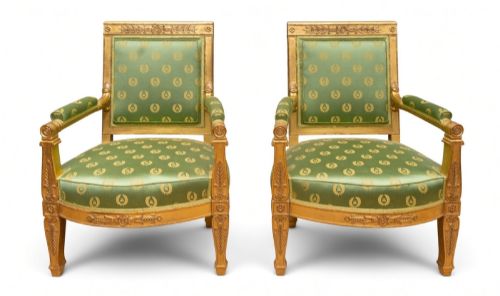
Louis XVI style seating is distinguished by straight, fluted legs and geometric forms such as oval or rectangular backs. The ornamentation draws on classical antiquity rather than asymmetric rococo curves.
Carvings on these pieces often feature laurel wreaths, ribbons and urn motifs executed in giltwood or painted finishes.