


Egyptian Revival Furniture
Egyptian revival furniture brings ancient pharaonic motifs into British and European interiors, offering striking symbolic forms that collectors prize for theatrical presence.
Egyptian Revival Furniture
Egyptian revival furniture encompasses pieces drawing directly on the art and architecture of ancient Egypt, spanning George III, Regency, and Victorian periods. Buyers search for this style to acquire items decorated with sphinxes, winged sun discs, and classical pharaonic symbolism.
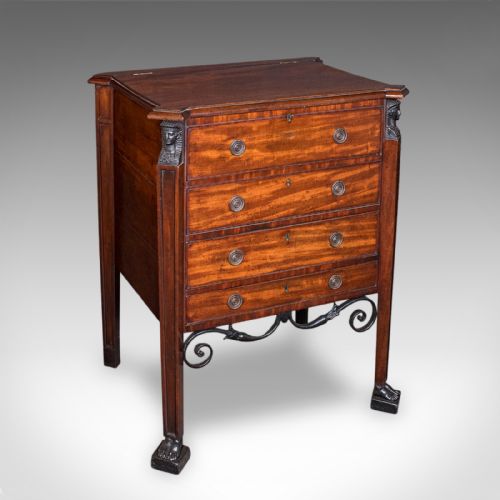
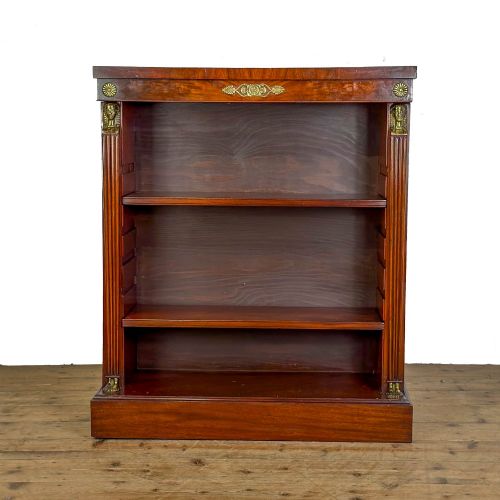
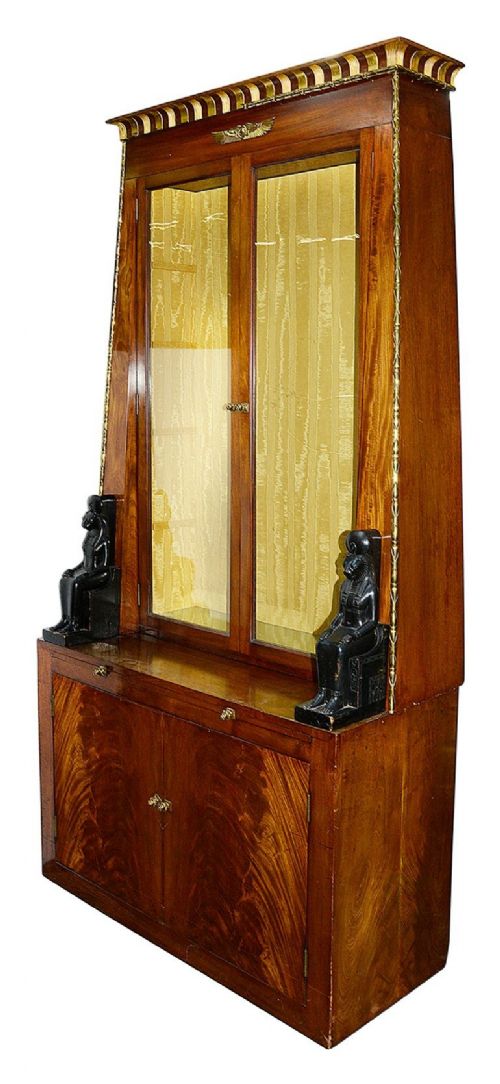
The pieces listed on this page include side cabinets, cocktail cabinets, bookcases, display cabinets, occasional tables, stools, door knockers, and chests of drawers. Most examples date from the nineteenth century, reflecting successive waves of archaeological fascination following Napoleonic campaigns and later discoveries.
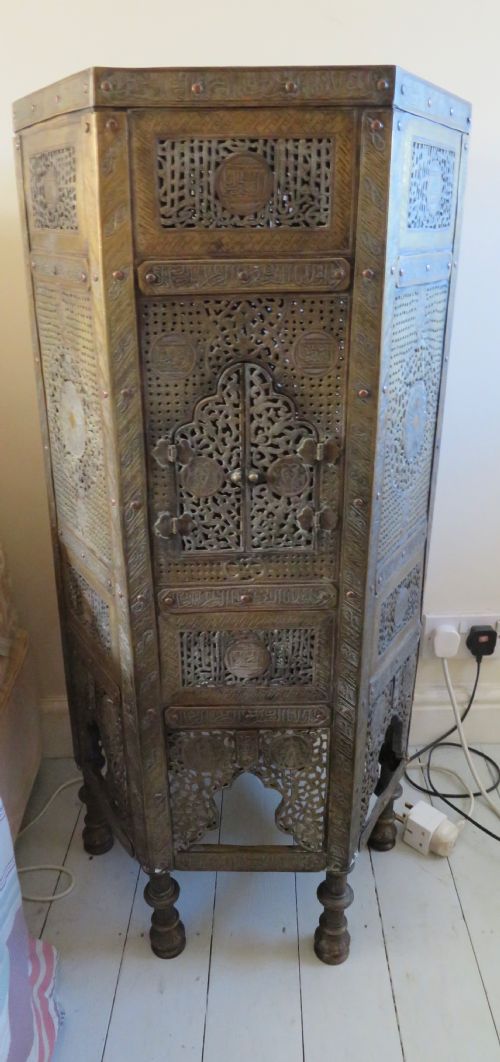
Mamluk revival and Cairo ware occasional tables also appear alongside classical Regency and Victorian forms, showing how eastern Mediterranean metalwork and woodwork fed into British taste. Stools in the manner of Liberty and Co represent the later Arts and Crafts interpretation of these ancient designs.
Materials and Construction
Makers utilised dark timbers such as mahogany, rosewood, and ebonised wood to provide a heavy, contrasting backdrop for metallic ornamentation. Plum pudding mahogany and mahogany veneer frequently feature on case pieces and tables from the Georgian and Regency eras.
Decoration relied on brass, gilt metal, white-metal, and copper inlay to create the characteristic flash of metallic contrast against polished wood surfaces. Glass panels appear in display cabinets, while specialised items incorporate woven fabric and iron fittings.
Egyptian Revival Furniture Retail Price Guide 2026
Typical asking prices for egyptian revival furniture among the pieces listed under this phrase on Sellingantiques today, from the lower quarter to the upper quarter. They describe what is for sale here now, not the wider market.
Cast bronze sphinxes stand ready to guard your hallway keys.
Markers of Quality
Quality in these pieces rests on the precision of the cabinetwork and the crispness of the applied brass or gilt metal mounts. Finer examples display meticulously chased details on sphinxes and classical motifs rather than mass-produced stamped metal.
The choice and figuring of timber dictate the standing of a piece, with dense mahogany veneers and richly grained rosewood marking out superior workshop production. Structural integrity in complex forms like multi-tiered cabinets or inlaid occasional tables separates standard trade pieces from exceptional commissions.
Liberty and Co
The Egyptian Revival Furniture Glossary
- Regency
- A period of British design spanning the early nineteenth century defined by classical restraint and archaeological inspiration. Pieces from this era often incorporate direct Greco-Roman and pharaonic motifs.
- Ebonised Wood
- Timber treated with a dark finish to imitate expensive ebony. This technique created high-contrast surfaces favoured by nineteenth-century cabinetmakers.
- Cairo Ware
- Nineteenth-century metalware produced in Egypt featuring openwork brass inlaid with silver, copper, and white-metal. These items found a ready market among European collectors.
- Thebes Stool
- A low, three-legged stool design popularised in late nineteenth-century Britain. It references ancient Egyptian artefacts discovered during archaeological excavations.
Egyptian Revival Furniture: Frequently Asked Questions
What periods do these pieces date from?
The pieces span several centuries of British and European design, with significant representation from the Regency, Victorian, and Edwardian eras. Later nineteenth-century interpretations often coincide with renewed public interest in archaeological discoveries.
Earlier examples from the George III period demonstrate the initial neoclassical adoption of pharaonic motifs in high-status domestic settings.
How do I identify genuine Egyptian revival furniture?
Genuine examples display period-appropriate construction methods, timber selections, and hand-chased metal mounts rather than modern synthetic adhesives or cast resins. Look for authentic ageing on brass elements and traditional joinery within carcases and drawers.
Stylistic markers such as winged sun discs, caryatids, and sphinx supports should integrate logically into the overall architectural form of the piece.
Where were these pieces used originally?
Original owners placed these dramatic items in grand libraries, drawing rooms, and specialised smoking rooms designed to showcase exotic taste and travel. Occasional tables and stools served functional roles while contributing to an eclectic, theatrical interior scheme.
Larger cabinets and bookcases housed collections of antiquities, books, or curated objects of curiosity gathered during foreign travel.
How should I care for timber and metal mounts?
Maintain finished wood surfaces with traditional beeswax and a soft cloth to preserve the natural lustre of mahogany and rosewood. Avoid abrasive cleaners or excessive moisture on both the timber and any applied metallic elements.
Keep pieces away from direct heat sources and strong sunlight to prevent veneer lifting and timber shrinkage over time.