


Gilded Blue Cabinet Plate
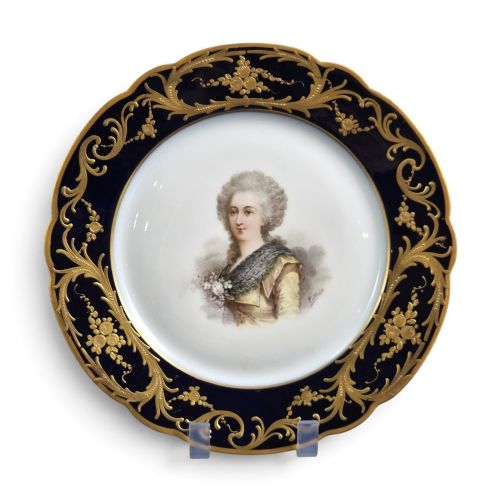
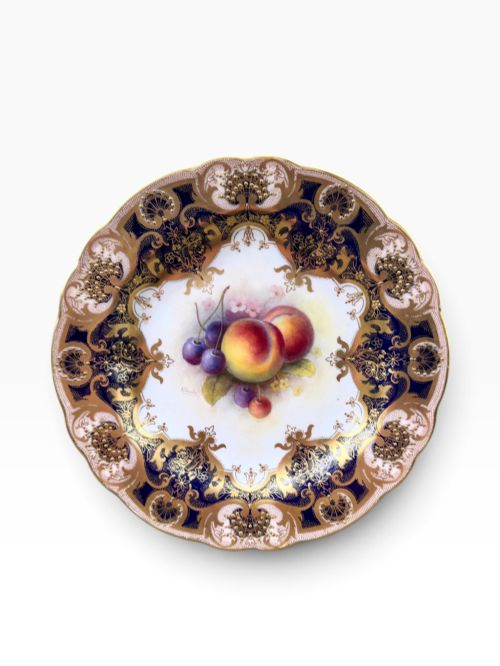
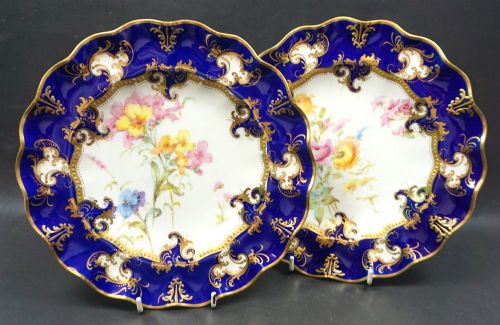
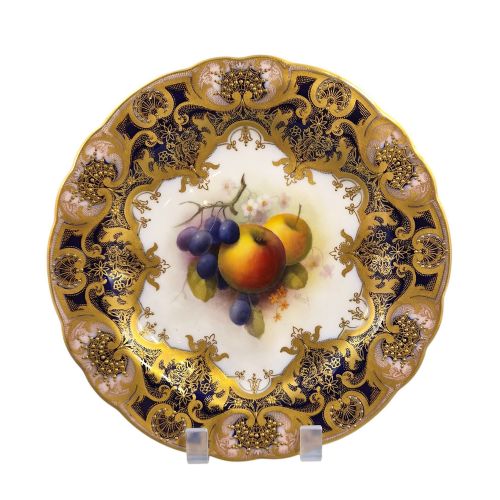
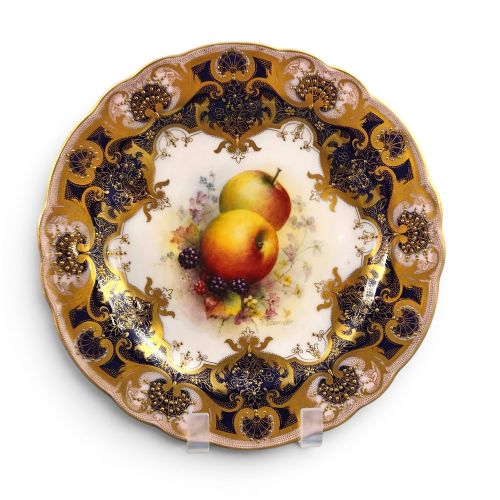
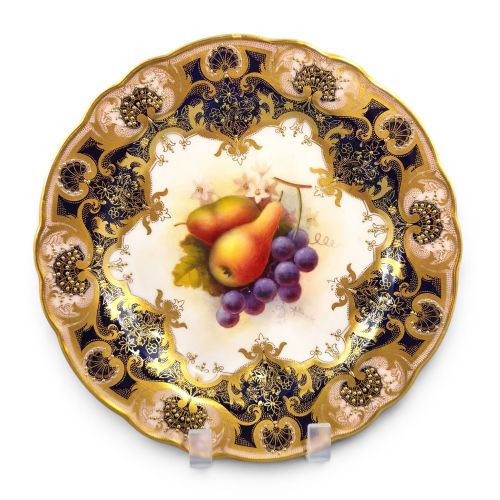
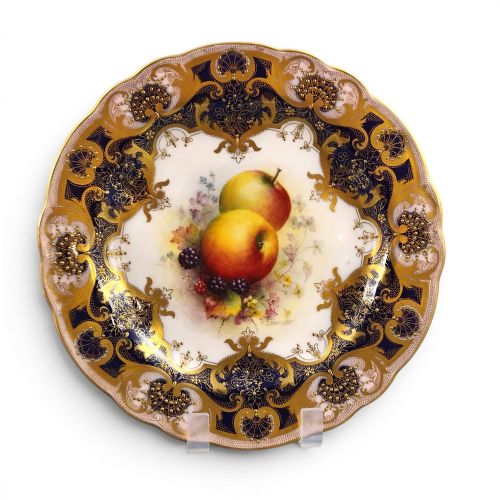
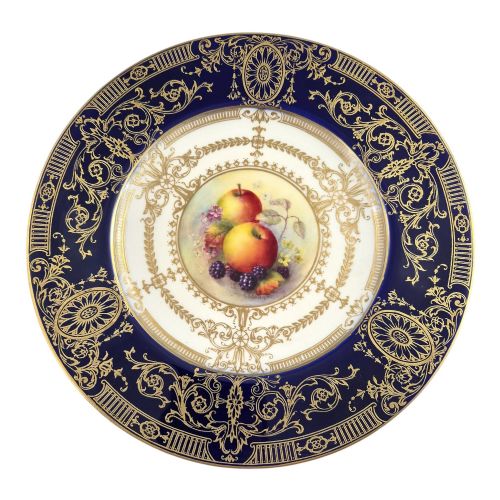
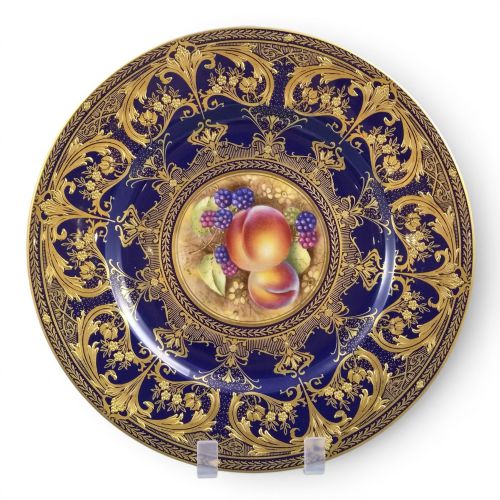
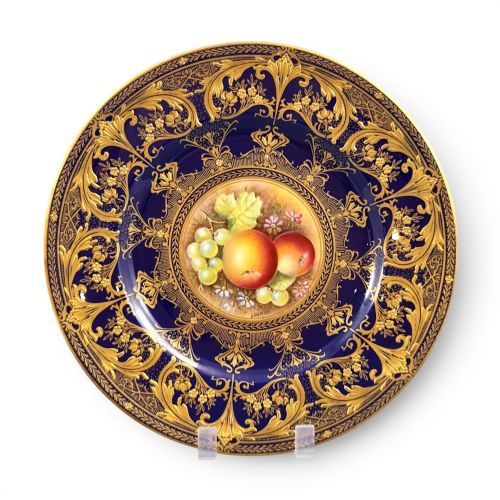
A gilded blue cabinet plate brings rich cobalt glaze and bright gold leaf together for display rather than dining.
Gilded Blue Cabinet Plate
A gilded blue cabinet plate is a display piece rather than table crockery, intended for exhibition on a sideboard or wall bracket. These items emerge from the nineteenth century onward, spanning Victorian production and later twentieth-century periods.
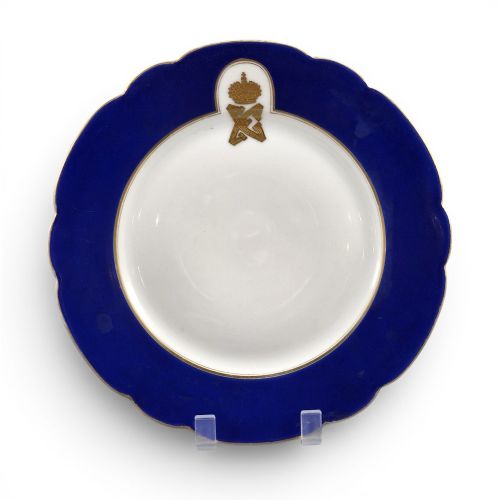
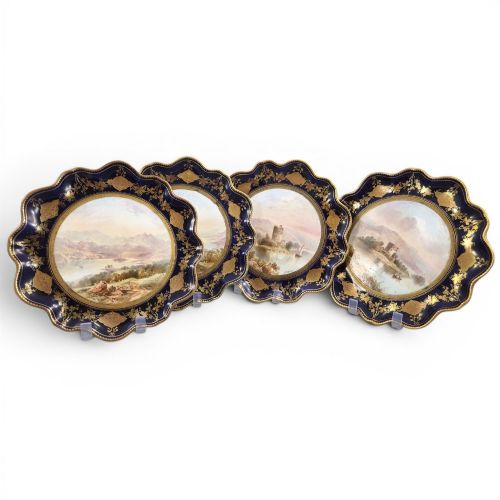
Most examples found here combine porcelain or bone china bodies with deep cobalt glaze backgrounds and contrasting gold leaf ornamentation. Makers applied these rich palettes to celebrate portraiture, botanical studies, or armorial crests.
The selection ranges from English factories like Royal Worcester and Coalport to continental porcelain houses. Forms include standard cabinet plates, chargers, and serving dishes adapted entirely for visual impact.
Materials and construction
Potters shaped fine porcelain and bone china before applying cobalt glaze to create the deep blue ground. Artisans then layered gold leaf, gilt, and enamel decoration by hand across the surface.
Many pieces required multiple firings in the kiln to set the cobalt underglaze beneath the glass layer while keeping the delicate overglaze gilding intact. Specialised painters added central portraits or landscapes within gilded borders.
Listings feature porcelain and bone china enriched with gold leaf, gilt, and cobalt glaze across nineteenth-century and twentieth-century periods.
Assessing craftsmanship and finish
Quality rests upon the precision of the hand-painted central motif and the depth of the tooled gilding. Signed works by recognised porcelain painters command greater attention than standard factory decoration.
The weight of the porcelain body and the crispness of the cobalt glaze application also separate standard production from exceptional examples. Relief gilding and pierced borders demand advanced technical skill from the potter.
Royal Worcester·Coalport·Aynsley·Darte Brothers·Chamberlain's Worcester·Grainger and Co·Copeland·Ridgway·Kerr and Binns·Barr Flight Barr
The Gilded Blue Cabinet Plate Glossary
- Cabinet plate
- A decorative ceramic dish intended for display in a cabinet rather than use at the table. These items often feature elaborate hand-painted scenes and heavy gilding.
- Cobalt glaze
- A deep blue mineral colour applied to ceramics before or during firing. This pigment withstands high kiln temperatures without losing intensity.
- Gilt
- A thin layer of gold applied to the surface of porcelain or metal. It provides the bright metallic contrast seen against the blue background.
- Armorial plate
- A ceramic dish painted with a family crest or coat of arms. They were frequently commissioned by prominent households.
- Charger
- A large decorative plate used as a base or displayed centrally on a sideboard. They exceed standard dinnerware dimensions.
Gilded Blue Cabinet Plate: Frequently Asked Questions
What is a gilded blue cabinet plate used for?
These pieces were made for display in parlours and drawing rooms rather than for serving food at the dining table. Owners placed them on plate stands or hung them on walls to showcase wealth and artistic taste.
Today, they serve the same decorative purpose in traditional or eclectic interiors. Collectors mount them on walls or display them within glass-fronted cabinets.
How do I identify the maker of a plate?
Makers typically applied factory marks, ciphers, or pattern numbers to the underside of the ceramic body using cobalt blue or iron red paint. Impressed stamps in the wet clay also help pinpoint the factory.
Signatures from individual artists occasionally appear near the edge of central painted scenes. Comparing these marks against standard factory reference guides reveals the date and place of manufacture.
Can I use these plates for dining?
These ceramics are intended strictly for display and collection. The delicate overglaze gilding and hand-painted enamel details wear away easily with regular use and washing.
Exposing old gilding to cutlery and dishwashers causes permanent damage to the surface. Cleaning should remain limited to gentle dusting with a soft cloth.
What periods do these pieces come from?
The selection spans the nineteenth and twentieth centuries, with heavy representation from the Victorian era. Earlier examples date back to the Georgian period, while others extend into the mid-twentieth century.
Stylistic shifts across these decades move from Neoclassical and Rococo Revival designs toward later factory commemorative pieces.