




19th Century French China
These pieces of 19th century french china bring decorative porcelain and cabinetry together for displaying delicate wares.
19th Century French China
Buyers examining 19th century french china encounter a diverse selection of porcelain items, cabinet plates, tea sets, and decorative figures alongside the vitrines built to house them. The inventory spans from the middle decades of the 19th century through to 1900, capturing periods of revivalism and ornate craftsmanship.
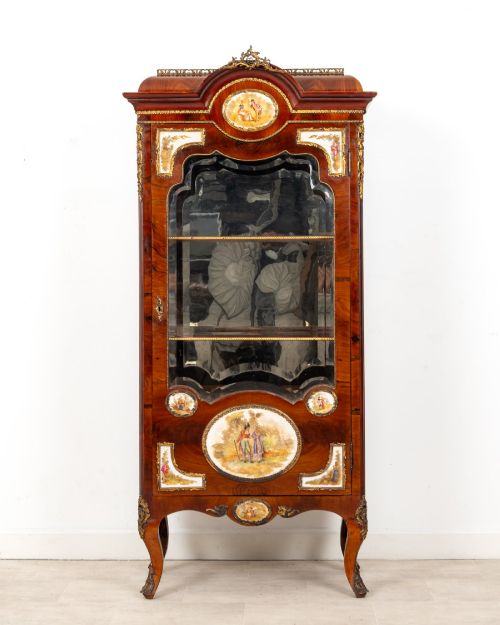
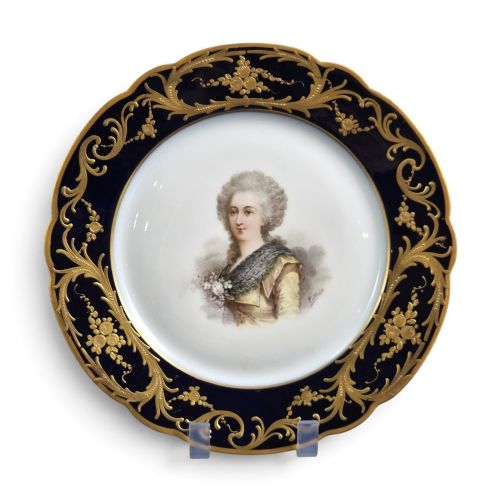
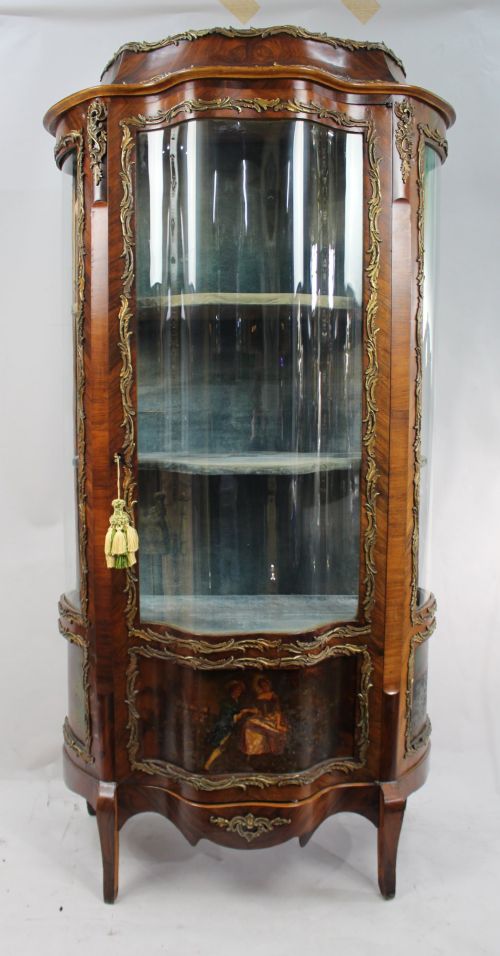
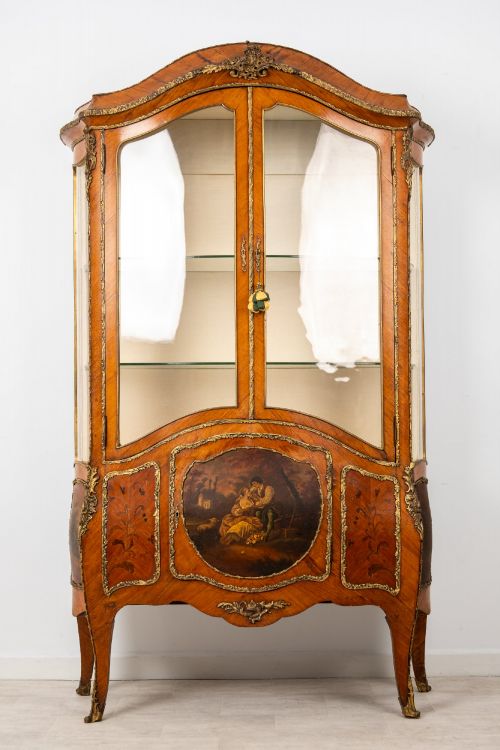
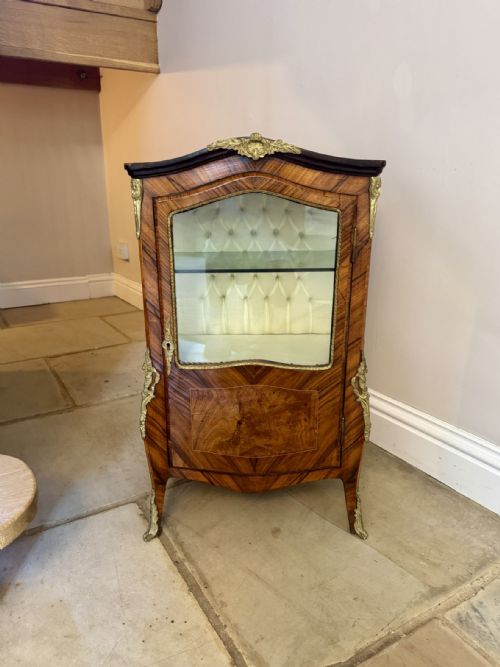
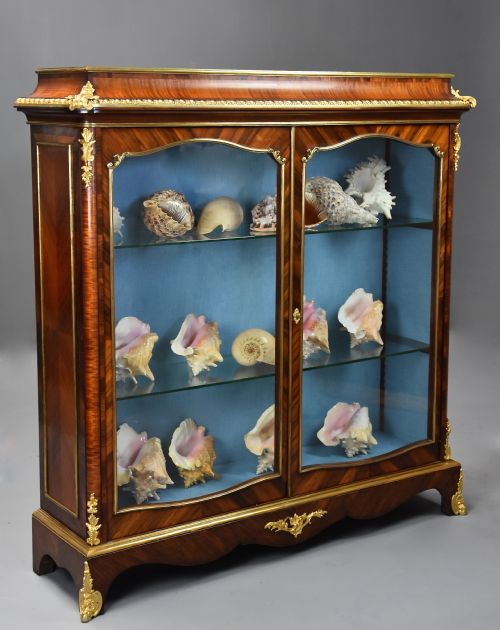
The most common formats on this page include porcelain portrait plates, painted bowls, and ceramic figures alongside glazed display cabinets constructed from kingwood, walnut, and mahogany. These items reflect Continental aesthetics from eras such as the Louis XV and Louis XVI revivals.
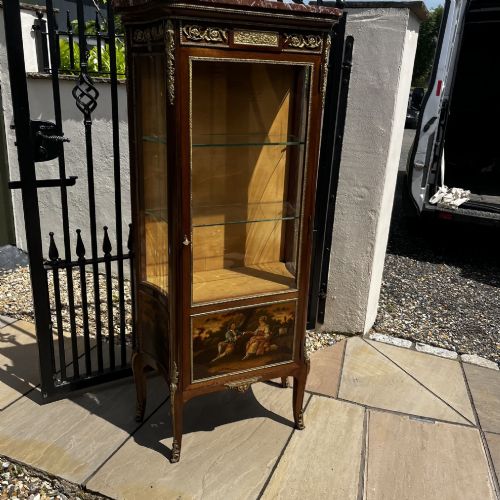
Objects range from small decorative cups and saucers to large furniture pieces mounted in ormolu and detailed with hand-painted ceramic plaques. The grouping demonstrates how ceramics and display furniture intersected in nineteenth-century interiors.
Materials and methods of construction
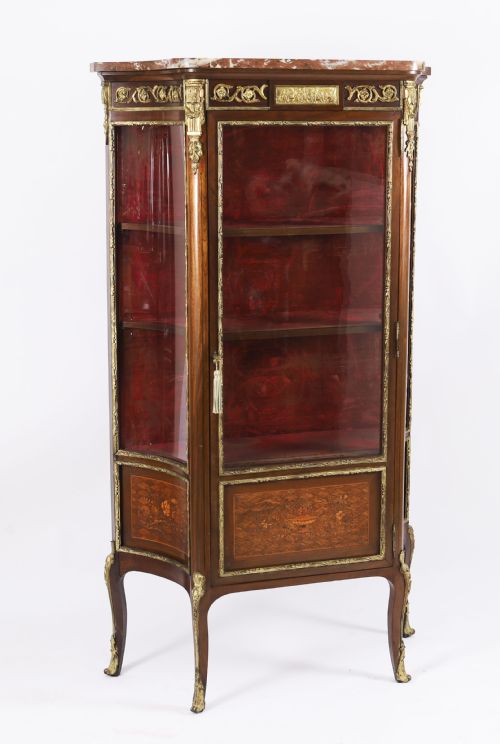
Makers utilised fine porcelain alongside cabinet woods like kingwood, walnut, and mahogany, often combining ceramic plaques directly into wooden furniture frames. Ormolu mounts and gilt bronze details provide structural embellishment and decorative contrast.
Techniques relied on hand-painted floral and portrait designs on porcelain surfaces, paired with parquetry, marquetry, and Vernis Martin painted panels on cabinetry. Marble tops frequently complete the upper surfaces of the larger display pieces.
Some carriage clocks made for the export market include sweep seconds specifically arranged for buyers in China.
Distinctions in execution and finish
Quality separates through the crispness of the ormolu mounts and the precision of the parquetry and marquetry inlay on the wooden structures. Hand-painted detail on porcelain plates, figures, and bowls displays varying degrees of artist control and finesse.
The integration of ceramic elements into cabinetry, alongside the structural soundness of glazed doors and marble tops, defines the upper tier of these pieces. Lesser examples rely on simpler wood veneers and standard cast mounts without hand-chased detailing.
François Linke·Paul Sormani·Letu and Mauger·Chantilly·Jacob Petit·Samson
The 19th Century French China Glossary
- Ormolu
- Gilt bronze mounts applied to furniture and decorative objects. This technique creates metallic highlights that complement porcelain inserts.
- Vitrine
- A glazed display cabinet designed specifically for showing porcelain and small collectibles. These pieces feature glass panels on the front and sides.
- Parquetry
- Geometric wood inlay patterns used on cabinet surfaces. Craftsmen arrange contrasting wood veneers to form geometric motifs.
- Biscuit porcelain
- Unglazed ceramic fired to a matte finish. This material resembles marble and highlights sculptural detail on figures.
19th Century French China: Frequently Asked Questions
What periods do these pieces represent?
The inventory covers items produced across the 19th century, with concentrations in Victorian eras and revival styles up to 1900.
Specific decades represented include the 1840s through to the turn of the twentieth century.
How were display cabinets used originally?
Vitrines and display cabinets housed delicate porcelain figures, tea sets, and cabinet plates in formal reception rooms.
They protected fragile ceramics from dust while allowing hosts to exhibit their collected objects to visitors.
How do I identify porcelain styles?
Pieces often incorporate painted portraits, armorial designs, or floral motifs characteristic of Paris porcelain and Sevres traditions.
Marks on the base of figures and plates help connect items to specific workshops like Samson or Chantilly.
What woods appear in the furniture?
Makers constructed cabinets primarily using kingwood, walnut, mahogany, and burr walnut veneers.
Many incorporate parquetry, marquetry, or painted Vernis Martin panels alongside marble tops.