




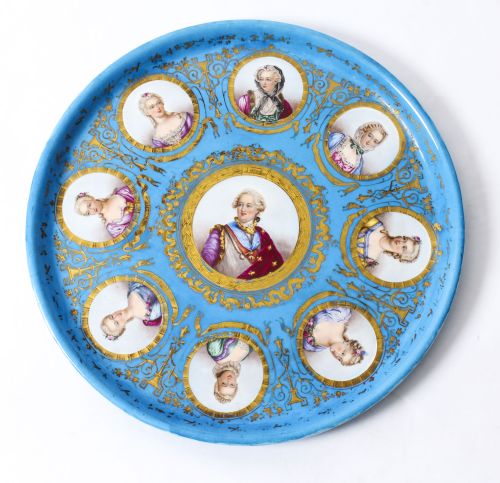
French Porcelain Wall Plate
These French porcelain wall plates bring hand-painted portraits, armorials and historical scenes straight onto the wall.
French Porcelain Wall Plate
A French porcelain wall plate takes the form of a decorative cabinet plate, display plate or large charger, designed primarily for visual appreciation rather than dining. When searching for a French porcelain wall plate, collectors encounter examples ranging from nineteenth-century Paris porcelain to tin-glazed earthenware.
Origins trace back through the nineteenth century and extend into eighteenth-century faience output from regional centres like Marseille. Buyers most frequently meet nineteenth-century decorative plates displaying rich gilding and pictorial subjects.
How they were made
Potters utilised hard-paste porcelain and tin-glazed earthenware as foundational bodies, shaping them into plates, chargers and wall plaques before firing. Artisans then applied detailed hand-painted enamel decoration directly to the glazed surfaces.
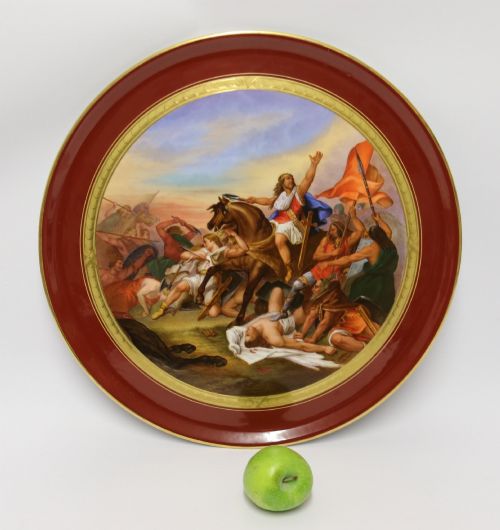
Gilt, gold leaf and precise gilding were added to borders and highlights, frequently framing central pictorial subjects such as battle scenes or equestrian figures. Subsequent low-temperature firings fixed the enamel colours and gold leaf securely to the porcelain body.
Materials recorded across the selection include hard-paste porcelain, tin-glazed earthenware, enamel and gold leaf.
What varies in quality
The refinement of the hand-painted brushwork sets finer cabinet plates apart from standard decorative wares, particularly in facial expressions, historical costume detail and equestrian anatomy. Superior examples exhibit crisp baseline definition beneath rich, well-preserved enamel and gold leaf.
The depth and execution of the underlying porcelain or faience body also dictate grade, with Paris porcelain and hard-paste pieces offering sharper moulding than simpler earthenware. Consistency in the gilding and the complexity of the armorial or pictorial composition further separate standard decorative plates from exceptional display pieces.
Edmé Samson & Cie·Darte Brothers·Pucher Deroche·Veuve Perrin
The French Porcelain Wall Plate Glossary
- Hard-Paste Porcelain
- A dense, vitrified ceramic composed of kaolin and petuntse, fired at high temperatures. It forms the durable white body typical of many nineteenth-century French cabinet plates.
- Faience
- Tin-glazed earthenware produced across continental Europe, notably in centres like Marseille. It provides an opaque white background suitable for colourful hand-painted designs.
- Armorial
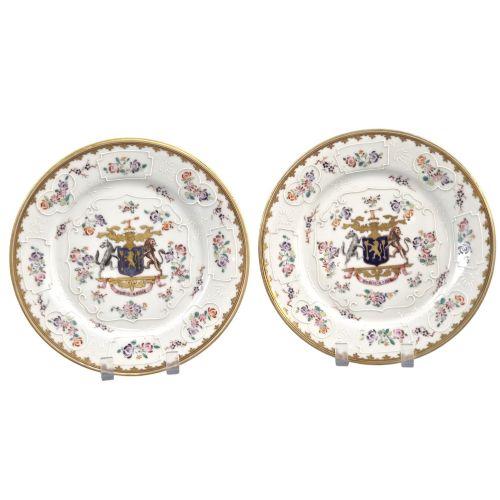
- Decorated with heraldic coats of arms or family crests. These motifs often signify commissioned sets produced for specific noble households.
- Charger
- A large decorative plate intended for display on a sideboard or wall rather than for serving food. These pieces frequently measure significantly wider than standard dining plates.
- Enamel
- Opaque or translucent glass-like material applied to ceramic surfaces and fired for colour. It creates the vibrant pictorial details found on nineteenth-century French wall plates.
French Porcelain Wall Plate: Frequently Asked Questions
How do I hang a porcelain plate safely?
Displaying a heavy porcelain charger or cabinet plate on the wall requires a well-fitted spring-loaded plate hanger with rubber-tipped prongs that grip the rim securely without pinching the ceramic body. Ensure the wall fixing engages directly with a stud or uses a proper anchor rated for the weight of the piece.
Position plates away from direct sunlight and areas of heavy vibration, such as slamming doors, to protect the fragile porcelain and delicate gold leaf highlights over time.
Are these plates meant for dining?
These decorative plates, plaques and large chargers are strictly intended for display rather than table service. The delicate hand-painted enamels, gilt borders and soft tin-glazes are vulnerable to cutlery scratching and abrasive detergents.
Using them for food risks damaging the historical painted surface and any underlying gold leaf application. Keep them mounted on walls or supported securely on plate stands.
How do I identify a Sèvres style plate?
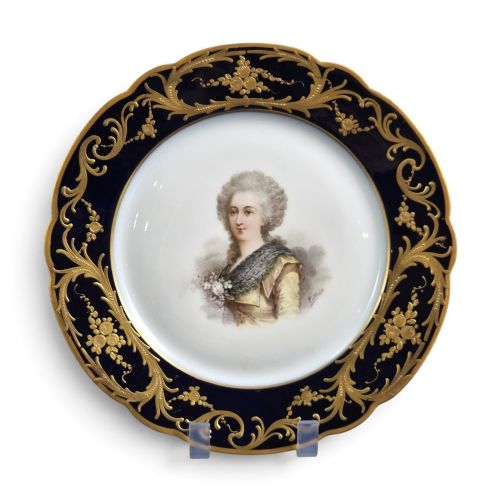
Pieces executed in the Sèvres manner typically display rich cobalt blue grounds, elaborate raised gilding, and finely painted central portraits or pastoral scenes framed by decorative borders. They often emulate the luxurious royal output associated with the famous French factory.
Many nineteenth-century pieces adopt these aesthetic traits as a tribute rather than a direct factory product, reflecting the widespread popularity of French Rococo and Louis XVI revivals.
What is Paris porcelain?
Paris porcelain refers to the output of numerous independent workshops and studios operating in and around Paris from the late eighteenth century through the nineteenth century. These makers produced high-quality hard-paste porcelain items independently of royal monopolies.
Characterised by ambitious painting, heavy gilding and diverse decorative forms, Paris porcelain plates often depict historical events, landscapes or detailed portraits.