





Large Porcelain Display Platter
A large porcelain display platter commands attention on a wall or table, bringing centuries of ceramic artistry into your home.
Large Porcelain Display Platter
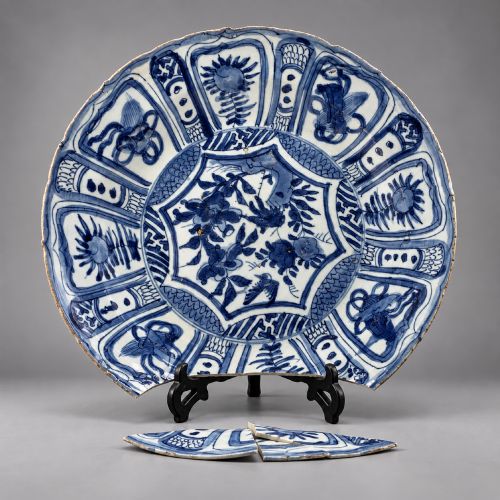
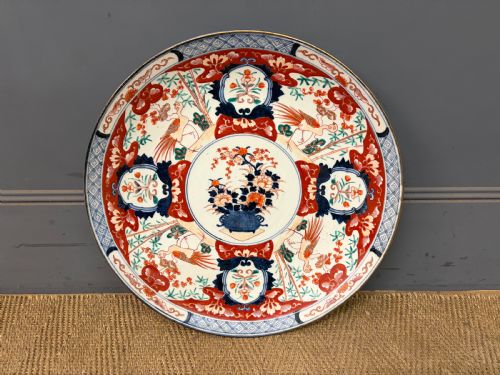
When you search for a large porcelain display platter, you encounter broad decorative plates and chargers designed primarily for presentation rather than dining. These pieces arrive in various regional traditions, spanning Japanese Imari wares, Chinese Famille Verte, and European productions from the nineteenth century.
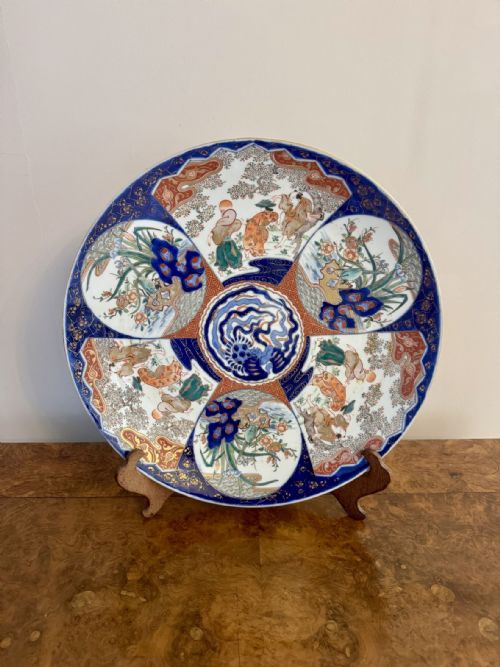
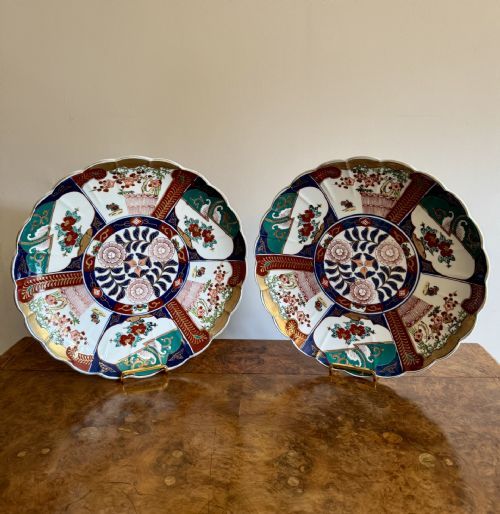
The dominant form on this page is the Japanese Imari charger, alongside related blue and white plates and celadon dishes. Dating predominantly from the nineteenth century and the Meiji period, these substantial ceramic surfaces often exceed typical table plate dimensions.
Makers utilised these wide expanses to exhibit intricate pictorial scenes, ranging from court life and carp motifs to the Seven Lucky Gods. Their origins stretch from nineteenth-century Japanese kilns back to earlier Edo, Yuan, and seventeenth-century periods.
How they were made
Potters shaped these large ceramic bodies by hand or mould, applying cobalt underglaze pigments before the initial firing. Artisans then added overglaze enamels and gold leaf highlights to achieve the vibrant palettes seen on Imari and Famille Verte chargers.
Kiln firing transformed the porcelain clay and glaze materials into durable, vitrified display pieces. Surface detailing often involved meticulous hand painting with gilt accents and complex scrolling foliate borders.
Object forms span decorative chargers, wall plates, fruit display plates, and celadon dishes.
What varies in quality
The distinction between ordinary and superior platters rests upon the precision of the hand painting and the clarity of the cobalt underglaze. Finer examples display crisp detail in complex figural scenes, such as court life or deities, rather than rushed or muddy brushwork.
Proportion and glaze consistency also dictate the visual weight of a charger. Well-balanced forms with evenly applied enamel and gold gilt retain their decorative impact across large diameters.
The Large Porcelain Display Platter Glossary
- Imari
- A style of Japanese porcelain featuring a distinct palette of underglaze blue, iron red, and gilt highlights. These wares were widely exported to Europe from the seventeenth century onward.
- Charger
- A large decorative plate utilised historically for ceremonial presentation or sideboard display rather than everyday dining. Their substantial diameter provides a wide canvas for intricate motifs.
- Celadon
- A type of ceramic glaze known for its jade-green colour, achieved through iron oxide in reduction kilns. Early examples often feature moulded floral scrolls beneath the translucent surface.
- Famille Verte
- A Chinese porcelain classification dominated by green enamel overglazes, frequently combined with other colours to depict narrative scenes. These pieces date across various dynastic periods.
- Cloisonne
- A decorative technique where metal wires form small compartments on a base, filled with enamel paste before firing. Certain display platters incorporate related Totai Shippo tree bark and scenic designs.
Large Porcelain Display Platter: Frequently Asked Questions
How were large porcelain display platters used?
These large vessels served primarily as decorative centerpieces on sideboards or dining tables in wealthy households. They were also mounted on walls to display intricate painted designs.
During formal occasions, similar chargers held fruit or acted as presentation bases for smaller dishes.
How do you hang a heavy charger?
Displaying a heavy ceramic platter safely requires a robust spring-loaded wall hanger designed specifically for large diameters. The prongs distribute the weight evenly across the rim without stressing the ceramic body.
Ensure the wall fixing anchors securely into masonry or a stud rather than plaster alone.
How do I distinguish Imari periods?
Distinguishing Edo period platters from later Meiji or nineteenth-century examples involves examining the clay body, weight, and pigment tones. Earlier pieces often display subtle variations in the cobalt blue and iron red.
Later Victorian and turn-of-the-century imports tend to exhibit more standardised potting techniques and brighter enamel applications.
Are these platters safe for food?
Most antique display platters are intended strictly for decorative purposes rather than modern culinary use. Overglaze enamels and gold gilt can wear down or react when exposed to acidic foods.
Display them on stands or walls to preserve the delicate painted surfaces from damage.