



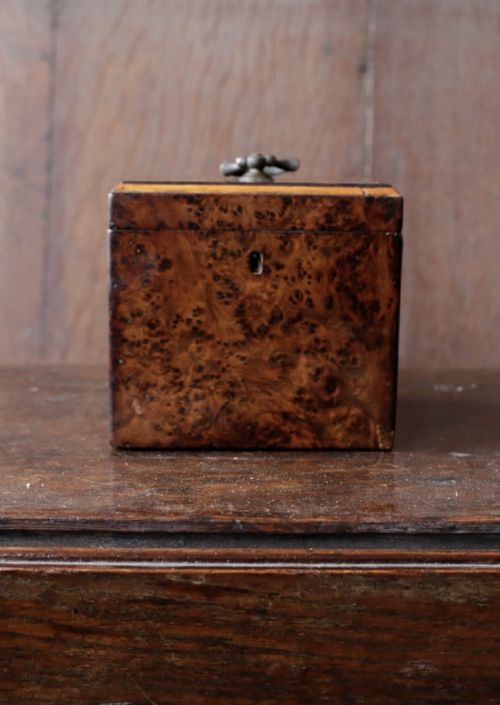


Georgian Yew Wood Chest
A georgian yew wood chest brings rich honey tones and distinctive figuring into a room through small drawer chests, tea caddies and desks.
Georgian Yew Wood Chest
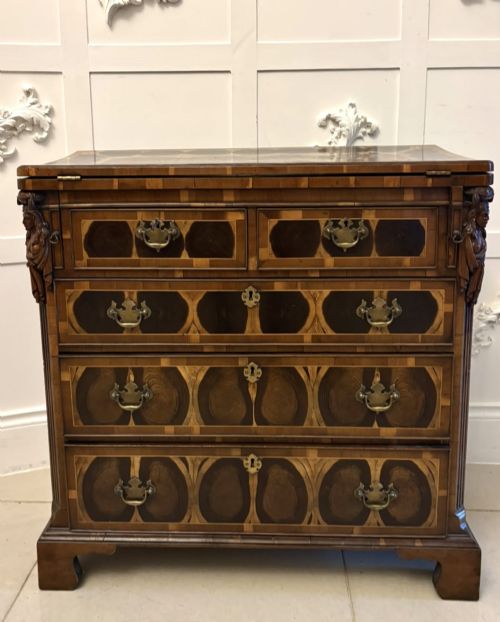
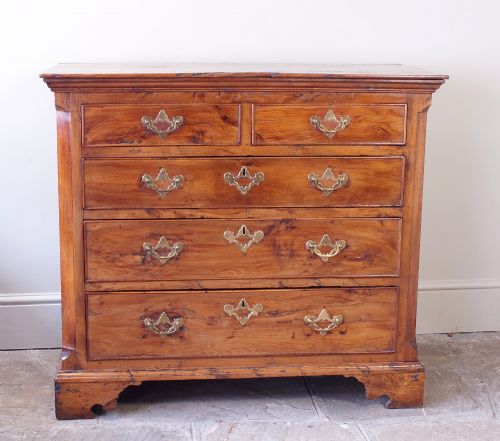
A georgian yew wood chest encompasses compact chests of drawers, small dressers and writing furniture shaped by eighteenth and nineteenth-century cabinet makers. The pieces surviving in this timber tend to be modest in scale, prioritising interesting grain over imposing size.
The material appears most frequently in case furniture and small receptacles like tea caddies, spanning the George II, George III and Regency periods. Buyers encounter everything from full-sized chests of drawers to miniature apprentice pieces and fitted desks.
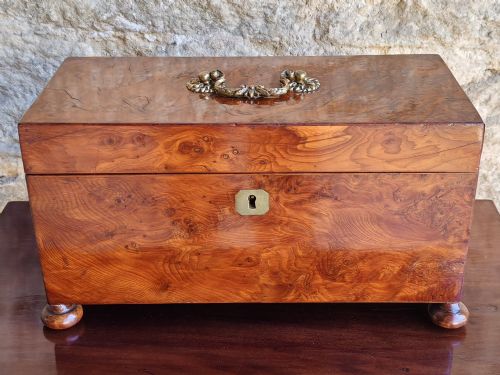
Regional work sits alongside mainstream Georgian output, with Scottish examples and burr yew variations showing how makers utilised local timber resources. The selection ranges from functional storage pieces to decorative tabletop boxes.
Grading Quality
Quality rests primarily on the choice of timber and the density of the grain figuring, with dense burr yew commanding higher regard than plain straight-grained wood. The skill of the veneer work and the crispness of any inlay define the better examples.
Proportion and the retention of original brass hardware influence how well a piece holds its character. Modest domestic items share space with finely detailed bureau desks and breakfront cabinets, each grade reflecting the ambitions of its original maker.
Georgian Yew Wood Chest Retail Price Guide 2026
Typical asking prices for georgian yew wood chest among the pieces listed under this phrase on Sellingantiques today, from the lower quarter to the upper quarter. They describe what is for sale here now, not the wider market.
The Georgian Yew Wood Chest Glossary
- Burr yew
- A growth on the yew tree that produces knotty, highly figured timber prized for decorative veneer. Makers reserved this for prominent surfaces.
- Featherbanding
- A type of inlay using matched veneers arranged in a herringbone pattern around the edges of drawer fronts. It frames the central timber.
- Teapoy
- A small stand or table fitted with containers for holding tea, often resting on a central pillar with tripod legs. They gained popularity during the Regency period.
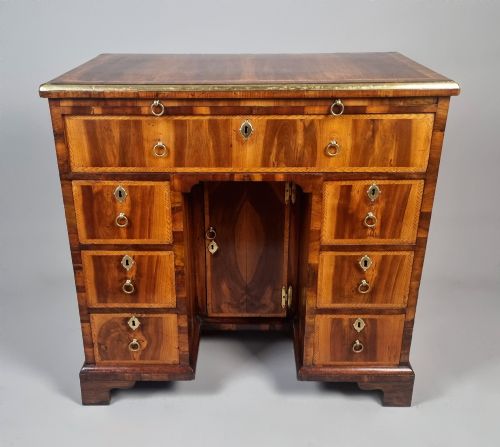
- Kneehole desk
- A writing table featuring a central recess for the legs flanked by banks of small drawers. Georgian versions in yew are particularly compact.
- Apprentice piece
- A miniature version of a larger furniture item created to demonstrate a craftsman's skill. These small chests show the same joinery as full-sized pieces.
Georgian Yew Wood Chest: Frequently Asked Questions
How do I care for yew wood furniture?
Keep wooden pieces away from direct heat sources and strong sunlight to prevent the timber from drying out and splitting.
Apply a traditional beeswax polish occasionally to nourish the surface and maintain the natural lustre of the yew grain.
What is the difference between a tea chest and a caddy?
Tea chests are generally larger boxes designed to hold multiple canisters of loose tea within a compartmentalised interior.
Tea caddies tend to be smaller tabletop receptacles intended for daily use, often featuring a mixing bowl and fitted lid.
How can I tell a Georgian piece from a Regency one?
Georgian furniture generally displays classical proportions with restrained decorative carving and bracket feet.
Regency pieces often incorporate bolder architectural motifs, brass inlay and sabre legs influenced by classical antiquity.
Why are yew wood chests usually small?
Yew trees grow slowly and tend to branch irregularly, which historically limited the availability of wide, clear boards for large furniture.
Cabinet makers compensated by using smaller sections of timber or applying striking burr veneers to compact forms like miniature chests and kneehole desks.