
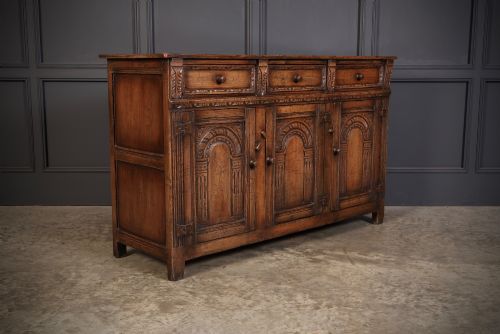
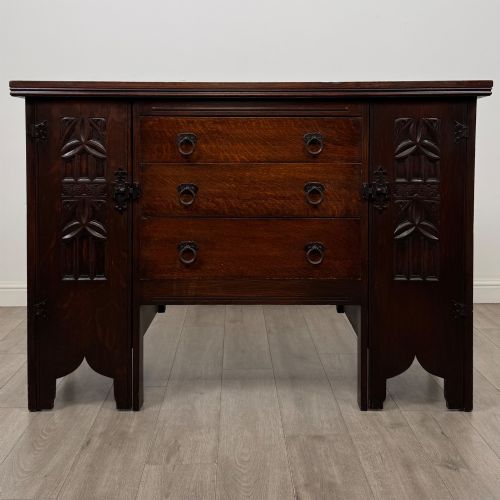
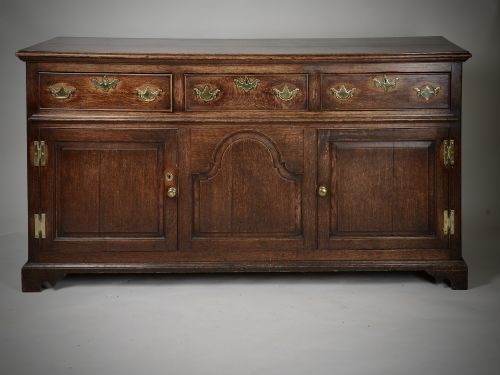
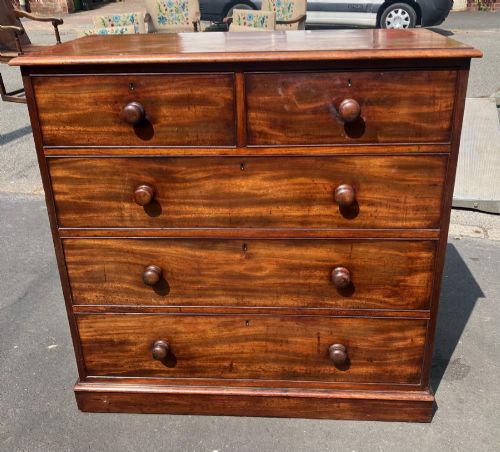



Dark Wood Dresser Base
A dark wood dresser base brings grounded presence and deep utility to a room, offering robust surface space and concealed storage built to last.
Dark Wood Dresser Base
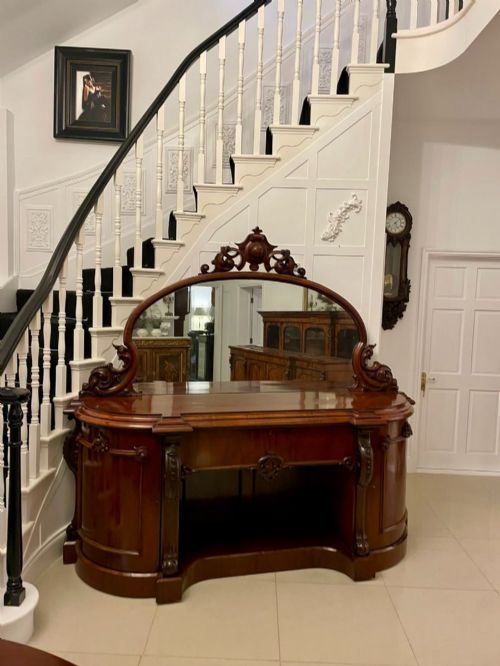
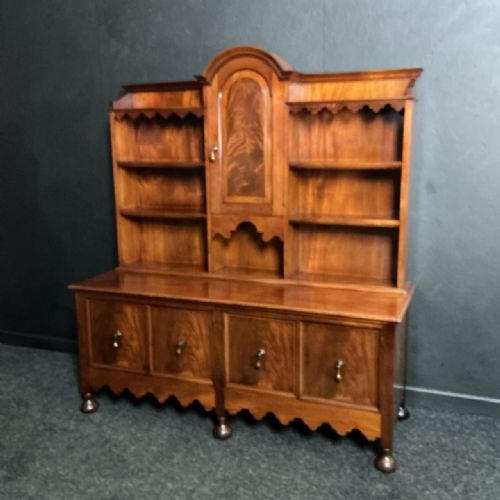
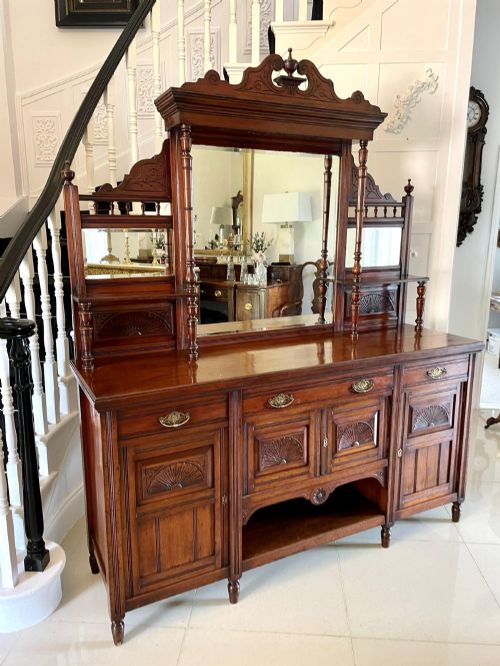
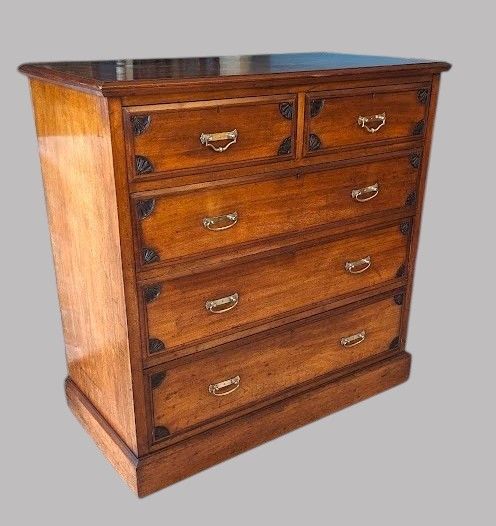
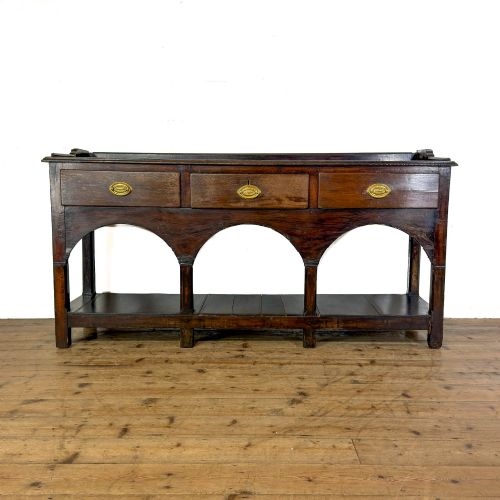
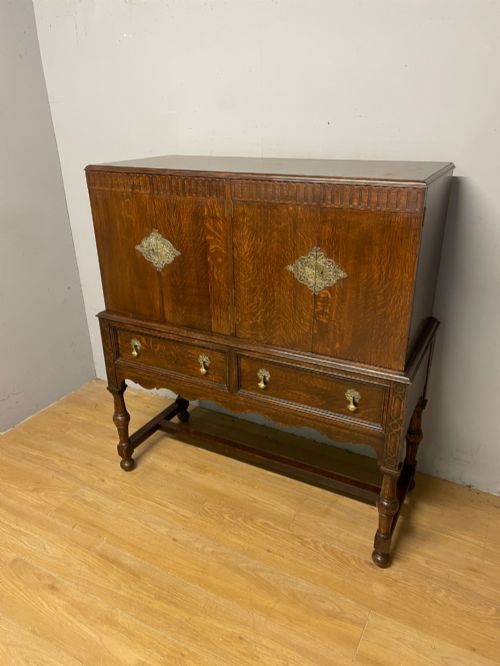
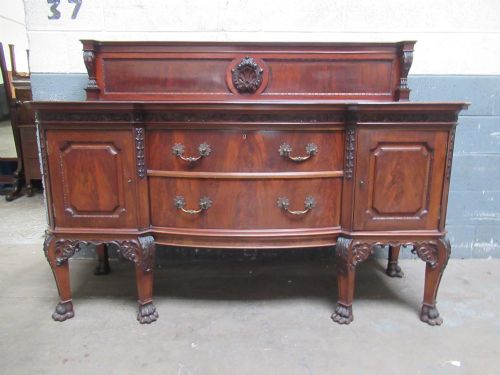
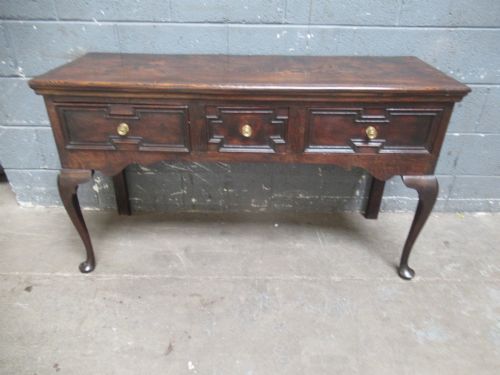
A dark wood dresser base provides a low, heavy sideboard profile designed for utility and display, often retaining the solid timber construction of earlier centuries. When searching for a dark wood dresser base, you encounter pieces spanning from the eighteenth century through to the Edwardian period and the early twentieth century.
The selection ranges from vernacular oak farmhouse examples to formal Georgian and Victorian iterations in mahogany and walnut. Many items bridge categories, appearing as sideboard hybrids or potboard dresser bases originating from English, Welsh, and continental workshops.
Makers and regional joiners utilised sturdy native and imported hardwoods to build these items for daily domestic service in kitchens, halls, and dining rooms. The surviving examples demonstrate how utilitarian forms evolved into decorative focal points for period and eclectic interiors.
Materials and construction methods
Joiners relied primarily on solid oak, mahogany, and walnut, frequently pairing them with secondary woods like pine for internal partitions and drawer linings. Flame mahogany veneer and yew wood also appear on select pieces, adding rich grain patterns to primary surfaces.
Construction techniques involve traditional mortise and tenon joints, hand-cut dovetails on drawer boxes, and panelled doors fitted with brass or iron hardware. Surfaces were hand-finished with wax or polish, allowing the natural depth of the dark timber to emerge over decades of handling.
An eighteenth-century green man dresser base invites carved woodland spirits into your modern dining room.
Distinguishing quality across the range
The calibre of a piece rests upon the selection of timber, the crispness of hand-carved detailing, and the integrity of the original construction. Superior examples display well-figured grain, robust proportions, and minimal timber replacement over time.
Subtle markers such as secondary wood choices, the precision of dovetailing, and untouched patination separate standard utilitarian pieces from exceptional workshop output. The weight of the timber and the honesty of the hardware contribute significantly to the overall presence of the furniture.
Mawer & Stephenson
The Dark Wood Dresser Base Glossary
- Dresser base
- A low cabinet or sideboard derived from the lower section of a kitchen dresser, usually fitted with drawers above cupboards.
- Potboard
- An open slatted lower shelf built into a dresser base, traditionally used for storing pots and heavy kitchenware.
- Flame mahogany
- A decorative veneer cut from wood where the branches join the main trunk, producing a distinctive flickering flame pattern.
- Elm
- A tough, interlocking native timber frequently used alongside oak for secondary elements or structural boards in vernacular furniture.
- Chiffonier
- A compact sideboard or cabinet developed during the nineteenth century, typically featuring enclosed cupboards beneath a drawer or shelf.
Dark Wood Dresser Base: Frequently Asked Questions
What is a dark wood dresser base?
A dark wood dresser base is a heavy low sideboard or cupboard originating mostly from the eighteenth and nineteenth centuries, built to provide surface space and drawer storage.
These pieces typically combine solid timbers like oak, mahogany, or walnut, and were designed for hardworking domestic environments before finding a place in modern reception rooms.
How do I date an oak dresser base?
Dating relies on construction clues such as hand-cut dovetails, tool marks, timber selection, and overall stylistic vernacular like Jacobean panelling or Georgian proportions.
Earlier eighteenth-century pieces often show pegged joinery and elm secondary woods, while later nineteenth and twentieth-century interpretations adopt revival styles or factory-cut elements.
Where were these dresser bases used?
They served primarily in farmhouse kitchens, sculleries, and dining rooms to store ceramics, linens, and provisions while providing a sturdy working surface.
Today, their low profile makes them adaptable as sideboards in living areas, console tables in hallways, or media units in contemporary settings.
Are these pieces made of solid wood?
The majority are constructed from solid native and imported hardwoods like oak and mahogany, though some fine examples incorporate veneers on primary surfaces.
Secondary timbers such as pine or elm frequently appear in drawer linings and backboards, reflecting traditional cabinetmaking economy and structural needs.