


Georgian Yew Wood Armchair
A georgian yew wood armchair brings warmth and robust regional character to a room through expressive timber and traditional spindle work.
Georgian Yew Wood Armchair
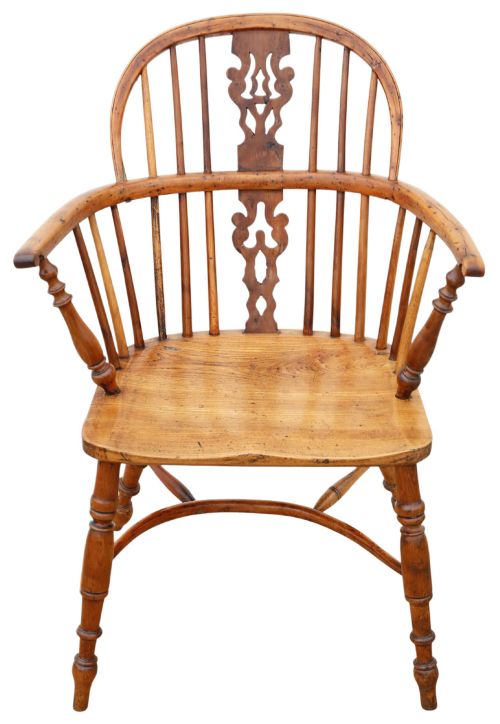
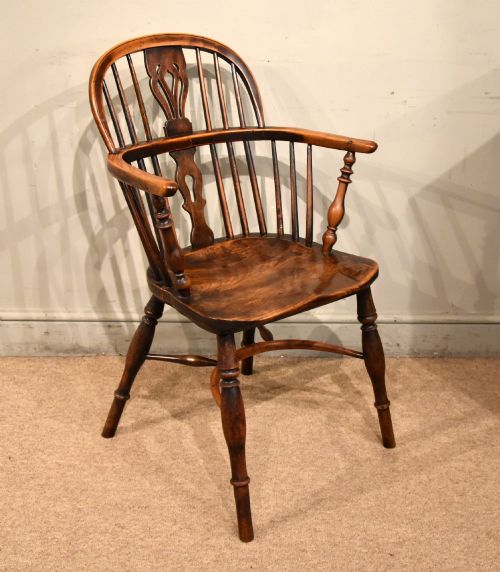
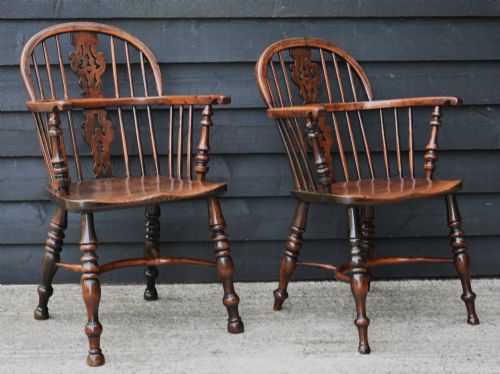
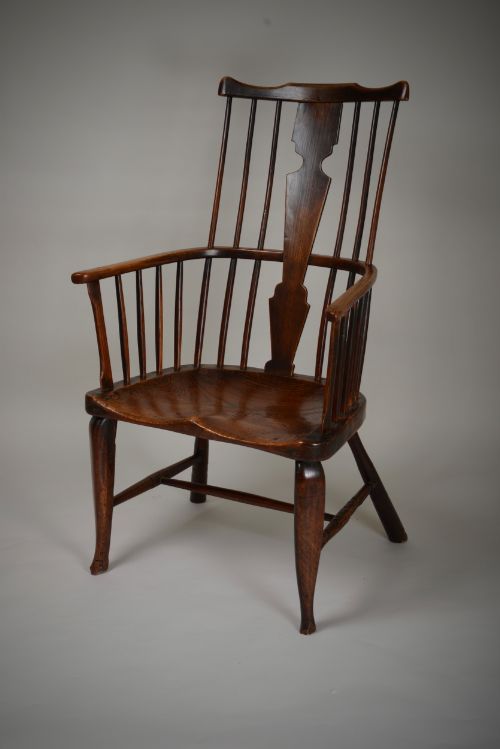
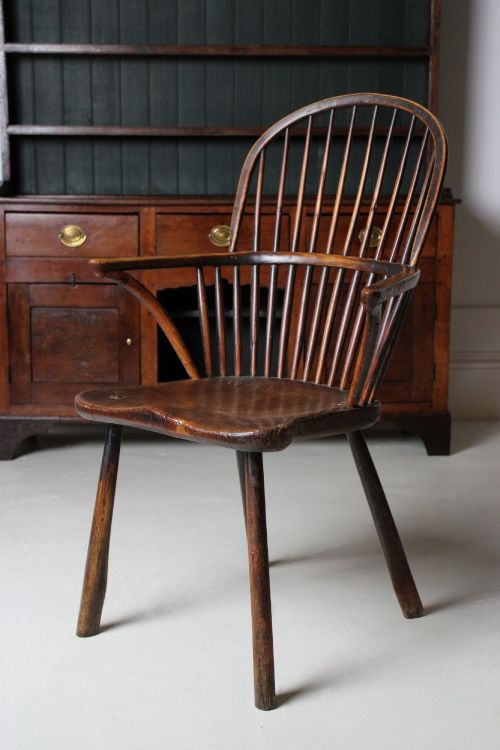
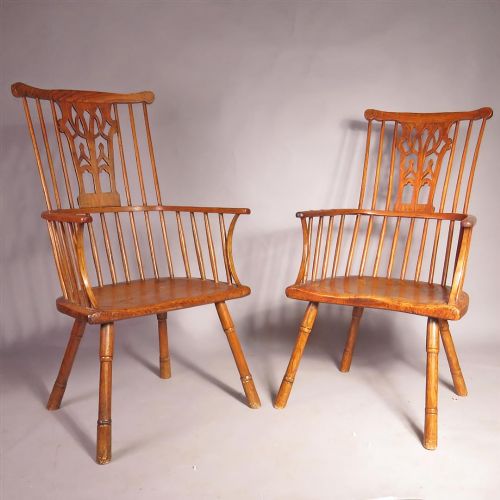
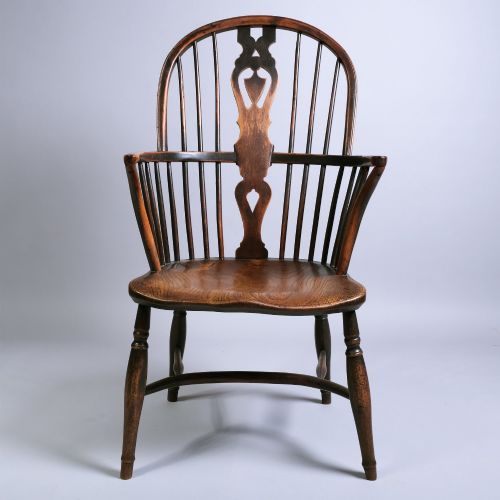
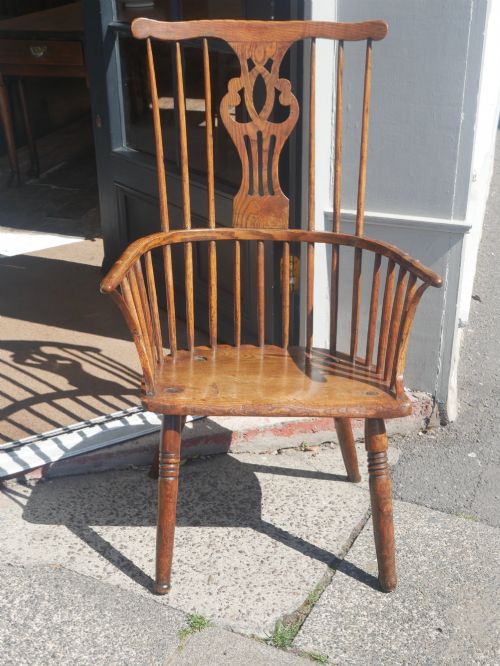
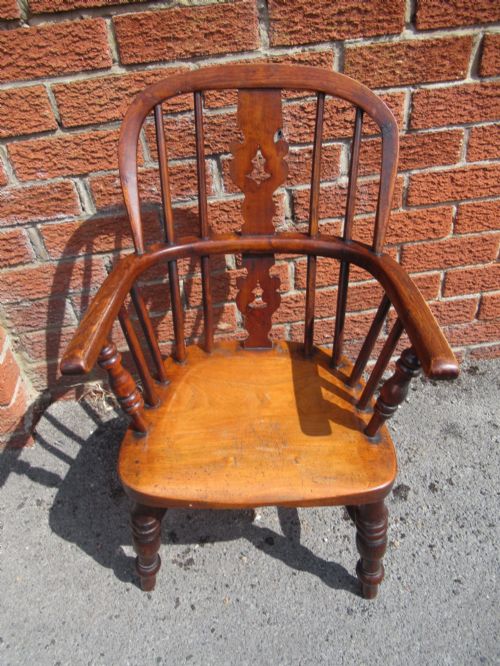
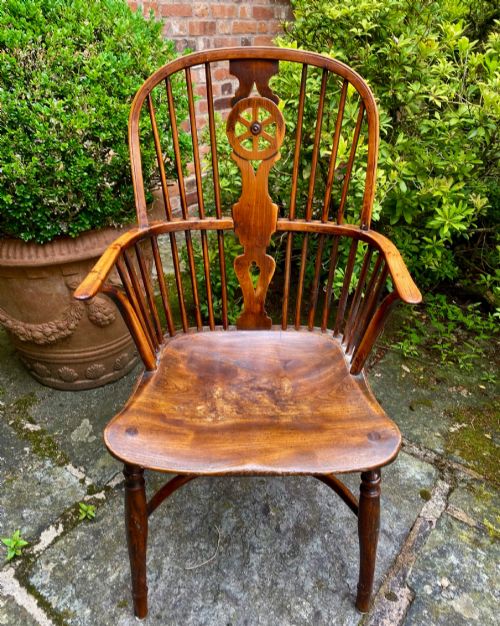
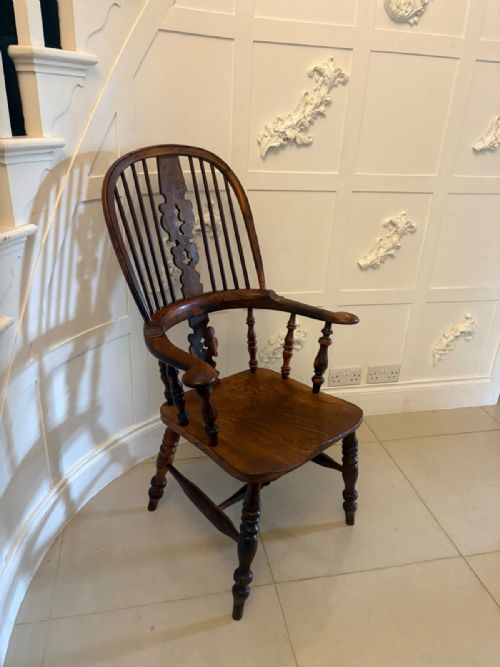
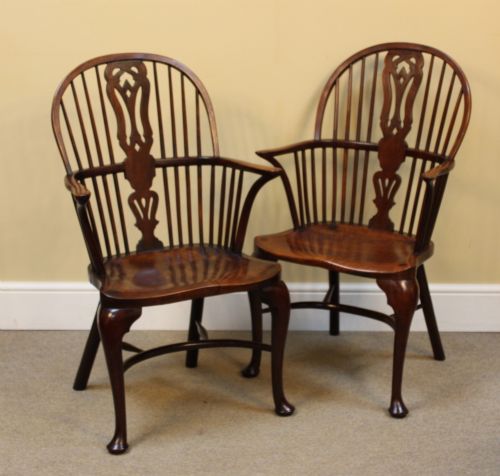
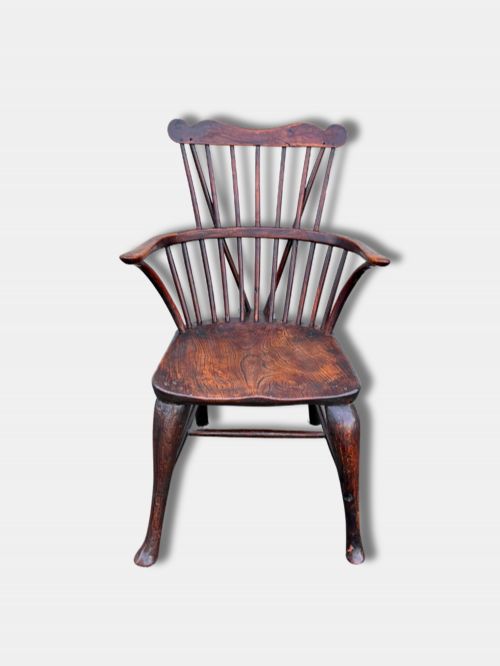
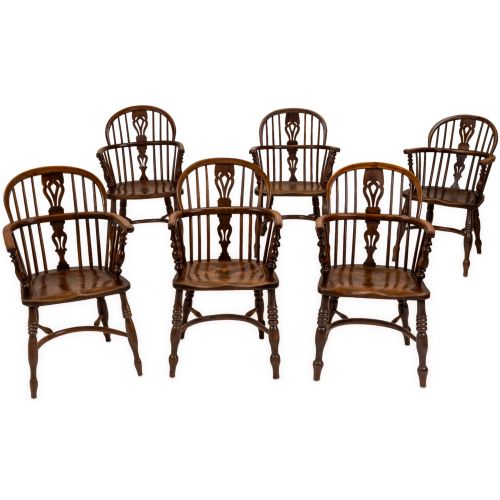
A georgian yew wood armchair represents the peak of English country seating, combining sturdy local timbers with sophisticated regional turning. Buyers searching for a georgian yew wood armchair encounter robust stick-back forms designed for comfort and durability in domestic settings. The pieces seen here span the eighteenth and nineteenth centuries, taking shape as high-back, comb-back, and low-back Windsor chairs.
Most examples combine yew with elm, ash, and beech, following regional traditions found across the Thames Valley and Yorkshire. The most frequent variant on this page is the Windsor armchair, often fitted with a crinoline stretcher and a characteristic central splat. Makers built these chairs for everyday use, resulting in survivors that carry deep surface patination from generations of handling.
Materials and construction
Makers constructed these chairs by seating turned spindles and legs directly into a thick, saddle-shaped wooden seat, usually carved from elm. The backrest typically incorporates bent yew wood for the hoop or comb, steamed into a smooth curve and supported by additional ash or beech stretchers.
Joinery relied on wedged tenons passing straight through the seat plank, creating a rigid frame without metal fastenings. Yew wood provided both the striking figured grain on the upper backs and the structural strength required for slender arm supports.
Some chairs bear the distinct chisel marks of forgotten country carpenters who built them to withstand centuries of heavy farmhouse sitting.
Judging the work
Quality rests in the expressiveness of the timber grain, the proportion of the turned components, and the crispness of the spindle profiles. Chairs with richly figured burr yew backs and well-balanced wheel or splat inserts stand apart from plainer variants.
The degree of wear on the seat and foot determines how honestly the chair has aged, while the integrity of the original wedged joints dictates its structural life. Finer regional workshops achieved lighter, more dynamic curves in the armbows and comb rails while maintaining absolute rigidity.
John Brand of Sleaford·Rockley Maker·Worksop
The Georgian Yew Wood Armchair Glossary
- Windsor chair
- A wooden chair constructed with a solid carved seat into which the legs and back spindles are separately inserted.
- Comb back
- A Windsor chair design where the top rail resembles the spine of a comb, with vertical spindles rising through a flat arm-bow.
- Crinoline stretcher
- A curved stretcher bent in a horseshoe shape connecting the legs of a Windsor chair to provide extra rigidity.
- Broad arm
- A chair design featuring wide, flat wooden armrests shaped from a single board for writing or resting.
- Splatted back
- A central vertical wooden slat, often pierced or shaped, set into the middle of the chair back for lumbar support.
Georgian Yew Wood Armchair: Frequently Asked Questions
What is a georgian yew wood armchair?
A georgian yew wood armchair is a traditional English wooden seat featuring a solid carved seat, turned legs, and a spindle-back construction made predominantly from native yew and elm timber.
These chairs were produced by regional carpenters and turners across the eighteenth and nineteenth centuries, often associated with vernacular styles like the Windsor form.
How were these chairs used originally?
These armchairs served as principal seating in farmhouses, country houses, and parlours, positioned near hearths for warmth and comfort.
Their robust construction made them suitable for daily domestic life, writing desks, and dining rooms alike.
How do I care for yew wood furniture?
Yew wood requires minimal maintenance, needing only an occasional application of beeswax to nourish the grain and preserve the historic surface patination.
Keep the timber away from direct heat sources and sudden humidity changes to prevent movement in the solid wood components.
How can I tell the age of a Windsor chair?
Age is determined by construction traits such as the thickness of the seat plank, the tool marks left by adzes, and the turning style of the legs and stretchers.
Earlier pieces from the eighteenth century typically exhibit finer proportions and distinct regional turning patterns compared to later nineteenth-century examples.