

Chippendale Style Elbow Chair
A chippendale style elbow chair brings sturdy joinery and carved splats to a room, offering both arm support and classic proportions.
Chippendale Style Elbow Chair
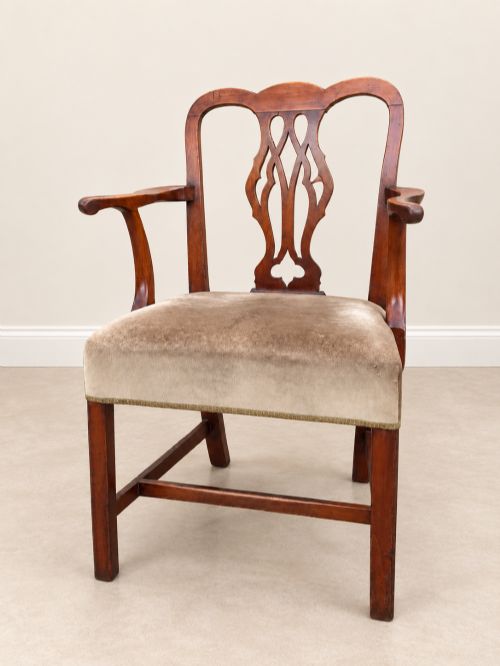
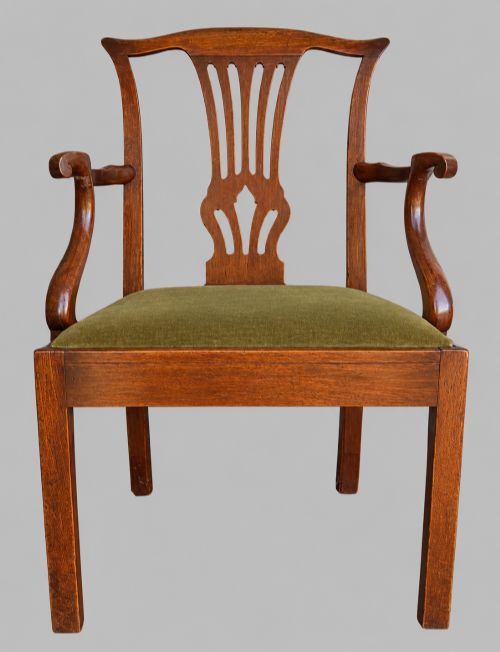
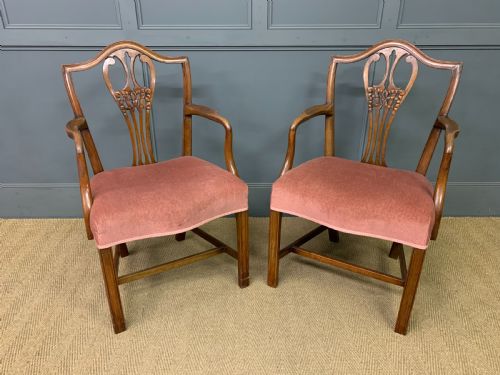
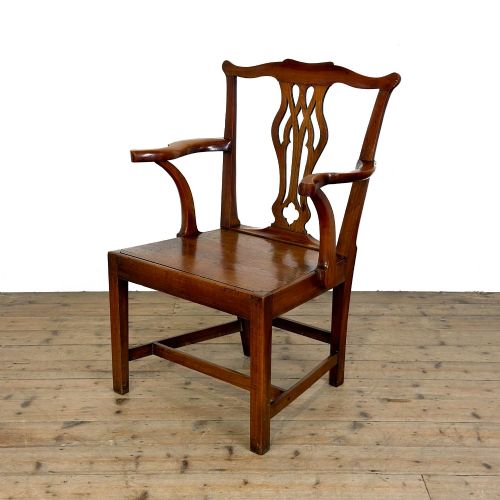
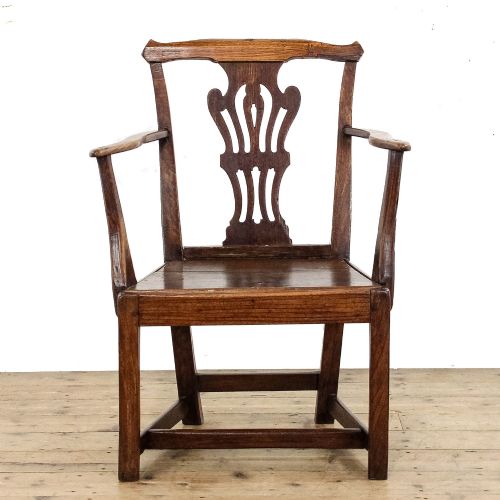
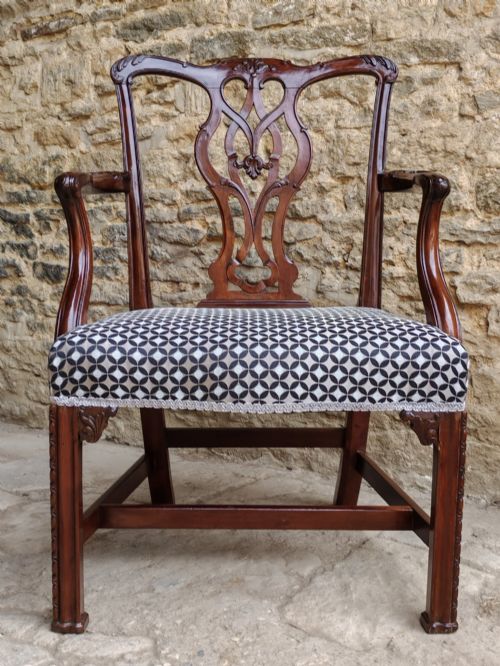
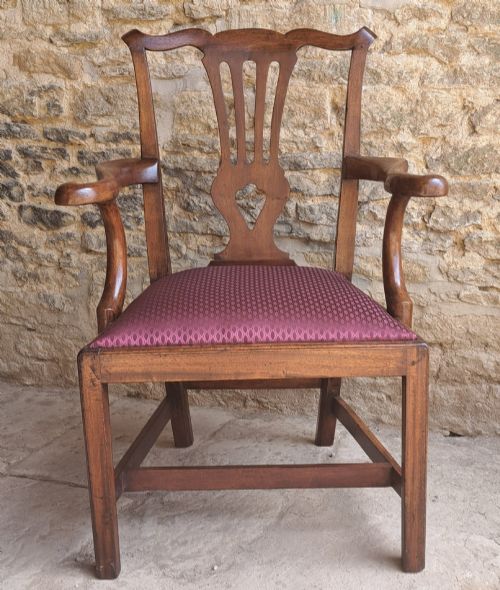
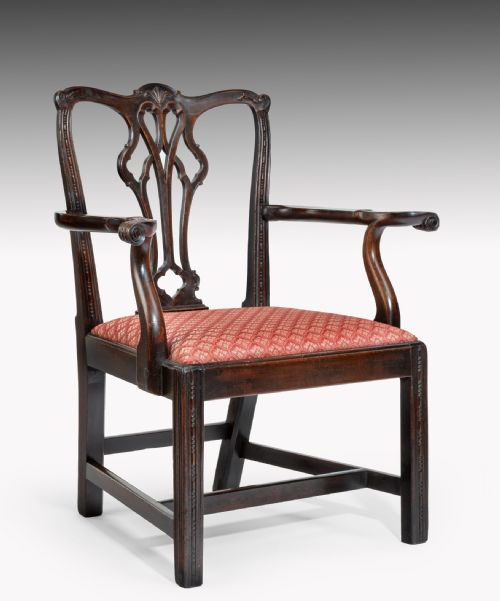
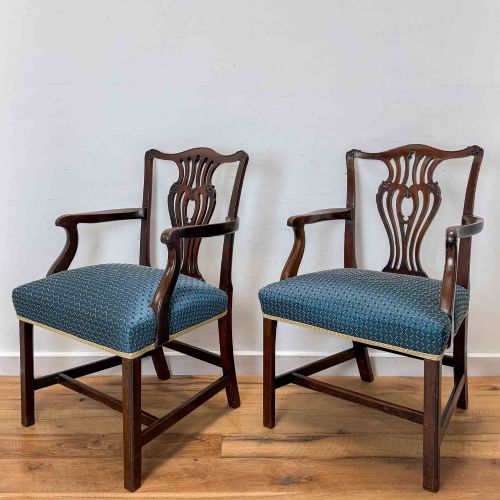
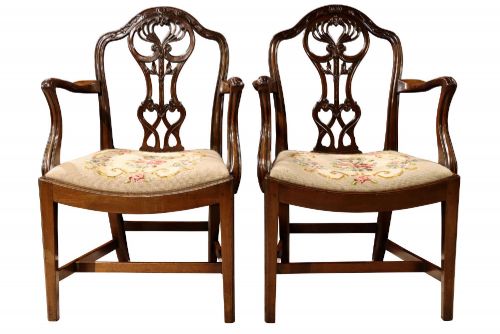
A chippendale style elbow chair is a seating form featuring scroll arms, a supportive backrest, and often an open splat design. The pieces on this page span the eighteenth, nineteenth, and early twentieth centuries, capturing both original period items and later revival interpretations.
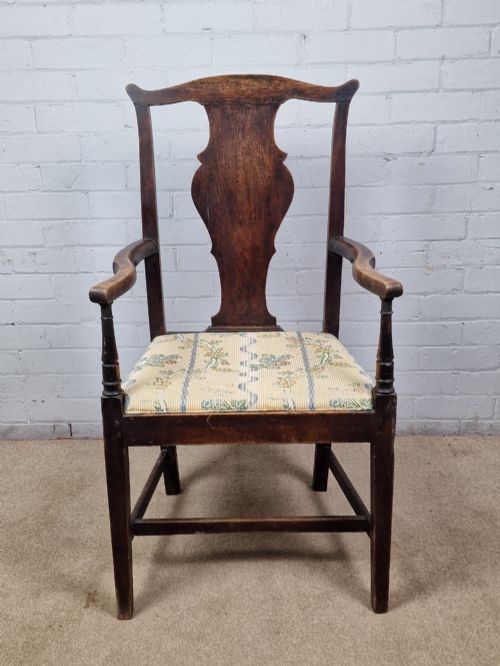
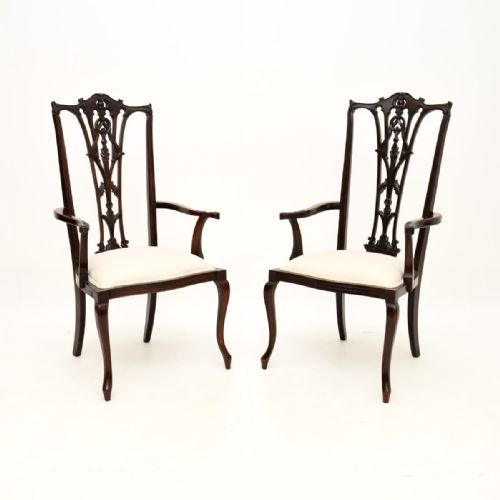
The selection includes dining chairs, desk chairs, and carver chairs designed to sit at the head of a table or beside a desk. Mahogany forms the primary structure, accompanied by occasional examples in fruitwood, walnut, oak, and elm.
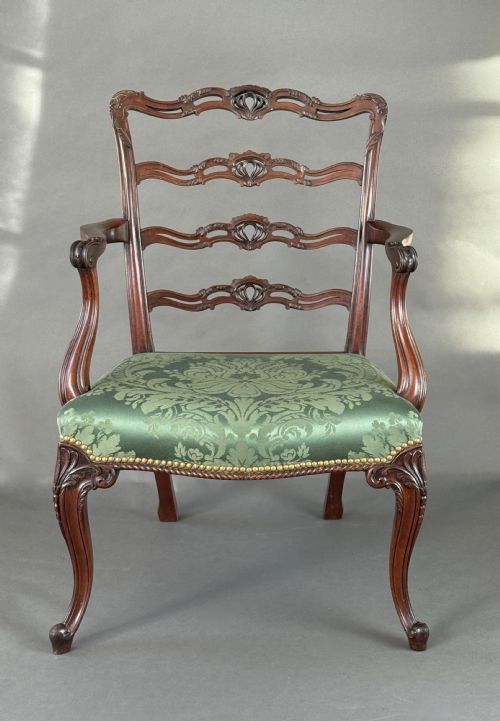
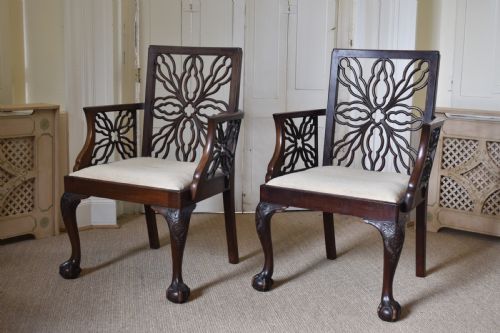
Buyers encounter both authentic Georgian specimens and later nineteenth-century revival pieces that emulate the carved crest rails and cabriole legs of the earlier era. These chairs function practically as desk seats or decorative armchairs within traditional interiors.
How they were made
Cabinetmakers constructed these frames predominantly from dense timbers like mahogany, utilising mortise and tenon joinery to ensure structural strength in the arms and legs. Carved details such as interlaced ribbon splats and acanthus leaves were shaped directly into the solid wood by hand.
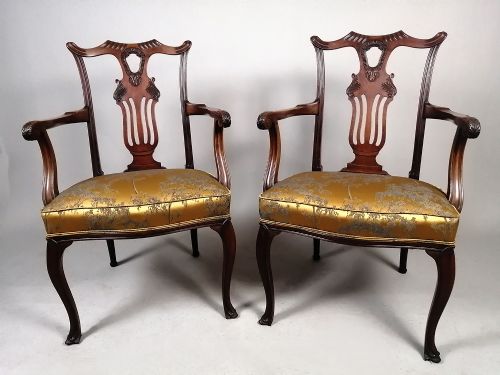
Seat bases commonly incorporated drop-in frames or webbing upholstered in materials such as leather, fabric, velvet, tapestry, and needlepoint. Brass tacks frequently secure these textile coverings along the seat rails of eighteenth and nineteenth-century examples.
What varies in quality
The refinement of the carving dictates the distinction between standard production and superior craftsmanship, visible in the depth of the pierced splat and the crispness of the claw and ball feet. Heavier proportions and simpler turned members generally point to utilitarian workshop output rather than high-style commission work.
Timbers selected for the primary frame and secondary woods used in the seat blocks reveal the original cost and intended status of the chair. Retaining the original upholstery webbing and undisturbed surface patination elevates the standing of any period piece.
The Chippendale Style Elbow Chair Glossary
- Elbow chair
- An armchair designed with low arms that support the elbows, frequently used at a desk or dining table. These chairs provide a broader seat than standard side chairs.
- Carver chair
- A traditional term for an armchair, often matching a set of smaller dining chairs intended for the head of a table. They share stylistic motifs with their smaller counterparts.
- Splat
- The vertical wooden strip down the centre of a chair back, which in this style is frequently pierced and carved into intricate ribbon or vase patterns. The shape of this element helps date the piece.
- Drop-in seat
- A removable wooden frame padded and covered in textile that drops into a rebate within the chair seat rails. This construction allowed easy reupholstery without dismantling the main frame.
Chippendale Style Elbow Chair: Frequently Asked Questions
How do I spot a revival chair?
Revival chairs from the late nineteenth century often display machine-sawn internal framing and standardised carving techniques that differ from eighteenth-century hand tool marks.
Examining the underside and the wear patterns on the feet helps determine whether the piece dates to the Georgian period or the later Chippendale revival eras.
Were these chairs used at desks?
Many elbow and carver chairs served as desk or writing chairs in libraries and morning rooms during the Georgian period.
The sturdy armrests and generous proportions accommodated formal clothing while providing a stable seat for daily correspondence.
What textiles were used originally?
Original seating surfaces featured woven tapestry, needlepoint, wool damask, and leather secured with brass upholstery nails.
Many surviving pieces have undergone later reupholstery using modern fabrics while retaining their historic wooden frames.
How do I care for mahogany frames?
Maintain the wood by applying traditional wax polish sparingly and avoiding direct placement near heat sources or strong sunlight.
Gentle dusting with a soft cloth preserves the natural finish and accumulated patination over decades of use.